
Massage During Pregnancy: Safety Guide & Benefits
Evidence-based guidance for safe and beneficial prenatal massage
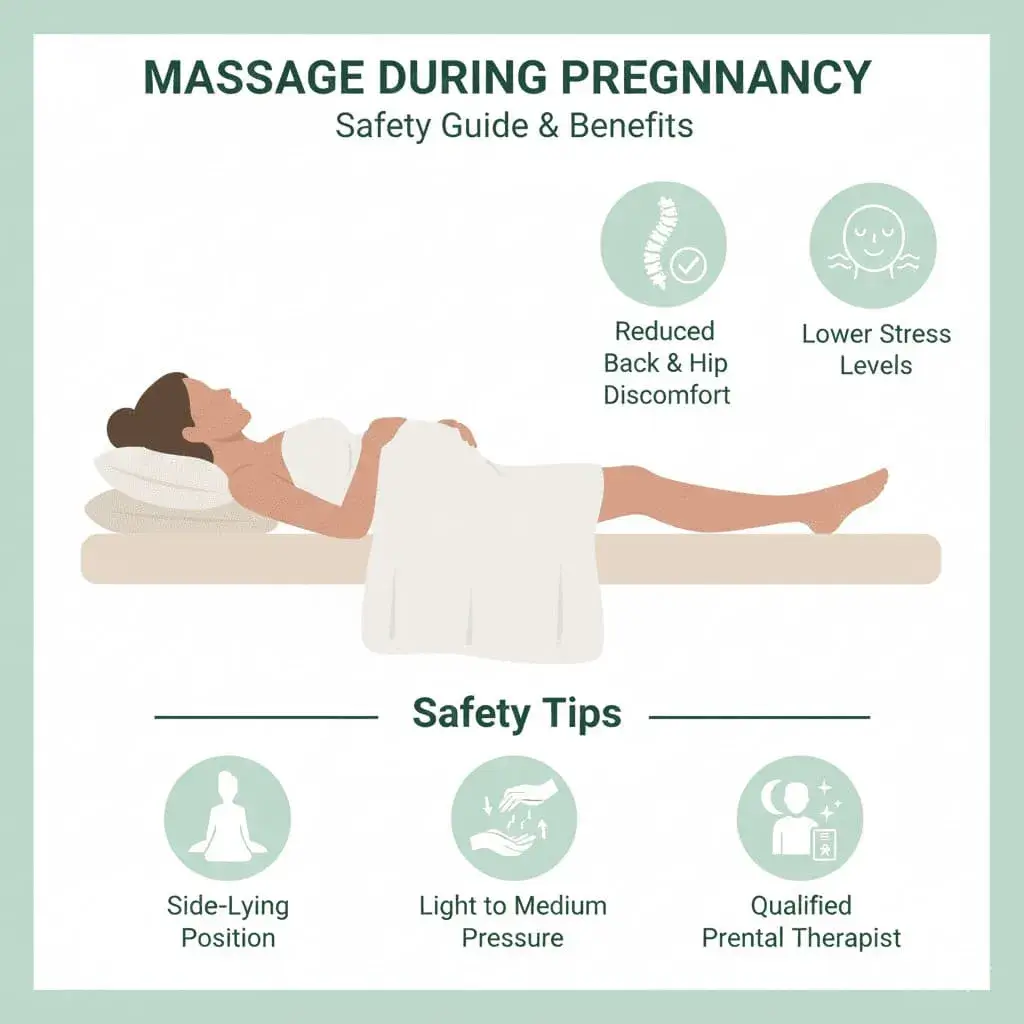
Growing a new life is extraordinary. And exhausting. Your body undergoes remarkable transformations, but those changes often bring discomfort: aching lower back, swollen ankles, trouble sleeping, and the general fatigue of supporting two. Many expectant mothers wonder: can massage help? And more importantly, is it safe?
The good news: prenatal massage, when performed by qualified therapists following appropriate guidelines, is not only safe but offers significant benefits for both mother and baby. Research supports its use for pain relief, stress reduction, and improved pregnancy outcomes. This guide covers everything you need to know to enjoy massage safely throughout your pregnancy.
Is Massage Safe During Pregnancy?
Yes, with appropriate precautions. Major medical organizations including the American Pregnancy Association recognize prenatal massage as safe and beneficial when performed by trained practitioners. The key factors are: qualified therapist with prenatal training, appropriate positioning, awareness of contraindications, and clearance from your healthcare provider. Unlike general massage, prenatal work requires specialized knowledge.
The outdated advice to avoid all massage during pregnancy stemmed from excessive caution rather than evidence. Modern research shows that properly performed prenatal massage poses no risk to healthy pregnancies and provides meaningful benefits.
What Makes Prenatal Massage Different
Prenatal massage isn't simply regular massage performed on a pregnant person. It involves specific modifications:
- Specialized positioning to accommodate the belly and protect the baby
- Avoidance of certain pressure points believed to stimulate contractions
- Modified techniques appropriate for pregnancy-related changes
- Awareness of pregnancy-specific contraindications
- Adjusted pressure and focus areas based on trimester
- Understanding of normal pregnancy discomforts vs. warning signs
Benefits of Prenatal Massage
Research and clinical experience support numerous benefits of massage during pregnancy:
Pain Relief
As your belly grows, your center of gravity shifts forward, straining your lower back. Hormones loosen ligaments, reducing joint stability. The result: back pain affects up to 70% of pregnant women. Massage effectively addresses pregnancy-related back pain, often providing relief when other options are limited (many pain medications aren't safe during pregnancy).
Massage also helps with:
- Hip pain from postural changes and loosened joints
- Leg cramps common in later pregnancy
- Neck and shoulder tension from changed posture
- Headaches (often tension-related during pregnancy)
- Sciatic nerve pain affecting many pregnant women
"With prenatal clients, everything is about gentle, careful work. I always use side-lying positioning with plenty of pillow support, and I keep the pressure lighter than a standard session. The hips and lower back are where most of the relief is needed, especially in the third trimester. Clients often say it is the only time during the week their back truly stops aching."
Reduced Swelling
Edema (swelling) in the legs, ankles, and feet is common during pregnancy, especially in the third trimester. Massage improves circulation and lymphatic drainage, helping reduce fluid accumulation. Many women notice significant improvement in ankle swelling after prenatal sessions.
Stress and Anxiety Reduction
Pregnancy brings joy but also anxiety. About the baby's health, the birth, life changes ahead. Elevated stress hormones affect both mother and baby. Massage reduces cortisol while increasing serotonin and dopamine, providing genuine stress relief that benefits the entire pregnancy.
Research shows prenatal massage can reduce anxiety and depression symptoms in pregnant women, with benefits extending to improved neonatal outcomes. Emotional wellness during pregnancy sets the foundation for postpartum recovery.
Better Sleep
Finding comfortable sleep positions becomes increasingly difficult as pregnancy progresses. Discomfort, anxiety, and frequent bathroom trips disrupt rest. Massage promotes relaxation, reduces pain that interferes with sleep, and helps regulate sleep-promoting hormones. Many pregnant women report their best sleep comes after sessions.
Hormone Regulation
Studies on prenatal massage show measurable hormone changes: decreased cortisol and norepinephrine (stress hormones) and increased dopamine and serotonin (feel-good hormones). These shifts are associated with fewer birth complications and healthier newborn outcomes.
Improved Labor Outcomes
Some research suggests women who receive regular prenatal massage experience shorter labors, reduced need for pain medication during birth, and lower rates of premature birth. While more research is needed, the stress-reduction benefits alone support better labor experiences.
| Benefit | How It Helps | Research Support |
|---|---|---|
| Back pain relief | Releases muscle tension, improves posture support | Strong |
| Reduced swelling | Improves circulation and lymphatic drainage | Moderate to strong |
| Stress reduction | Lowers cortisol, increases relaxation hormones | Strong |
| Better sleep | Reduces pain and anxiety that disrupt sleep | Moderate |
| Reduced anxiety/depression | Hormone regulation, relaxation response | Moderate to strong |
| Improved labor outcomes | Overall wellness, reduced stress hormones | Emerging |
Massage by Trimester
Guidelines and focus areas vary throughout pregnancy:
First Trimester (Weeks 1-12)
Some therapists and healthcare providers recommend waiting until the second trimester to begin massage, primarily because the first trimester carries the highest miscarriage risk. While massage doesn't cause miscarriage, the association concern leads many to err on the side of caution.
If you do receive massage in the first trimester:
- Get explicit clearance from your healthcare provider
- Choose a therapist experienced in early pregnancy massage
- Avoid deep abdominal work
- Lighter pressure is generally recommended
- Be aware of heightened sensitivity to smells (communicate about oils/lotions)
- Nausea may affect your ability to lie in certain positions
Second Trimester (Weeks 13-26)
Often called the "golden trimester" for massage. Morning sickness typically subsides, energy returns, and the belly isn't yet large enough to make positioning difficult. This is an ideal time to establish a regular routine.
Focus areas often include:
- Lower back as postural changes begin
- Hips and glutes adapting to shifted weight
- Legs where circulation changes may cause discomfort
- General relaxation and stress management
- Establishing comfort with prenatal positioning
Third Trimester (Weeks 27-40)
Maximum benefit often comes in the third trimester when discomfort peaks. However, positioning requires more accommodation, and some pressure points are avoided as the due date approaches. Many women increase massage frequency during this time.
Focus areas typically include:
- Lower back under significant strain
- Swollen feet and ankles
- Hip pain from loosened pelvic joints
- Upper back and shoulders from changed posture
- Leg cramps and restless legs
- Stress and anxiety about upcoming birth
| Trimester | Considerations | Common Focus Areas | Recommended Frequency |
|---|---|---|---|
| First (1-12 weeks) | Caution advised, lighter work | General relaxation, legs, upper body | Monthly if approved |
| Second (13-26 weeks) | Ideal time to begin | Lower back, hips, establishing routine | Bi-weekly to monthly |
| Third (27-40 weeks) | Maximum benefit, careful positioning | Back, swelling, hips, stress relief | Weekly to bi-weekly |
Safe Positioning During Prenatal Massage
After the first trimester, lying flat on your back isn't recommended for extended periods; the weight of the uterus can compress major blood vessels, reducing blood flow to you and the baby. Lying face-down becomes impossible as the belly grows. Prenatal massage uses alternative positions:
Side-Lying Position
The most common prenatal massage position. You lie on your side with pillows supporting your belly, between your knees, and under your head. The therapist can access your back, hips, legs, and shoulders using modified deep tissue techniques. You may switch sides during the session for full coverage.
Semi-Reclined Position
Propped at an angle (not flat) with pillows supporting your back, this position works for facial massage, scalp massage, and upper body work. It's comfortable and doesn't put pressure on major blood vessels. This aligns with proper massage etiquette and safety protocols.
Pregnancy Massage Tables
Some therapists use specialized tables with cutouts or cushioning systems that allow pregnant clients to lie face-down safely. These distribute weight appropriately and support the belly without pressure. Not all therapists have this equipment, and opinions vary on whether face-down positioning is ideal even with modifications.
Contraindications: When to Avoid Massage
While prenatal massage is safe for most healthy pregnancies, certain conditions require avoiding massage or getting specific medical clearance:
Absolute Contraindications
Do not receive massage without explicit medical clearance if you have:
- High-risk pregnancy designation from your healthcare provider
- Preeclampsia or pregnancy-induced hypertension (linked to stress)
- Placenta previa or placental abruption
- Risk of premature labor or history of preterm birth
- Deep vein thrombosis (DVT) or blood clotting disorders
- Severe swelling, headaches, or visual disturbances (potential preeclampsia signs)
- Vaginal bleeding or unusual discharge
- Currently experiencing contractions before 37 weeks
Relative Contraindications
Discuss with your healthcare provider before massage if you have:
- Gestational diabetes (controlled through wellness practices)
- Previous miscarriage history
- Multiple pregnancy (twins, triplets)
- Advanced maternal age with complications
- Any condition requiring bed rest
- Fever or active infection
- Severe morning sickness (hyperemesis gravidarum)
Pressure Points and Areas to Avoid
Certain areas require caution during pregnancy. While scientific evidence for some restrictions is limited, most prenatal therapists follow these guidelines:
Areas of Caution
- Abdomen: Only very light, gentle work if any; deep pressure avoided
- Inner ankle area: Contains acupressure points traditionally believed to stimulate contractions
- Webbing between thumb and index finger: Another point associated with labor induction in acupressure
- Lower back sacral area: Light pressure only, especially near due date
- Inner thigh near groin: Contains lymph nodes and is a sensitive area
A qualified prenatal massage therapist knows these restrictions and will automatically avoid problematic areas. However, it's worth being aware so you can ensure your therapist is following appropriate protocols.
Choosing a Prenatal Massage Therapist
Not all massage therapists are qualified for prenatal work. Here's what to look for:
Essential Qualifications
- Specific training in prenatal massage (beyond general massage certification)
- Understanding of pregnancy physiology and contraindications
- Experience working with pregnant clients
- Appropriate equipment (pillows, bolsters, or pregnancy table)
- Willingness to communicate with your healthcare provider if needed
- Clear intake process asking about your pregnancy status and any complications
Questions to Ask
- What prenatal massage training have you completed?
- How many pregnant clients do you typically work with?
- What positioning do you use for prenatal massage?
- How do you modify treatment based on trimester?
- What would cause you to decline or postpone a prenatal session?
What to Expect During Your Session
Before the Massage
- Complete intake form about your pregnancy (due date, complications, symptoms)
- Discuss any specific concerns or discomforts
- Use the bathroom. You'll likely need to during the session anyway
- Have water available for hydration
- Communicate any scent sensitivities (pregnancy often heightens smell)
During the Massage
- You'll be positioned comfortably with pillow support
- Draping maintains your privacy throughout
- Therapist will check in about pressure and comfort
- Session typically focuses on back, hips, legs, and shoulders
- Feel free to request bathroom breaks; this is normal and expected
- Communicate immediately if anything feels uncomfortable
After the Massage
- Take time to get up slowly; your blood pressure may be lower
- Drink plenty of water
- Rest if possible; your body is doing important work
- Note any changes in how you feel for future sessions
- Contact your healthcare provider if you notice anything concerning
Massage After Birth (Postnatal)
The benefits of massage don't end with delivery. Postnatal massage supports recovery and addresses new challenges:
- Recovery from labor. Muscle fatigue, soreness, and tension
- Upper back and neck strain from nursing and holding baby
- Hormone rebalancing support as body adjusts post-pregnancy
- Stress relief during demanding newborn period
- Sleep support when opportunities for rest are limited
- Emotional support; massage can help with postpartum mood challenges
- Abdominal recovery (gentle work after clearance)
Most women can resume massage within a few days of uncomplicated vaginal birth. After cesarean section, wait for incision healing and medical clearance. Typically 6-8 weeks. Listen to your body and consult your healthcare provider. See our massage frequency guide for postpartum scheduling.
Frequently Asked Questions
Can massage cause miscarriage?
How often should I get prenatal massage?
Is deep tissue massage safe during pregnancy?
Can I get massage if I have gestational diabetes?
What if I can't lie on my side comfortably?
Can prenatal massage help induce labor?
Is it safe to have massage if I'm carrying twins?
Should I tell my obstetrician I'm getting massage?
Nurturing the Nurturer
Pregnancy asks enormous things of your body. Growing another human is among the most demanding physical experiences you'll have. The discomforts that come with this remarkable process aren't weaknesses to push through. They're signals that your body could use support.
Prenatal massage offers that support safely and effectively. It addresses the specific challenges of pregnancy, back pain, swelling, stress, poor sleep, with techniques adapted for your changing body. The research is clear: massage during pregnancy benefits both mother and baby.
You're caring for a new life. You deserve care too.
Related Articles
Massage for Stress & Anxiety: Science-Backed Benefits
Discover how massage therapy reduces stress and anxiety through proven mechanisms. Best massage types for relief and what clinical research shows.
Massage for Better Sleep: How It Works & What to Expect
Learn how massage therapy improves sleep quality by reducing cortisol and boosting serotonin. Best massage types for insomnia and optimal timing guide.
Back Pain Massage at Home: What Works, What to Expect
Yes, massage helps most muscle-related back pain - research agrees. See which massage works, what a home session looks like, and when to see a doctor.
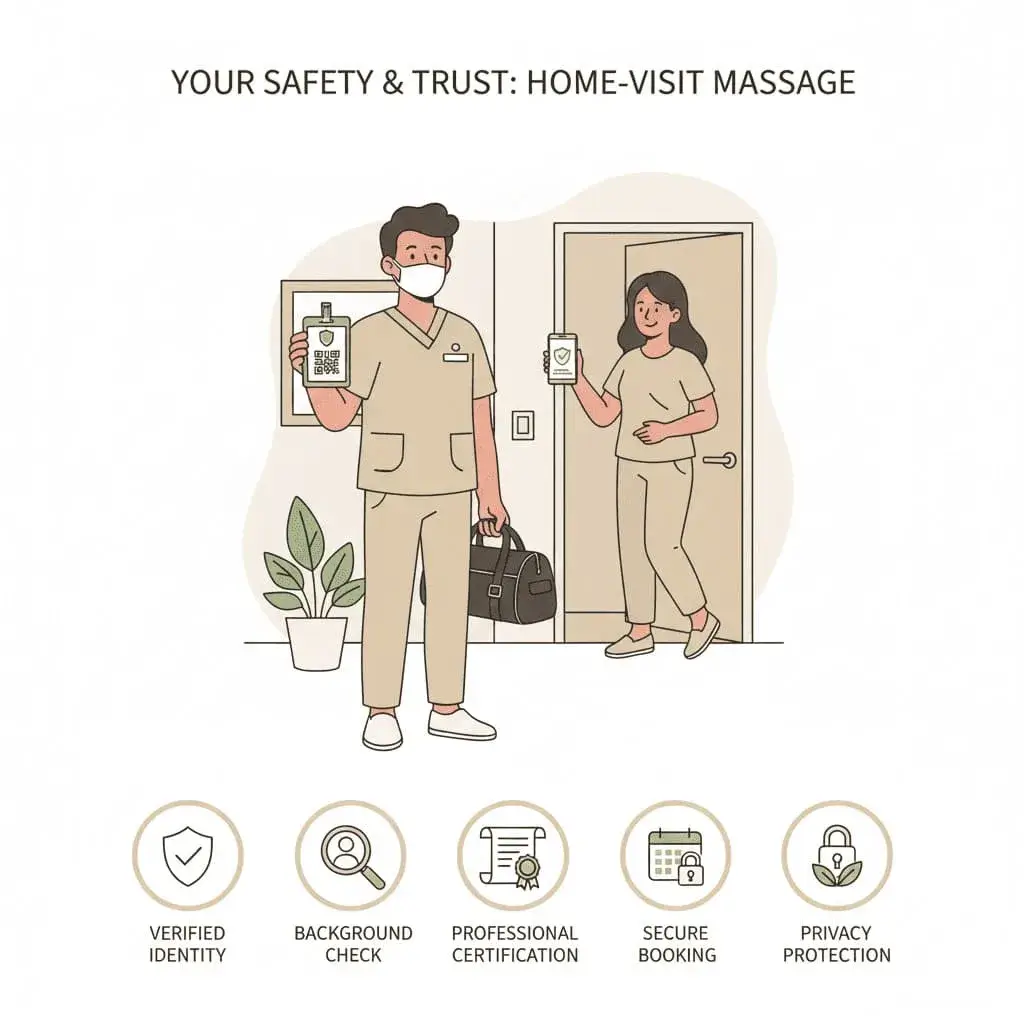
Is Home Massage Safe in India? What to Check Before Booking
Yes, with the right service. See what a verified platform checks before a therapist profile goes live, plus the smart checks you should do yourself.
Massage Services in Other Cities

Professional Home Massage in Mumbai
Professional home massage in Mumbai. {{therapist_count}}+ verified therapists, same-day booking, 40+ areas covered. Swedish, deep tissue & Thai massage. Book now.

Professional Home Massage in Delhi NCR
Professional home massage in Delhi NCR. {{therapist_count}}+ verified therapists offering same-day booking across 50+ areas including Gurgaon, Noida, and CP. Book now.

Professional Home Massage in Bangalore
Professional home massage in Bangalore. {{therapist_count}}+ verified therapists, same-day booking across 50+ areas. Koramangala, Whitefield, HSR Layout. Book now.

Professional Home Massage in Pune
Professional home massage in Pune. {{therapist_count}}+ verified therapists offering same-day booking across 40+ areas. Koregaon Park, Baner, Hinjewadi. Book now.