
What to Wear & Expect: Complete Massage Etiquette Guide
Everything you need to know for a comfortable massage experience
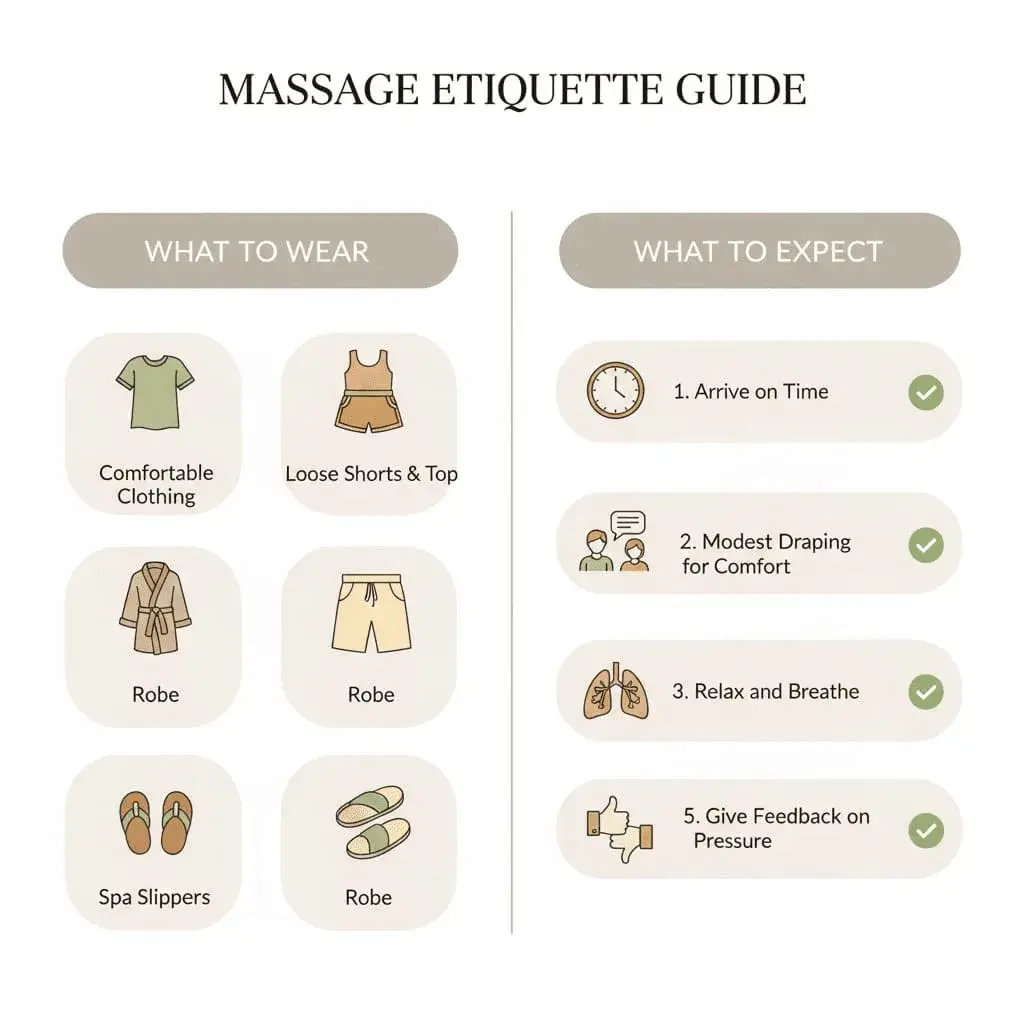
If you've never had a professional massage before - or it's been a while - you might have questions. What do you actually wear? What happens when you arrive? Is it awkward? What if you need to use the bathroom halfway through? These concerns are completely normal, and they stop many people from booking massages they'd genuinely benefit from.
Here's the thing: massage therapists have seen it all. They're professionals who want you to be comfortable. Most of what feels uncertain to you is routine to them. This guide covers everything you need to know so you can stop worrying about logistics and actually enjoy the experience.
We'll cover what to wear, how to prepare, what happens during the session, and proper etiquette - including specifics for the Indian context. By the end, you'll know exactly what to expect.
Quick Do's & Don'ts
Do: Communicate
Speak up about pressure preferences, discomfort, or needs - therapists want feedback
Do: Arrive Clean
A quick shower before your oil massage shows courtesy and helps you relax
Don't: Endure Pain
If pressure is too intense, say so - massage shouldn't hurt
Don't: Rush After
Give yourself time to hydrate and rest for better sleep benefits
What to Wear to Your Massage Appointment
Let's start with the easy part: what you wear to get to your appointment doesn't matter much. You'll be changing anyway. But some choices make life easier:
Best Choices for Arrival
- ✓Comfortable, loose clothing - Easy to take off and put back on when you're relaxed
- ✓Minimal jewelry - Less to remove and keep track of
- ✓Skip heavy makeup - It may smear on the face cradle or pillow
- ✓Tie hair back - If you have long hair, a simple tie keeps it manageable
- ✓Comfortable footwear - Slip-on shoes are easier than laces when you're relaxed afterward
What to Wear During the Massage
This is the question that causes the most anxiety. Let's address it directly: you undress to your comfort level. There's no universal rule that you must be completely undressed.
Your Options
- Fully undressed - Most common for oil-based massages; allows full access to muscles
- Underwear on - Completely acceptable; therapist works around it
- Underwear and bra - Also fine; may limit some back work but therapist adjusts
- Comfortable shorts/clothes - Required for Thai massage; acceptable for others if preferred
Most people choose to remove everything or keep underwear on. For oil-based massages (Swedish, deep tissue, aromatherapy), being undressed allows the therapist to work more effectively and prevents oil from ruining your undergarments. But your comfort matters more than optimal technique.
What About Draping?
Professional massage always includes draping - you're covered with a sheet or towel, and only the area being worked on is exposed. This is non-negotiable in professional practice. You're never fully exposed at any point.
- Sheet or towel covers you - Always, throughout the entire session
- Only the working area is uncovered - Back exposed while working on back, then re-covered
- Private areas stay covered - Chest and groin remain draped at all times
- You can request extra coverage - If you want more draping, just ask
Clothing Requirements by Massage Type
Different massage styles have different clothing expectations. Here's what's typical:
| Massage Type | Typical Attire | Why |
|---|---|---|
| Swedish Massage | Undressed or underwear | Oil-based, needs skin contact |
| Deep Tissue | Undressed or underwear | Oil-based, needs deep muscle access |
| Aromatherapy | Undressed or underwear | Oil-based, oils absorb through skin |
| Hot Stone | Undressed or underwear | Stones placed on and moved along skin |
| Thai Massage | Comfortable loose clothing | No oil, involves stretching and movement |
| Sports Massage | Underwear or athletic wear | May focus on specific muscle groups |
| Ayurvedic (Abhyanga) | Undressed | Uses generous warm oil that should absorb |
Before Your Massage: Preparation
The Day Before
- ✓Stay hydrated - Well-hydrated muscles respond better to massage
- ✓Avoid heavy meals - Lying face-down on a full stomach is uncomfortable
- ✓Note any health changes - New injuries, medications, or conditions to mention
- ✓Prepare questions - Write down anything you want to ask the therapist
The Day Of
- ✓Shower if possible - Basic hygiene; therapists appreciate it
- ✓Skip heavy perfume/cologne - Can be overwhelming in close quarters
- ✓Eat lightly - A light meal 1-2 hours before is ideal
- ✓Use the bathroom - Before the session starts; 60-90 minutes is a long time
- ✓Arrive a few minutes early - Rushing creates tension you're trying to release
- ✓Silence your phone - Or better yet, leave it in another room
The Pre-Massage Conversation
Before starting, your therapist should ask some questions. This isn't small talk - it helps them customize your session. Be honest and specific:
- Health history - Injuries, surgeries, chronic conditions, pregnancy
- Current concerns - Where you hold tension, any pain or discomfort
- Pressure preferences - Light, medium, firm - or "I don't know yet"
- Areas to avoid - Places that are injured, ticklish, or you'd rather skip
- Goals for the session - Relaxation? Pain relief? Better sleep? All valid
During the Massage: Etiquette & Communication
Your Massage Session Flow
Arrival & Setup (5 min)
Therapist greets you, discusses needs and health concerns, then leaves room while you undress
Starting Position (2 min)
Usually face-down; adjust face cradle, settle in, take deep breaths to relax
Main Session ([45-60 min](/blog/massage-duration-guide))
Therapist works through body areas; communicate about pressure; you may doze off
Turn & Finish (15-20 min)
Turn face-up midway; therapist finishes with shoulders, neck, head massage
Session End (5 min)
Therapist leaves; take your time getting up, dress slowly, hydrate before leaving
Getting On the Table
The therapist will leave the room while you undress and get on the table. They'll tell you which way to lie (usually face-down to start) and how to position yourself under the sheet. Take your time - there's no rush.
- Face cradle position - Adjust it so your neck is comfortable, not strained
- Arms - Usually down by your sides or on armrests if available
- Breathing - Start with a few deep breaths to settle in
- Sheet placement - Make sure you're covered how you want to be
Communication During the Session
You're not required to chat, but you should communicate about the massage itself. Good therapists want feedback:
- ✓Pressure feedback - "Could you go deeper there?" or "That's a bit too intense"
- ✓Problem spots - "Right there - that's the tight spot"
- ✓Temperature - "I'm a bit cold" or "Could we turn the AC down?"
- ✓Discomfort - "That position hurts my neck" or "I need to shift"
- ✓Anything wrong - If something feels off, say so immediately
Common Questions About During the Massage
Should I talk or stay quiet?
Entirely your choice. Some people chat, most stay quiet. The therapist follows your lead. If you want silence, they won't take offense. If you want to talk, they'll engage. There's no "correct" approach.
What if I need to use the bathroom?
Just say so. The therapist will step out, you'll wrap in a sheet or robe, use the bathroom, and return. It happens. It's not embarrassing. Much better than being uncomfortable for the rest of the session.
What if I fall asleep?
That's fine - it means you're relaxed. Many people doze off, especially during relaxing massage styles like Swedish. The therapist will continue working and wake you gently when it's time to turn over or when the session ends. Snoring happens too; therapists are used to it.
What if my stomach growls?
Normal. Massage switches your body into rest mode, which can wake up digestive sounds. It happens frequently. Therapists don't even notice anymore.
What if I get emotional?
Also normal. Massage can release stored tension, and sometimes emotions come with it. If you tear up or need a moment, that's okay. Therapists are trained to handle this with discretion. You don't need to explain or apologize.
Understanding Pressure: The Pain Question
"No pain, no gain" doesn't apply to massage the way people think. Let's clarify what good pressure feels like:
Good Pressure vs. Too Much
- Good pressure - You feel it working. Might be intense. You can breathe through it.
- Too much pressure - You're holding your breath, tensing against it, or wincing
- "Hurts so good" - Real thing with deep tissue work. Intense but you want them to stay there.
- Just painful - Nothing good about it. You want it to stop.
The ideal pressure is where you feel productive work happening but you can still relax into it. If you're tensing your muscles against the therapist's pressure, it's counterproductive - tense muscles can't be effectively worked. Understanding the difference between Swedish and deep tissue helps set proper expectations.
How to Communicate About Pressure
- "That's perfect" - Lets them know to maintain current pressure
- "Could you go deeper?" - You want more intensity
- "A little lighter, please" - Too intense, dial it back
- "That's too much" - Need significant reduction
- Scale of 1-10 - Some therapists ask you to rate pressure; be honest
After the Massage: Post-Session Etiquette
Immediately After
When the massage ends, the therapist will let you know and leave the room for you to dress. Take your time. You might feel:
- Deeply relaxed - Possibly a bit spacey or floaty; a sign massage is working
- Thirsty - Massage can be mildly dehydrating
- Need to use bathroom - Massage stimulates circulation and elimination
- Slightly lightheaded - From lying down, especially if you sat up quickly
- Tender in worked areas - Especially after deep tissue; usually fades within a day
Post-Massage Best Practices
- ✓Drink water - Helps your body process the session
- ✓Move slowly - Don't rush back into intense activity
- ✓Avoid alcohol - Can intensify any lightheadedness
- ✓Skip intense exercise - Your muscles are in recovery mode; save the post-workout massage for another day
- ✓Rest if possible - Even 20-30 minutes extends benefits for better sleep
- ✓Note what worked - Remember for future sessions
Tipping Etiquette in India
Tipping norms in India differ from Western countries and vary by context. Here's a straightforward guide:
General Guidelines
- Tipping is appreciated but not mandatory - Unlike the US, tips aren't expected to supplement wages
- 10-15% is generous - For exceptional service at spas
- Round up or add ₹100-500 - Common approach for good service
- Platform services may differ - Some include the tip, some don't; check the policy
- Cash is preferred - If tipping, cash goes directly to the therapist
When to Tip More
- The therapist addressed a specific problem that's been bothering you
- They went beyond the scheduled time to finish properly
- Exceptional communication and customization
- You plan to request them again (builds relationship)
Home Massage Specific Etiquette
Having a massage at home has some additional considerations. Here's how to be a good host while maintaining appropriate boundaries:
Preparing Your Space
- ✓Clear enough space - Room for the massage table and for the therapist to move around it
- ✓Control temperature - Slightly warm is better; you'll be still and may feel cold
- ✓Ensure privacy - Inform family members, close curtains if needed
- ✓Minimize interruptions - Put pets in another room, silence phones
- ✓Have water available - For yourself after the session
- ✓Bathroom accessible - Let the therapist know where it is
How Home Visits Work in India
A few things that first-timers in India often ask about:
- Family at home is normal - Parents, spouse, kids in the next room - therapists are used to Indian households. Just give the therapist a quiet room to work in
- You can state a gender preference - When booking, simply say if you prefer a male or female therapist. This is accommodated without judgment
- The therapist brings everything - Massage table, oils, towels, and music all arrive with the therapist, and setup takes under 10 minutes. You only need to provide the room
Hosting Boundaries
The therapist is a professional, not a social guest. You don't need to:
- Offer food or extensive refreshments - A glass of water is courteous, nothing more expected
- Make extended small talk - Brief greeting is fine; then let them set up
- Give a house tour - Just show them where they'll work and the bathroom
- Apologize for your home - They're there to work, not judge your decor
- Entertain them before or after - Professional efficiency is fine
Safety and Comfort
- ✓Use reputable services - Platforms that verify each therapist's identity and certificates
- ✓Have someone else home - Especially for first appointments if it makes you comfortable
- ✓Trust your instincts - If anything feels wrong, you can end the session
- ✓Lock valuables away - Standard precaution with any service provider
- ✓Confirm identity - Verify the therapist matches who you booked
Addressing Common Concerns
Body Image Worries
Many people feel self-conscious about their bodies. Here's what therapists want you to know: they're focused on muscles, not appearance. They work on bodies of all shapes, sizes, and conditions daily. Your stretch marks, weight, body hair, or skin concerns are not something they're judging or even particularly noticing.
Hygiene Concerns
Basic cleanliness is appreciated - a shower before your massage is ideal. But don't stress about being perfectly groomed. Therapists work through oil and focus on muscle tissue. They're not examining your skin. If you're coming straight from work and couldn't shower, that's fine too.
Physical Responses
Occasionally, people worry about involuntary physical responses during massage. If this concerns you, know that professional therapists are trained to handle any situation with discretion. The body's rest mode (which massage switches on) can cause various automatic responses. Professionals don't make it awkward.
First-Time Nerves
It's normal to feel nervous before your first massage. Let the therapist know you're new to this. Good therapists will explain everything they're doing, check in more frequently, and ensure you're comfortable throughout. Your nervousness will usually fade within the first few minutes.
Frequently Asked Questions
Should I shave before a massage?
Can I get a massage if I'm sick?
Is it okay to request a specific gender therapist?
What if I don't like the massage style?
How often should I get a massage?
Can I eat before a massage?
What if the therapist is late?
Should I remove my contact lenses?
The Bottom Line: Relax and Communicate
Massage etiquette comes down to two things: basic courtesy and communication. You don't need to be a perfect client. You don't need to know all the rules. You just need to be reasonably clean, communicate your needs and feedback, and let the professional do their job.
The concerns that stop people from booking massages - worry about undressing, not knowing what to do, potential embarrassment - are almost always worse in imagination than reality. Therapists handle nervous first-timers regularly. They know how to put you at ease. Within minutes of starting, most people forget they were ever anxious and can focus on the stress relief they came for.
Your job is simple: show up, communicate what you need, provide feedback during the session, and let yourself relax. Everything else is handled.
Related Articles
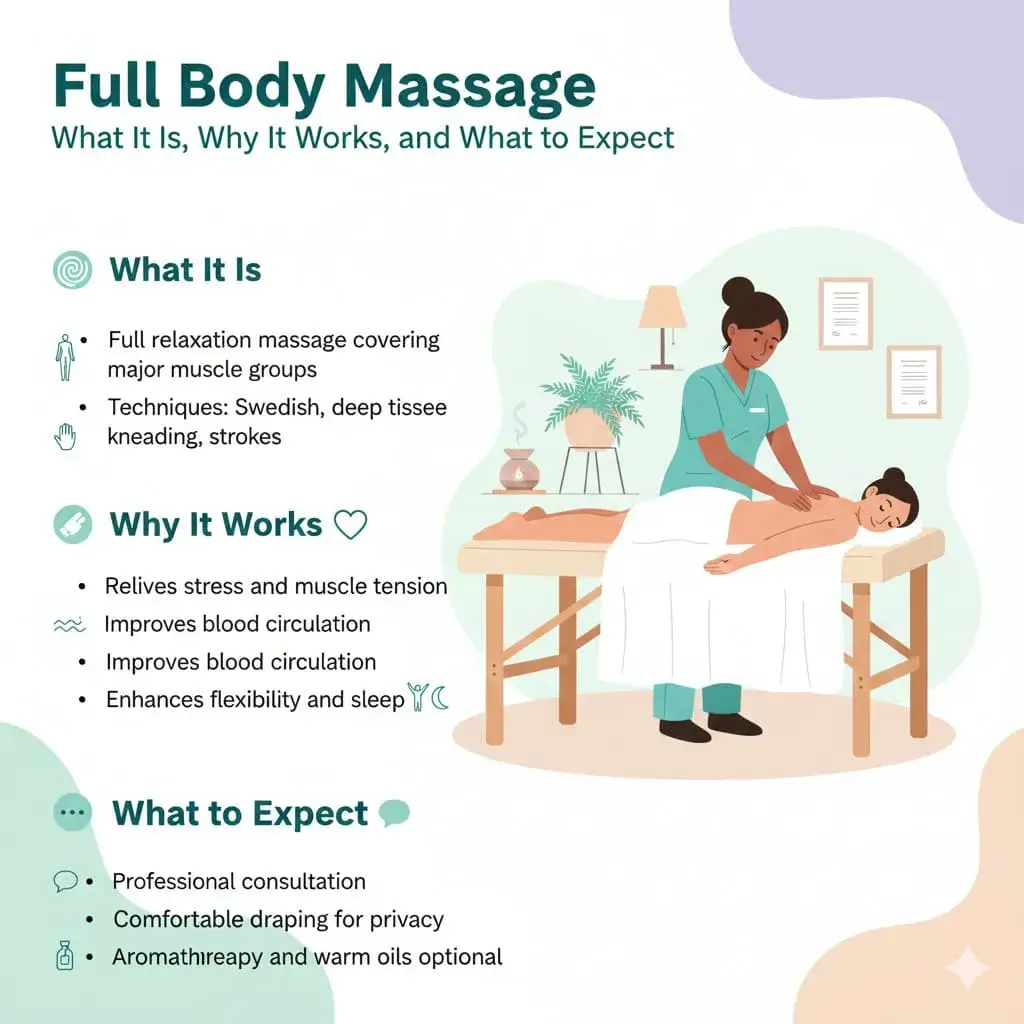
Full Body Massage: What It Is, Why It Works, and What to Expect
What is full body massage? Learn the benefits, best types for your needs, and what to expect. Expert tips from trained therapists for your session.
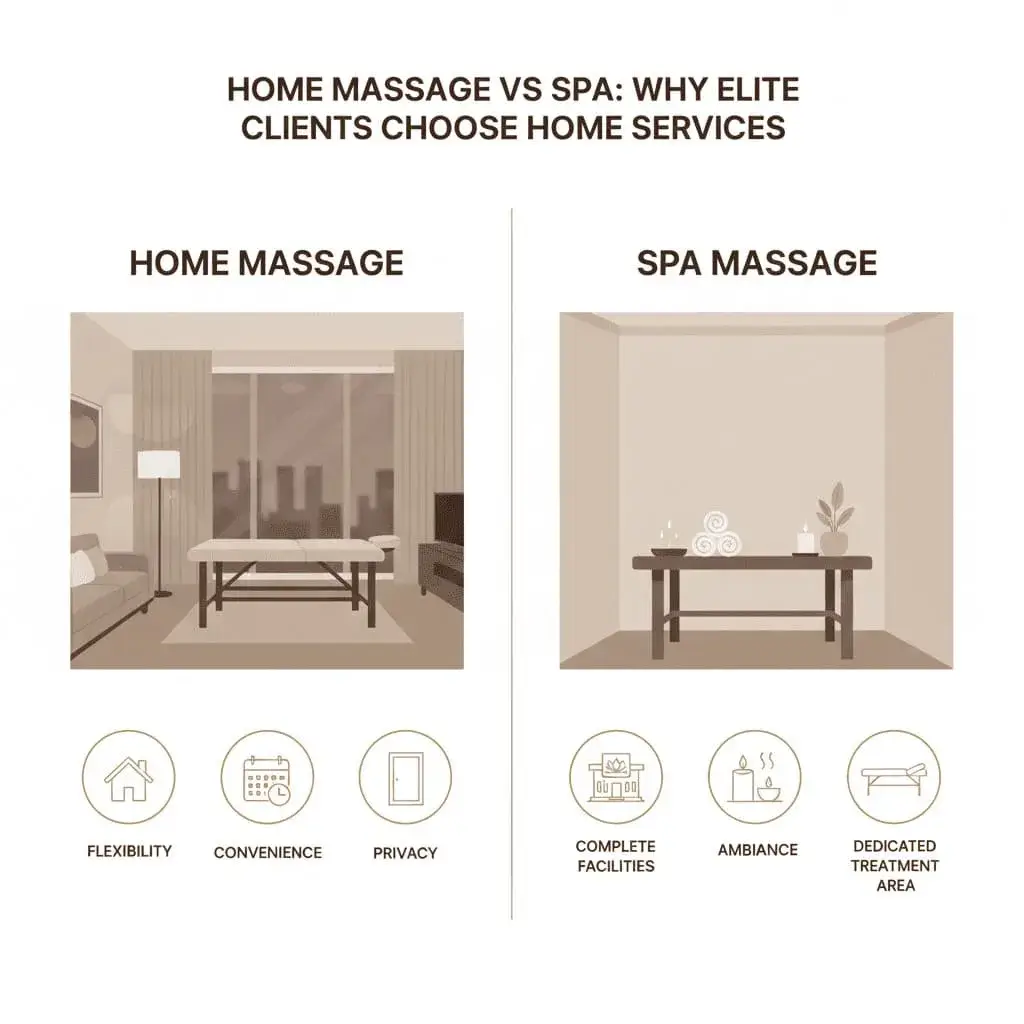
Home Massage vs Spa: Price, Privacy and Which Is Better
Honest comparison of home massage and spa visits in India - cost, hygiene, privacy, travel time, and when each one makes sense for you.
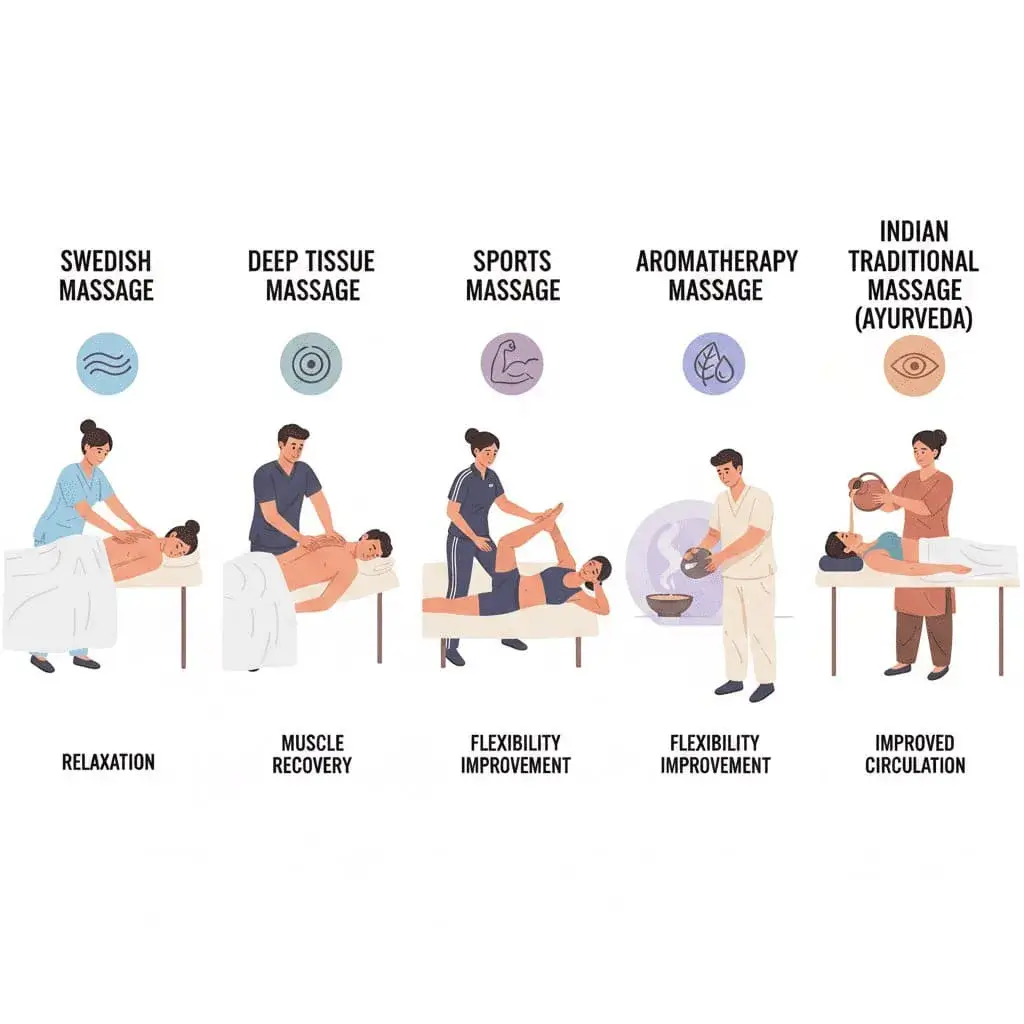
Types of Body Massage in India: How to Choose
Swedish for relaxation, deep tissue for pain, Thai for flexibility - compare the 8 massage types you can book at home in India and pick the right one.
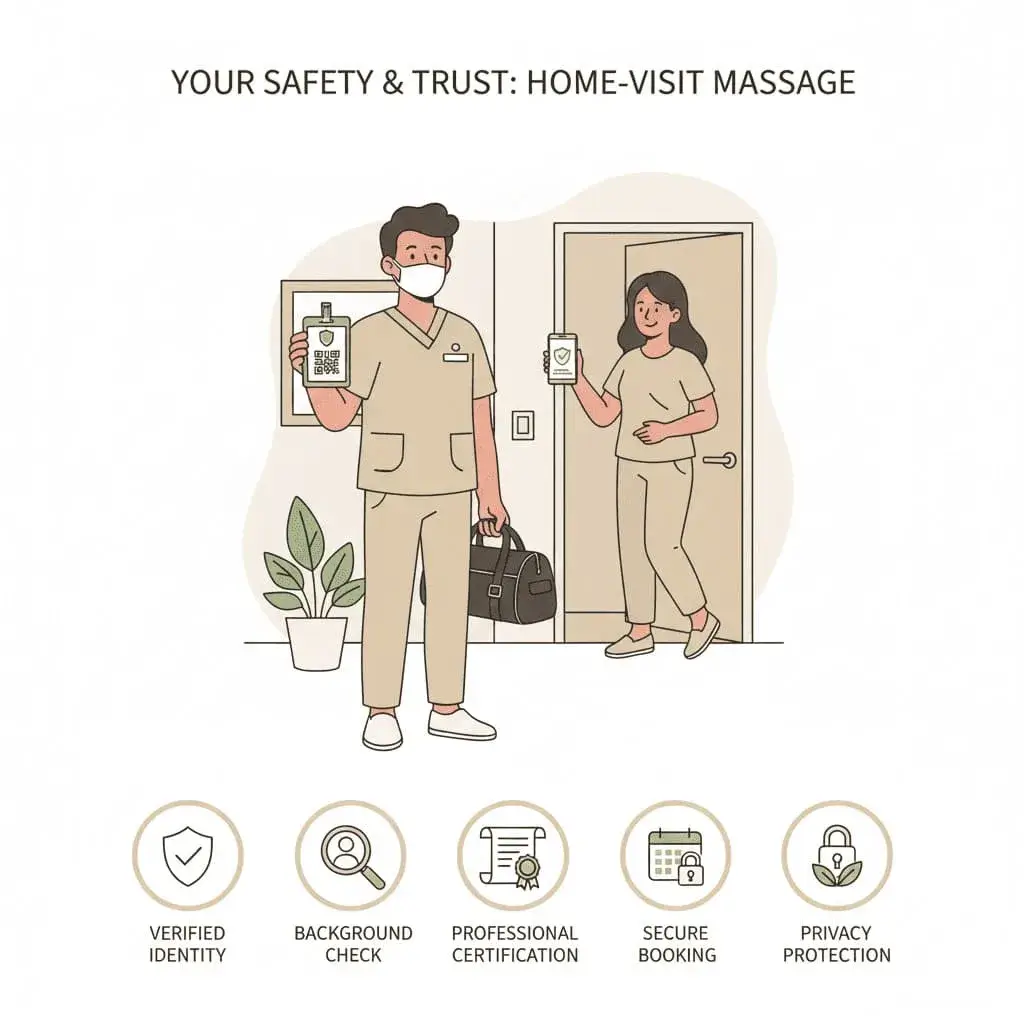
Is Home Massage Safe in India? What to Check Before Booking
Yes, with the right service. See what a verified platform checks before a therapist profile goes live, plus the smart checks you should do yourself.
Massage Services in Other Cities
Professional Home Massage in Mumbai
Professional home massage in Mumbai. {{therapist_count}}+ verified therapists, same-day booking, 40+ areas covered. Swedish, deep tissue & Thai massage. Book now.
Professional Home Massage in Bangalore
Professional home massage in Bangalore. {{therapist_count}}+ verified therapists, same-day booking across 50+ areas. Koramangala, Whitefield, HSR Layout. Book now.

Professional Home Massage in Delhi NCR
Professional home massage in Delhi NCR. {{therapist_count}}+ verified therapists offering same-day booking across 50+ areas including Gurgaon, Noida, and CP. Book now.
Professional Home Massage in Pune
Professional home massage in Pune. {{therapist_count}}+ verified therapists offering same-day booking across 40+ areas. Koregaon Park, Baner, Hinjewadi. Book now.