
How to Build Your Massage Therapy Clientele: Proven Strategies
From zero clients to a full schedule, what actually works
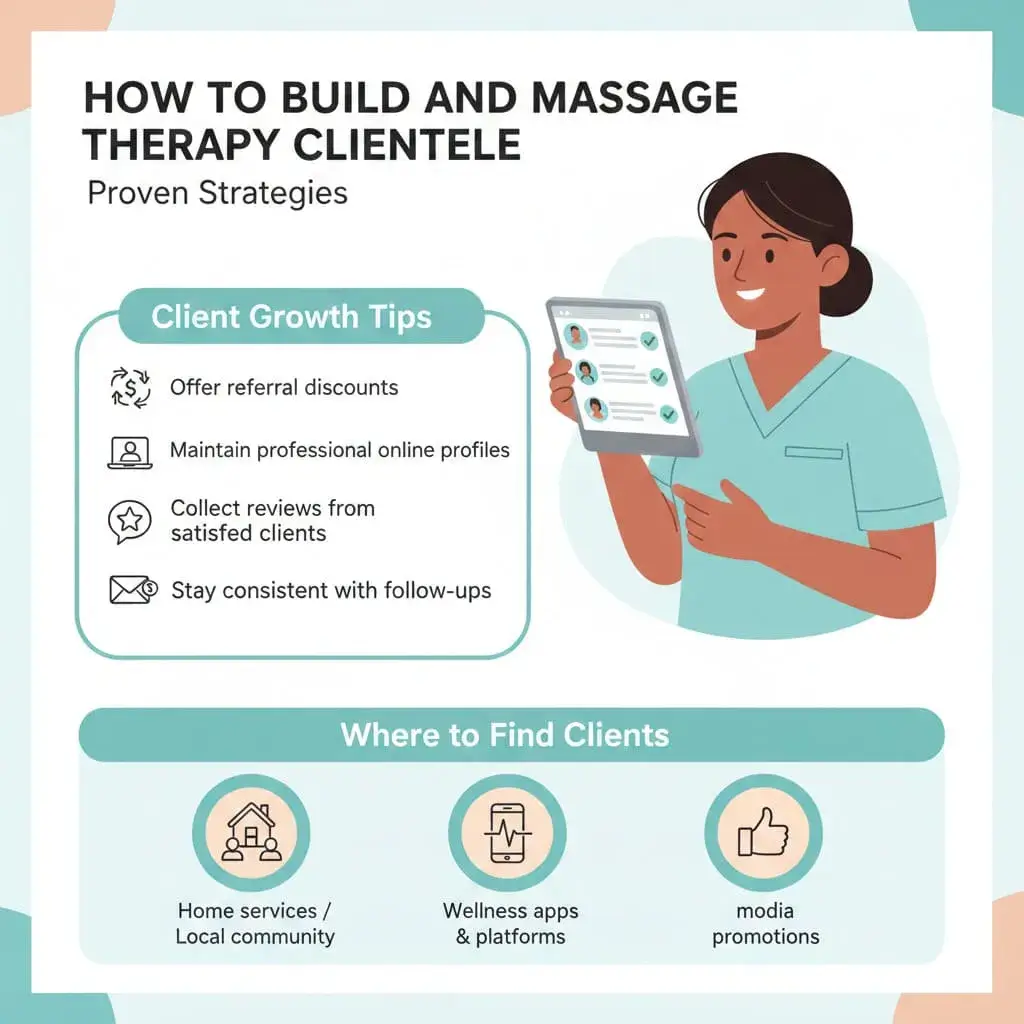
You have the certification. You have the skills. But your calendar looks empty, and every day without clients feels like money slipping away. Building a massage therapy clientele is the challenge that separates therapists who thrive from those who quietly return to other careers.
The good news? Client building is a learnable skill, not an innate talent. Therapists who consistently fill their schedules are not necessarily better at massage; they are better at a few specific activities that generate bookings. This guide breaks down exactly what those activities are.
The Client Building Mindset
Before tactics, you need the right perspective. Many therapists approach client building with beliefs that sabotage their efforts:
- "Good work speaks for itself." It does not. People cannot experience your work until they book you.
- "Marketing feels sleazy." Sharing your availability is not manipulation. People need massage and cannot find you if you hide.
- "I should not have to sell myself." Every professional promotes their services. Doctors have clinic signs. Lawyers advertise.
- "If I am good enough, clients will come." Quality matters for retention, not acquisition. First, people need to know you exist.
Phase 1: Your First 10 Clients
The hardest clients to get are the first ones. You have no reviews, no referrals, and no track record. Here is how to break through:
Start With Your Existing Network
Your first clients almost always come from people who already know and trust you. This is not about pressuring friends; it is about informing people who might genuinely want your service.
- Make a list of everyone you know: family, friends, former colleagues, neighbors, gym acquaintances
- Send a personal message (not mass broadcast) to each: "I have started offering professional massage therapy. If you or anyone you know ever needs massage, I would love to help."
- Offer a discounted "friends and family" rate for your first month; this gets you practice, testimonials, and referrals
- Ask satisfied early clients directly: "Do you know anyone else who might benefit from massage?"
Join Professional Platforms
Platforms that connect therapists with clients solve your biggest early challenge: being discovered. While you build independent clientele, platforms provide immediate access to people actively searching for massage.
- Research platforms operating in your city
- Complete profiles thoroughly. Incomplete profiles get fewer bookings
- Get verified credentials displayed prominently
- Respond to inquiries quickly (response time affects visibility on most platforms)
- Accept early bookings even at less convenient times to build reviews
Collect Testimonials Immediately
Every early client is a potential testimonial. These reviews become your most powerful marketing asset for growing your income.
- Ask for feedback immediately after sessions while the experience is fresh
- Make it easy: send a direct link to review, or offer to write based on their verbal feedback for approval
- Request specific details: "What did you like most?" produces better testimonials than "Was it good?"
- Ask permission to use testimonials in your marketing
- Five strong testimonials are worth more than fifty mediocre ones
Phase 2: Growing to 20-30 Regular Clients
Once you have initial clients and testimonials, your growth strategy shifts from cold outreach to systematic referral generation and visibility building.
The Referral System That Works
Referrals are the most reliable source of quality clients. People referred by existing clients arrive pre-trusting you and tend to become long-term customers themselves.
- Ask every satisfied client: "Who else do you know who deals with the same kind of tension you had?"
- Create a simple referral incentive: ₹300-500 credit for both referrer and new client
- Time your ask right: after the session when they are relaxed and grateful, not during booking
- Make referring easy: provide your contact details in a shareable format
- Follow up with referrers: "Thank you for sending Priya. She was wonderful to work with"
| Structure | Pros | Cons | Best For |
|---|---|---|---|
| Discount for referrer only | Simple to manage | New client pays full price | Established practices |
| Discount for new client only | Lowers barrier for new client | Less motivation for referrer | Building initial base |
| Discount for both | Maximum motivation | Reduces revenue initially | Aggressive growth phase |
| Free session after X referrals | Encourages multiple referrals | Delayed reward | Loyal client base |
Build Local Visibility
People search for massage therapists in their area. Being visible locally, both online and offline, puts you in front of potential clients when they are actively looking.
- Create a Google Business Profile (free) with your service area, photos, and contact details
- Join local Facebook groups and community forums; be helpful, not promotional
- Partner with complementary businesses: gyms, yoga studios, physiotherapy clinics
- Attend local wellness events and networking meetups
- Consider business cards at local shops (with permission)
Social Media That Actually Converts
Social media can generate clients, but most therapists use it ineffectively. Posting stock images with generic wellness quotes does nothing. Here is what works:
- Share educational content: "Why your neck hurts after working from home" with practical tips
- Show your setup and professionalism (without showing client faces or bodies)
- Post client testimonials (with permission) as image quotes
- Share behind-the-scenes: your oils, your portable table, your preparation routine
- Be consistent: one quality post weekly beats daily low-effort content
- Include location in posts: "Serving South Mumbai" so local searches find you
Phase 3: Building a Sustainable Full Practice
With 20-30 clients, you have proof of concept. Now the focus shifts to optimization, retention, and sustainable income growth, building the practice you actually want, not just any practice.
Client Retention: The Math That Matters
Acquiring a new client costs 5-7 times more (in time and effort) than retaining an existing one. A full practice is built on repeat clients, not constantly finding new ones.
Retention Strategies That Work
- Remember client preferences: pressure level, focus areas, conversation vs. silence preference
- Take notes after each session: what you worked on, what they mentioned, any relevant personal details
- Follow up 2-3 days after sessions: "How is your shoulder feeling after our work on it?"
- Book the next appointment before they leave: "Same time next week?" creates routine
- Offer package discounts for committed bookings: 10% off 5-session packages
- Acknowledge milestones: "This is our 10th session together. Thank you for trusting me with your wellness"
Raise Your Rates Strategically
As demand increases, so should your rates and pricing strategy. Underpricing attracts price-sensitive clients who are first to leave when cheaper options appear.
- Increase rates annually (5-10%) to match inflation and growing expertise
- Give existing clients advance notice: "Rates will increase next month. Book at current rates until then"
- Do not apologize for rate increases: "My rates reflect my experience and the quality of service I provide"
- Consider premium offerings: longer sessions, specialized services at higher rates
- When fully booked consistently, you are underpriced. Raise rates until demand balances
Build Your Ideal Client Base
Not all clients are equal. Some energize you, pay well, and refer others. Some drain you, haggle constantly, and never return. A mature practice actively cultivates the former.
- Identify your best clients: Who do you enjoy working with? Who pays promptly? Who refers others?
- Ask for referrals specifically from ideal clients; they tend to refer similar people
- Gradually phase out difficult clients by becoming "unavailable" at their preferred times
- Market toward your ideal demographic: executives, athletes, new mothers, whoever you serve best
- Specialize if a pattern emerges: "massage for tech professionals" or "prenatal massage specialist"
Common Client-Building Mistakes
Avoid these errors that keep therapists stuck at low client counts:
1. Waiting for Clients to Find You
Passive marketing (having a profile, waiting for calls) produces passive results. Active outreach, asking for referrals, following up with past clients, networking, produces clients.
2. Competing on Price
Racing to be the cheapest attracts clients who will leave for the next cheaper option. Compete on quality, convenience, specialization, or service, anything but price.
3. Neglecting Existing Clients
Focusing only on new clients while ignoring current ones creates a leaky bucket. You constantly find new clients to replace those drifting away. Fix retention first.
4. Inconsistent Follow-Up
Clients who loved their session forget to rebook. Life gets busy. A simple follow-up message brings them back. No follow-up means waiting and hoping.
5. No Booking Systems
Making clients call or message to book creates friction. Simple online booking, even just clear availability and a WhatsApp link, removes barriers. Every barrier costs you bookings.
Client Acquisition Channels Compared
| Channel | Cost | Time to Results | Client Quality | Best For |
|---|---|---|---|---|
| Personal Network | Free | Immediate | High (pre-trust) | Starting out |
| Referrals | Low (incentives) | 1-3 months to build | Very high | Growing practices |
| Platform Listings | Subscription/commission | Immediate | Mixed | Steady flow needs |
| Social Media | Free (time cost) | 3-6 months | Variable | Brand building |
| Google Business | Free | 1-3 months | High (search intent) | Local visibility |
| Paid Advertising | ₹5K-20K/month | Immediate | Variable | Scaling quickly |
The 90-Day Client Building Plan
Here is a practical timeline for building your first sustainable client base:
Days 1-30: Foundation
- ✓Message your entire personal network about your services
- ✓Join 1-2 therapist platforms in your city
- ✓Create Google Business Profile with complete information
- ✓Set up simple booking system (even WhatsApp with clear hours)
- ✓Prepare testimonial request template
- ✓Target: 5-10 paying clients
Days 31-60: Momentum
- ✓Collect testimonials from every client
- ✓Implement referral incentive program
- ✓Start weekly social media posting
- ✓Follow up with all past clients who have not rebooked
- ✓Partner with one local complementary business
- ✓Target: 15-20 clients, 30% repeat bookings
Days 61-90: Optimization
- ✓Analyze which channels produce best clients
- ✓Double down on what works, drop what does not
- ✓Raise rates if consistently booked above 70%
- ✓Identify and cultivate ideal client characteristics
- ✓Systematize follow-up and rebooking processes
- ✓Target: 25-30 clients, 50% repeat rate, clear growth trajectory
Frequently Asked Questions
How long does it take to build a full client base?
Should I offer discounts to get started?
How much should I spend on marketing?
What if I hate marketing and sales?
How do I handle slow periods?
Should I specialize or offer everything?
Taking Action
Building a massage therapy clientele is not complicated, but it requires consistent action. The therapists who succeed are not necessarily the most skilled; they are the ones who show up week after week, ask for referrals, follow up with past clients, and continuously improve their visibility.
Pick one strategy from this guide and implement it this week. Then add another next week. In 90 days, you will have a client base that seemed impossible when you started. The only failure is not starting.
Related Articles
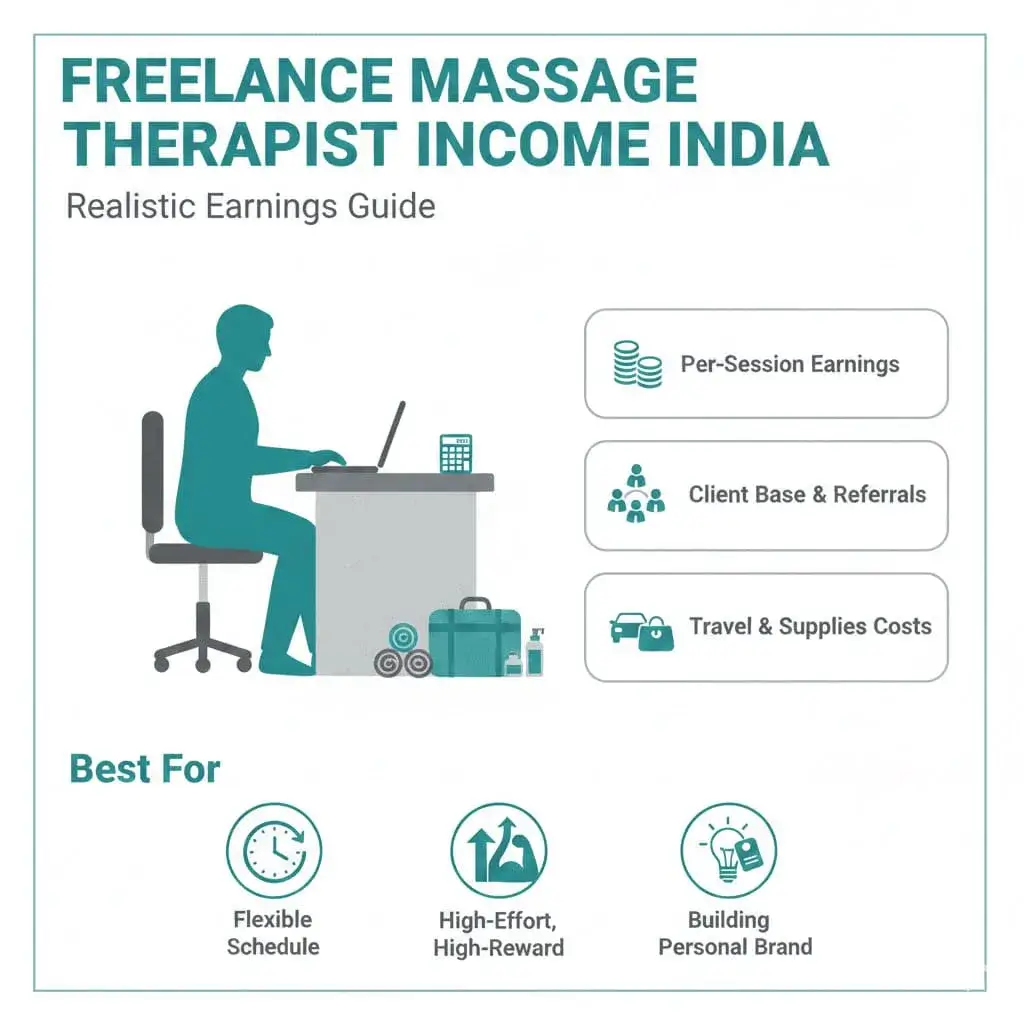
Freelance Massage Therapist Income India 2026: How Much Can You Earn?
Freelance massage therapist income in India: realistic earnings from ₹30K to ₹2L+ monthly, key factors affecting pay, and proven strategies to earn more.
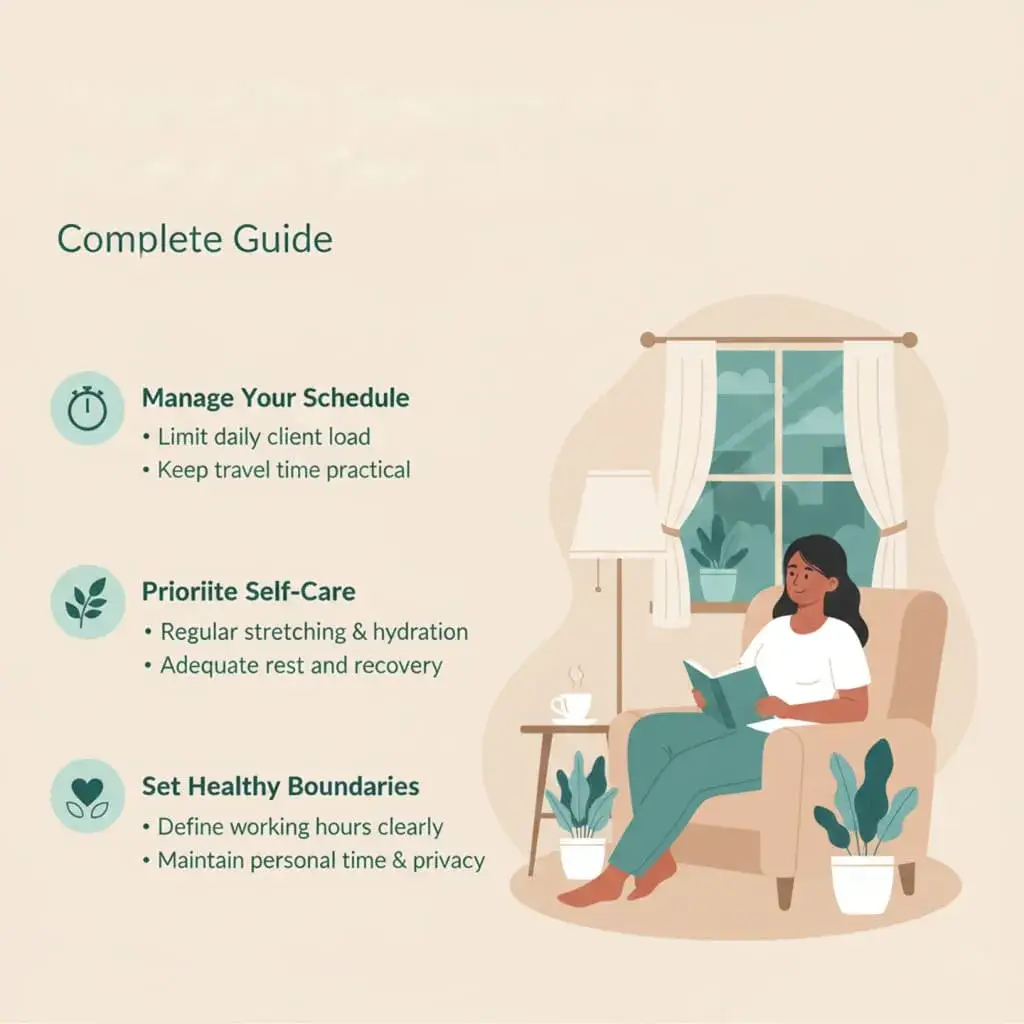
Work-Life Balance as a Massage Therapist
How home service massage therapists achieve work-life balance. Scheduling strategies, boundary setting, self-care tips, and burnout prevention guide.
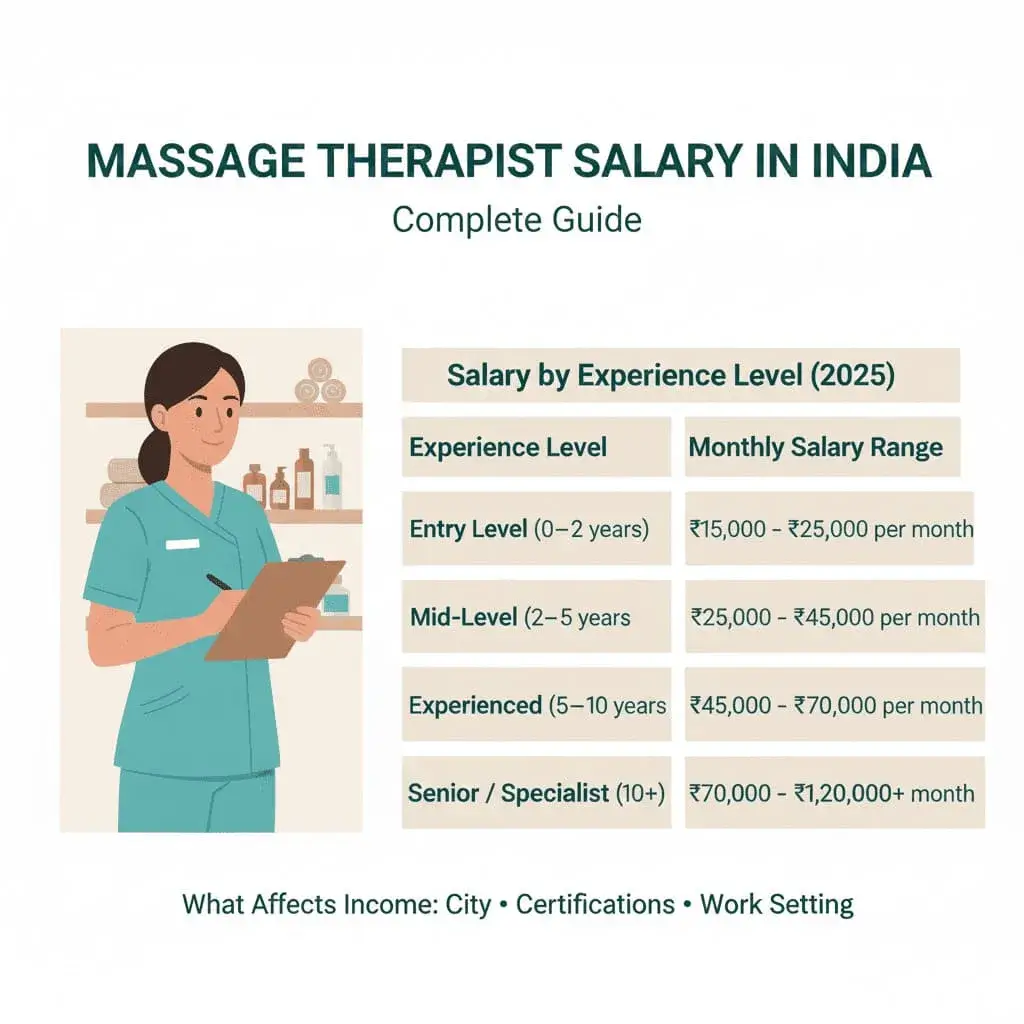
Massage Therapist Salary in India 2026: Complete Guide
Massage therapist salary guide for India 2026. Compare earnings by city, experience level, and work setting. Tips to maximize your earning potential.
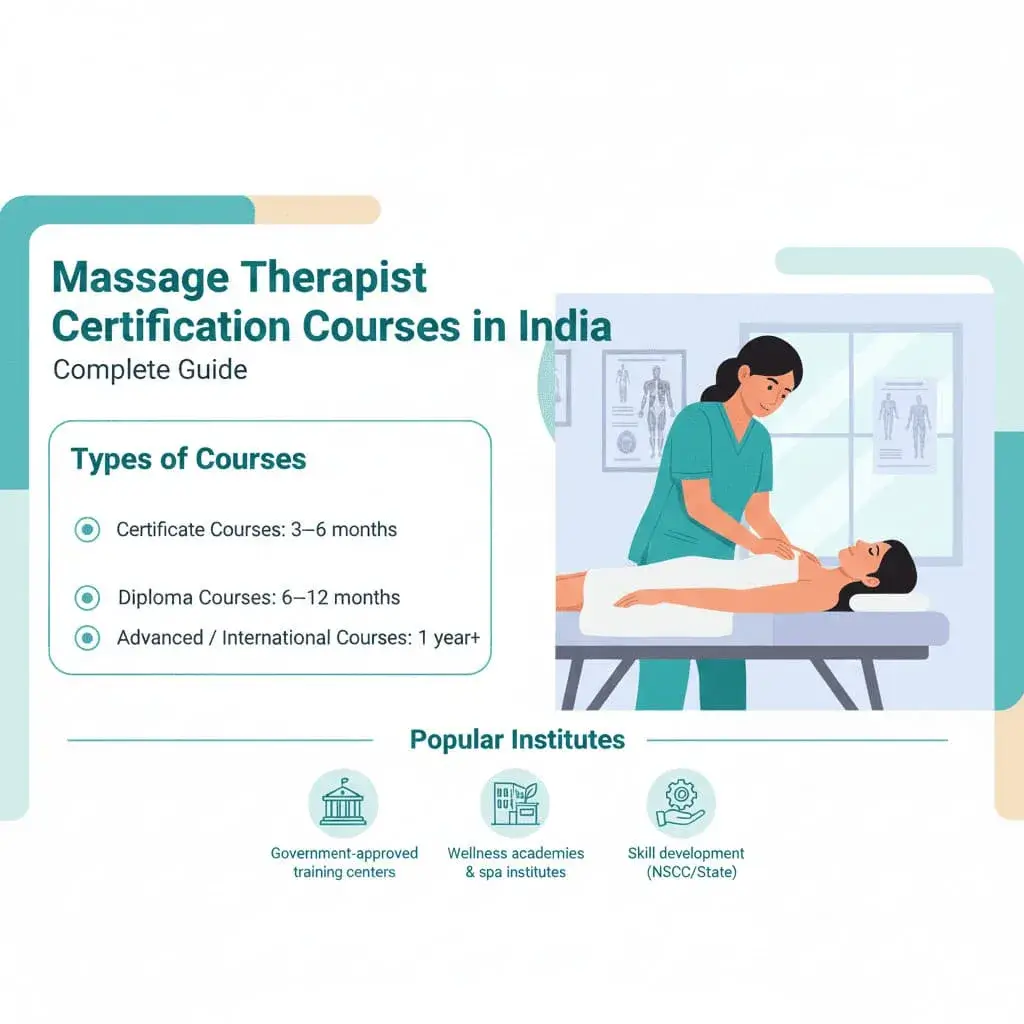
Massage Therapist Certification in India 2026: Which One to Choose?
Compare top massage therapy certifications in India including CIBTAC, CIDESCO, and VTCT. Costs, duration, recognition, and career impact explained.
Massage Services in Other Cities

Professional Home Massage in Mumbai
Professional home massage in Mumbai. {{therapist_count}}+ verified therapists, same-day booking, 40+ areas covered. Swedish, deep tissue & Thai massage. Book now.

Professional Home Massage in Bangalore
Professional home massage in Bangalore. {{therapist_count}}+ verified therapists, same-day booking across 50+ areas. Koramangala, Whitefield, HSR Layout. Book now.

Professional Home Massage in Delhi NCR
Professional home massage in Delhi NCR. {{therapist_count}}+ verified therapists offering same-day booking across 50+ areas including Gurgaon, Noida, and CP. Book now.

Professional Home Massage in Pune
Professional home massage in Pune. {{therapist_count}}+ verified therapists offering same-day booking across 40+ areas. Koregaon Park, Baner, Hinjewadi. Book now.