
Types of Body Massage in India: How to Choose
A practical guide to choosing the right massage for your needs
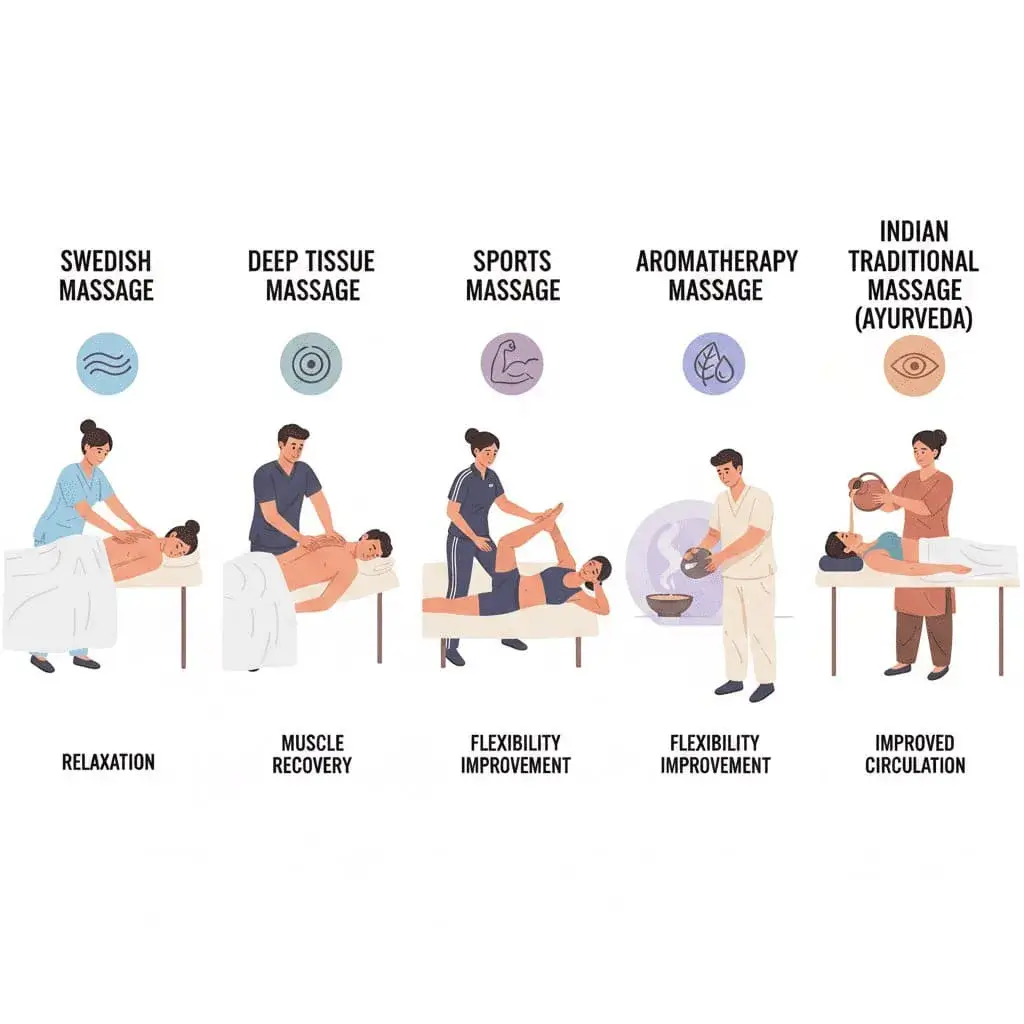
You've decided to book a full body massage. Then you see the menu: Swedish, deep tissue, Thai, sports, aromatherapy... suddenly what seemed simple feels overwhelming. Which one do you actually need?
Here's the thing - each massage type was developed for a specific purpose. Picking randomly might leave you underwhelmed (too light when you needed deep work) or overwhelmed (too intense when you wanted relaxation). The right choice depends on your body, your goals, and honestly, your comfort level with being worked on.
This guide compares the 8 massage services you can book at home, explains what massage actually does to your body, and helps you match your needs to the right one. Each service has its own detailed guide - this page is for choosing.
The 8 Massage Services You Can Book at Home
Every service on our menu has a set duration, so you always know exactly what you are booking:
| Service | Duration | Best For | Pressure |
|---|---|---|---|
| Swedish | 60 minutes | Relaxation, first-timers | Light to Medium |
| Aromatherapy | 60 minutes | Stress relief, mood, sleep | Light to Medium |
| Sports Massage | 75 minutes | Workout recovery, active bodies | Medium to Firm |
| Ayurvedic Oil (Abhyanga) | 75 minutes | Traditional warm-oil wellness | Light to Medium |
| Hot Stone | 75 minutes | Deep relaxation through heat | Light to Medium |
| Deep Tissue | 90 minutes | Chronic tension, knots, muscle pain | Medium to Firm |
| Thai Massage | 90 minutes | Flexibility, assisted stretching | Medium |
| Couples | 90 minutes | A shared session for two | As preferred |
Swedish starts from ₹1,999 in metro cities, and the 90-minute services cost less per minute than the 60-minute ones. Exact prices for your city are on the live price list - there is no travel charge, and no taxes are added on top.
Swedish Massage (60 min): The Foundation
Swedish massage is what most people picture when they think "massage" - long, flowing oil strokes, gentle kneading, light to medium pressure. It relaxes the whole body without ever feeling intense, which makes it the best starting point for stress relief and better sleep.
- First-time massage clients who want a gentle introduction
- Anyone looking for pure relaxation and stress relief
- People who find firm pressure uncomfortable
Aromatherapy Massage (60 min): Scent + Touch
Aromatherapy combines Swedish-style strokes with essential oils chosen for their effect on mood - lavender to calm, eucalyptus to clear the head, and so on. The technique feels similar to Swedish; the difference is the sensory experience of scent filling the room while the oils work on your skin.
- Anyone who wants massage plus a mood and sensory component
- People dealing with stress, anxiety, or sleep issues
- Anyone wanting a more "spa-like" experience at home - compare home massage vs spa
Tell the therapist beforehand if you have sensitive skin, allergies, or are pregnant - certain oils can be swapped or skipped. The aromatherapy massage guide explains the common oils and what each one is used for.
Sports Massage (75 min): For Active Bodies
You don't have to be an athlete to benefit from sports massage - anyone who exercises regularly can. It blends firmer strokes, stretches, and targeted work on the muscle groups your activity loads most: legs for runners, shoulders and arms for cricket players, everything for gym-goers.
- Regular gym-goers dealing with workout soreness
- Runners, cyclists, swimmers, and people training for events
- People with repetitive strain from physical jobs - see how often to book
Timing matters: book 2-3 days before a big event, and wait a day or two after very intense exercise before deep work. The sports massage guide covers pre-event, post-event, and maintenance sessions in detail.
Ayurvedic Oil Massage / Abhyanga (75 min): Traditional Warm Oil
Abhyanga is India's traditional full body massage with generous warm herbal oil. The strokes follow set patterns - long on the limbs, circular on the joints - and the oil itself is part of the treatment, meant to absorb and nourish rather than just help hands glide. Pressure stays gentle to moderate.
- Those drawn to traditional Indian wellness practices
- Anyone seeking a calming, nurturing experience for stress relief
- People with dry skin who benefit from warm oil
Plan your day so you can let the oil absorb afterward instead of showering immediately. The Ayurvedic massage guide covers the oils, the stroke patterns, and how to prepare.
Hot Stone Massage (75 min): Deep Warmth
Smooth heated stones are placed on the body and used as massage tools. The heat does much of the work, so muscles release deeply while the pressure stays moderate - ideal if you want deep relief but can't handle firm massage. The session runs 75 minutes because stone placement and heat need setup time.
- People who love warmth and find it comforting
- Those who want deep relaxation without heavy pressure
- People whose muscle tension responds well to heat
Heat is not suitable for everyone - pregnancy, heart conditions, diabetes, and some other conditions need a doctor's go-ahead first. The hot stone massage guide covers the full session flow and who should avoid it.
Deep Tissue Massage (90 min): For Serious Tension
Deep tissue targets the deeper muscle layers and the connective tissue around them, using slow, deliberate strokes with real pressure - often forearms and elbows, not just hands. It's not "harder Swedish"; it's structural work on chronic tension. Focused pressure on painful knots (trigger points) is part of it, which is why a stubborn shoulder knot that sends pain to your head is a deep tissue job.
- People with chronic tension that lighter massage doesn't resolve - especially the lower back
- Desk workers with postural strain from long hours sitting
- People who find Swedish massage "too light" to feel effective
The 90-minute duration allows proper warm-up before the deep work, and mild soreness for a day or two afterward is normal. Read the deep tissue guide for what the pressure should feel like, or compare Swedish vs deep tissue if you're between the two.
Thai Massage (90 min): Yoga Without the Work
Thai massage is unlike the oil-based styles. You stay in comfortable clothes while the therapist moves you through yoga-like stretches and presses along the muscles - no oil, no lying still. It feels active and leaves you looser and more energized rather than sleepy.
- People who feel stiff and want improved flexibility
- Those who prefer staying clothed during massage
- Anyone who finds lying still for an hour difficult
Because of the stretching and joint movement, tell the therapist about any joint problems, disc issues, or recent surgery first - see home massage safety. The Thai massage guide explains the stretches and how a 90-minute session flows.
Couples Massage (90 min): A Session for Two
Couples massage is a 90-minute session for two people in the same room, each with their own therapist. Book it with a partner, a parent, or a friend - sharing the experience makes it easier for a hesitant first-timer to relax, and it turns massage into time spent together instead of time apart.
- Partners who want a shared relaxation experience at home
- A way to introduce a nervous first-timer alongside someone experienced
- Celebrations - anniversaries, birthdays, or simply a weekend reset
Each person can choose their own pressure and focus areas. The couples massage guide covers how the session is set up at home.
How to Choose: Match Your Needs to the Right Massage
Quick Match: Find Your Massage
Pure Relaxation
Swedish (60 min), Aromatherapy (60 min), Hot Stone (75 min)
Muscle Pain
Deep Tissue (90 min) - includes focused work on painful knots
Flexibility
Thai Massage (90 min) - a full assisted-stretching routine
Athletic Recovery
Sports Massage (75 min) - recovery and injury prevention
If Your Main Goal Is...
- Pure relaxation → Swedish, Aromatherapy, or Hot Stone
- Stress and anxiety relief → Swedish, Aromatherapy, or Ayurvedic
- Chronic muscle pain or specific knots → Deep Tissue
- Better flexibility → Thai Massage
- Workout recovery → Sports Massage
- Traditional warm-oil wellness → Ayurvedic (Abhyanga)
- Warmth and deep relaxation → Hot Stone
- A shared experience → Couples - see how often to schedule
Consider Your Pressure Preference
- Prefer light touch → Swedish, Aromatherapy, Ayurvedic
- Want medium pressure → Hot Stone, Thai, Swedish (adjusted)
- Need firm/deep pressure → Deep Tissue, Sports
Think About the Experience
- Want to zone out completely → Swedish, Hot Stone, Aromatherapy
- Okay with some intensity → Deep Tissue, Sports
- Prefer active participation → Thai Massage
- Prefer traditional approach → Ayurvedic (Abhyanga)
- Want company → Couples
Booking a Home Session
All 8 services are available as home sessions in 121 cities across India, including Mumbai, Bangalore, Delhi, and Pune. Sessions run 10 AM to 7 PM daily, and same-day booking works with 3 hours notice. The therapist brings the table, oils, towels, and music, and setup takes under 10 minutes.
- ✓Trained, identity-verified therapists - how verification works
- ✓Specialization - Most therapists are trained in multiple techniques, so you can get your preferred style from the same professional
- ✓Clear communication - Good therapists ask about your goals and health history - see our etiquette guide
- ✓Hygiene standards - Clean linens and sanitized equipment - review home massage safety
How to Communicate with Your Therapist
Even with the right massage type chosen, communication makes the difference between a good session and a great one. Before starting, state your goal ("I want to relax" vs "I need work on my lower back"), mention any health conditions, and share your pressure preference. During the session, adjustments are normal: "more pressure there", "that spot is tender", "spend more time on my shoulders".
Frequently Asked Questions
Can I combine different massage types in one session?
Which massage is best for back pain?
How often should I get a massage?
Is Thai massage painful?
What if I fall asleep during massage?
Which massage type has the fastest results?
Making Your Choice
The "best" massage type is the one that matches your current needs. Your ideal choice might change - deep tissue during a stressful work project, Thai when you're feeling stiff from travel, Swedish when you just need to unwind. Understanding the options lets you choose intelligently rather than randomly.
If you're still uncertain, remember: Swedish massage is an excellent starting point. It's effective for most people, provides a baseline for future sessions, and gives you a sense of what professional massage feels like. From there, explore the dedicated guide for whichever service your body tells you it needs.
Related Articles
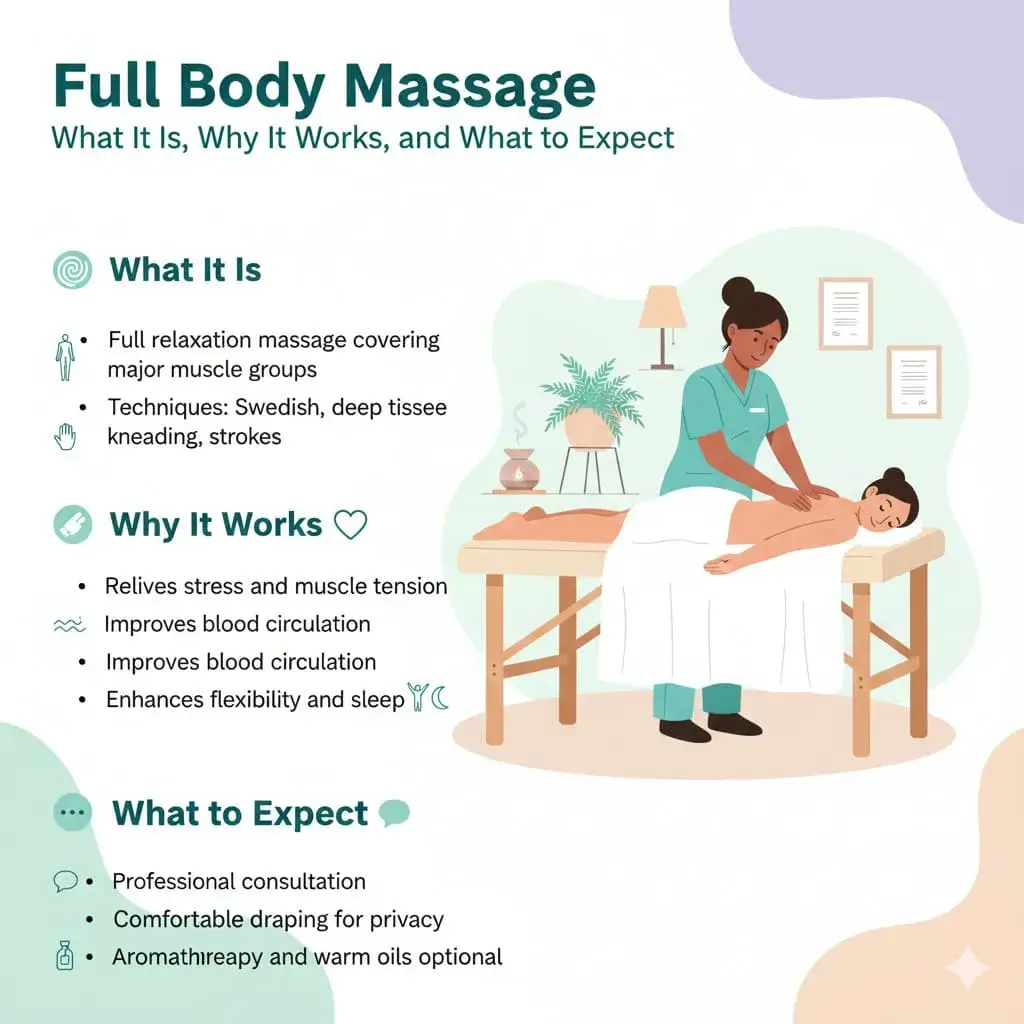
Full Body Massage: What It Is, Why It Works, and What to Expect
What is full body massage? Learn the benefits, best types for your needs, and what to expect. Expert tips from trained therapists for your session.
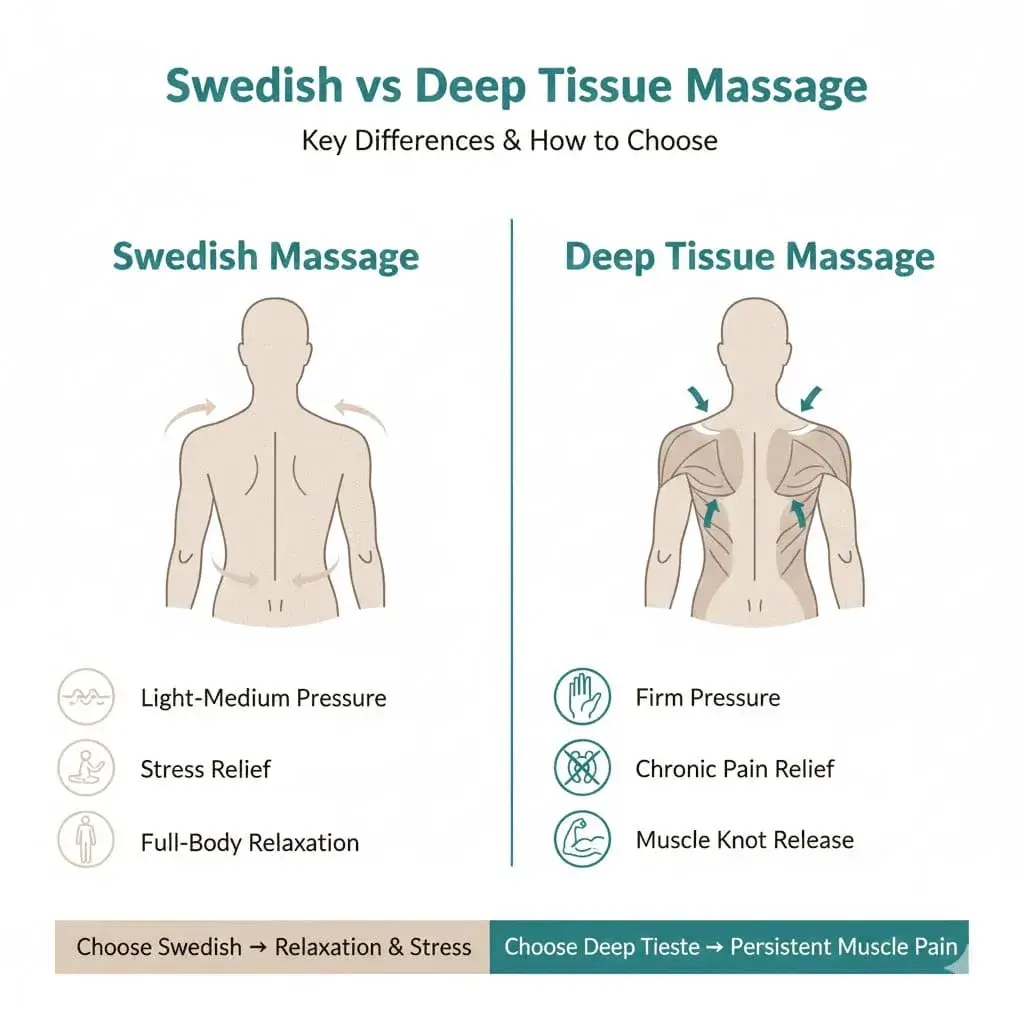
Swedish Massage vs Deep Tissue: Which Is Right for You?
Compare Swedish and deep tissue massage: pressure, techniques, benefits, and who each is best for. Find out which massage type matches your needs.
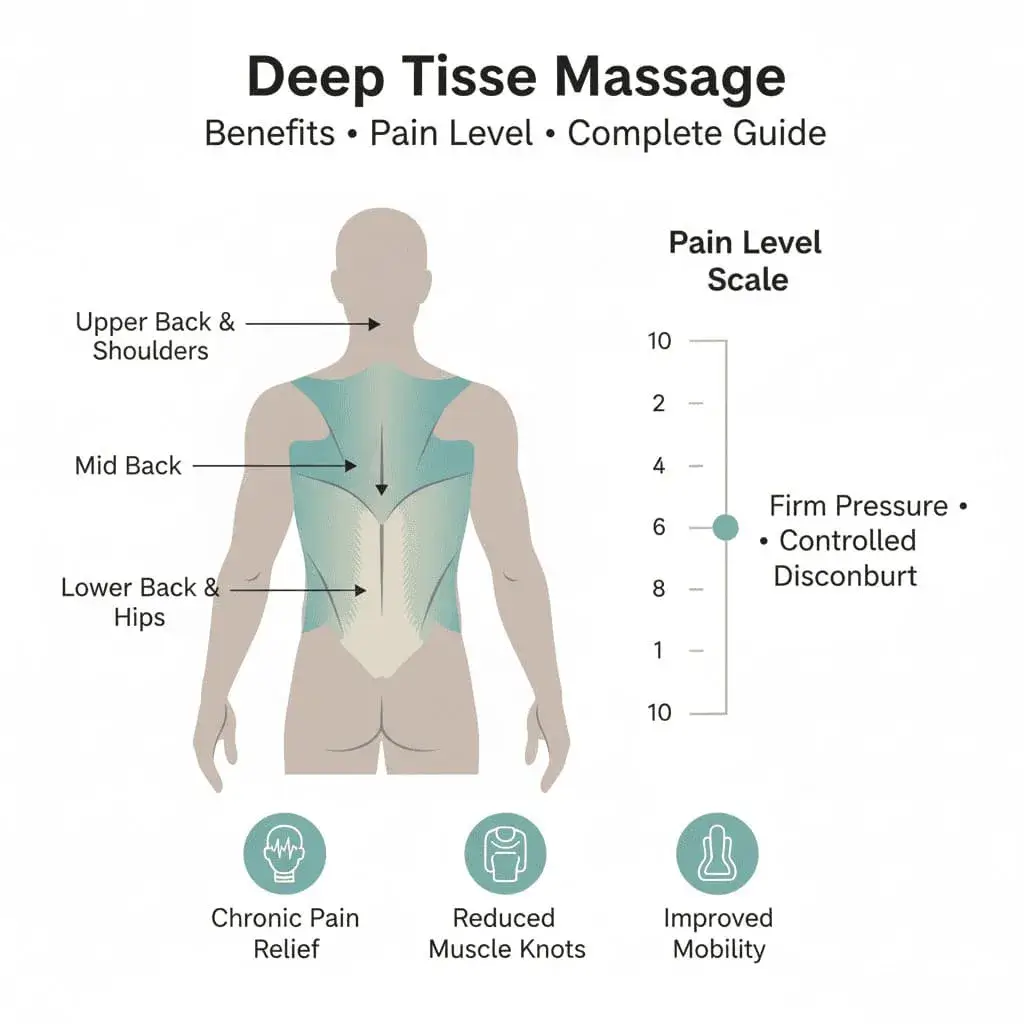
Deep Tissue Massage at Home: Benefits, Price, What to Expect
Deep tissue massage uses slow, firm pressure to release stubborn muscle tension. On our menu it is a 90-minute home session. See benefits, price and prep.
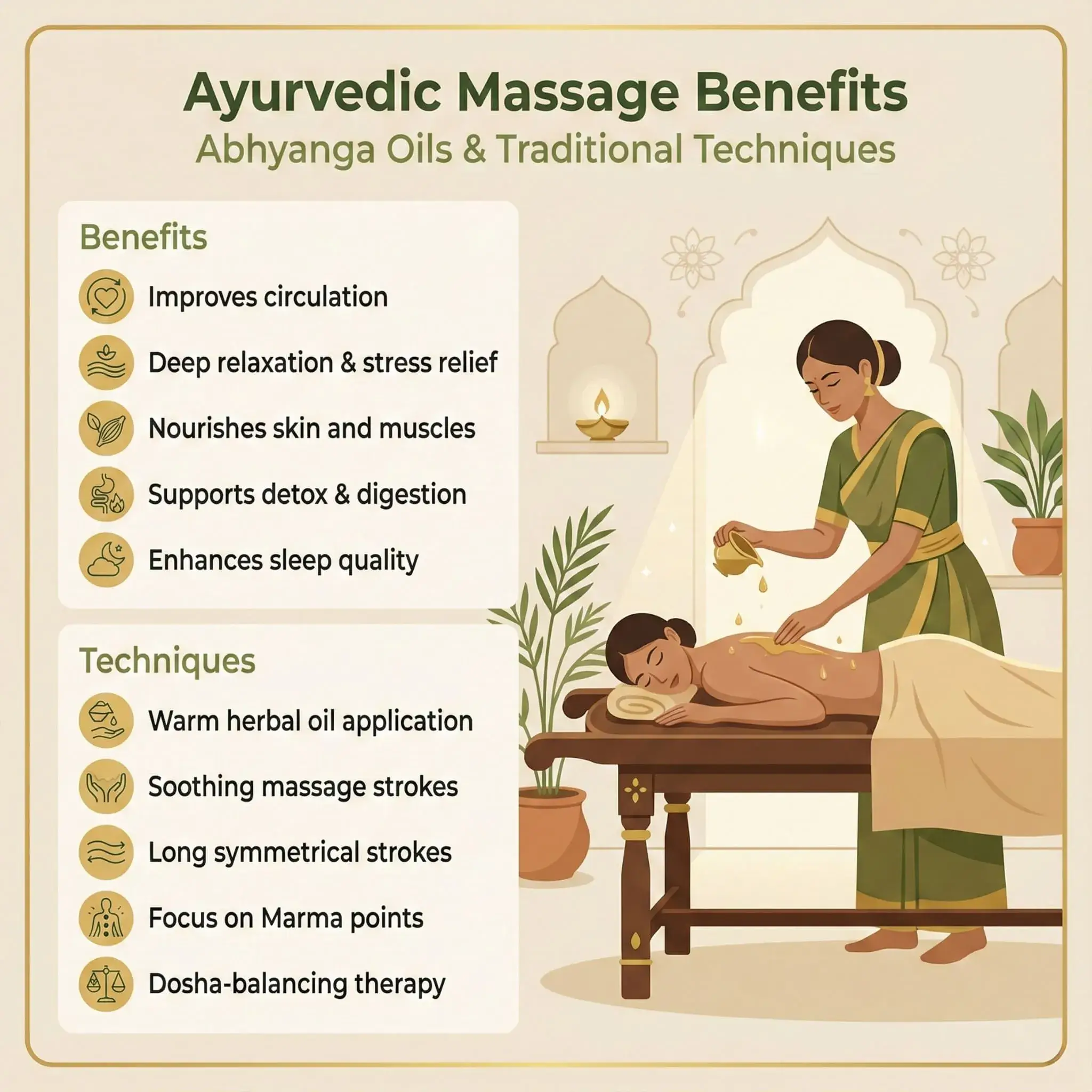
Abhyanga (Ayurvedic Massage) at Home: Benefits and Oils
What an Ayurvedic oil massage actually does, which oils suit Indian seasons, and how a 75-minute abhyanga session works at your home.
Massage Services in Other Cities
Professional Home Massage in Mumbai
Professional home massage in Mumbai. {{therapist_count}}+ verified therapists, same-day booking, 40+ areas covered. Swedish, deep tissue & Thai massage. Book now.
Professional Home Massage in Bangalore
Professional home massage in Bangalore. {{therapist_count}}+ verified therapists, same-day booking across 50+ areas. Koramangala, Whitefield, HSR Layout. Book now.

Professional Home Massage in Delhi NCR
Professional home massage in Delhi NCR. {{therapist_count}}+ verified therapists offering same-day booking across 50+ areas including Gurgaon, Noida, and CP. Book now.
Professional Home Massage in Pune
Professional home massage in Pune. {{therapist_count}}+ verified therapists offering same-day booking across 40+ areas. Koregaon Park, Baner, Hinjewadi. Book now.