
Work-Life Balance as a Massage Therapist
How to build a fulfilling career without sacrificing your personal life
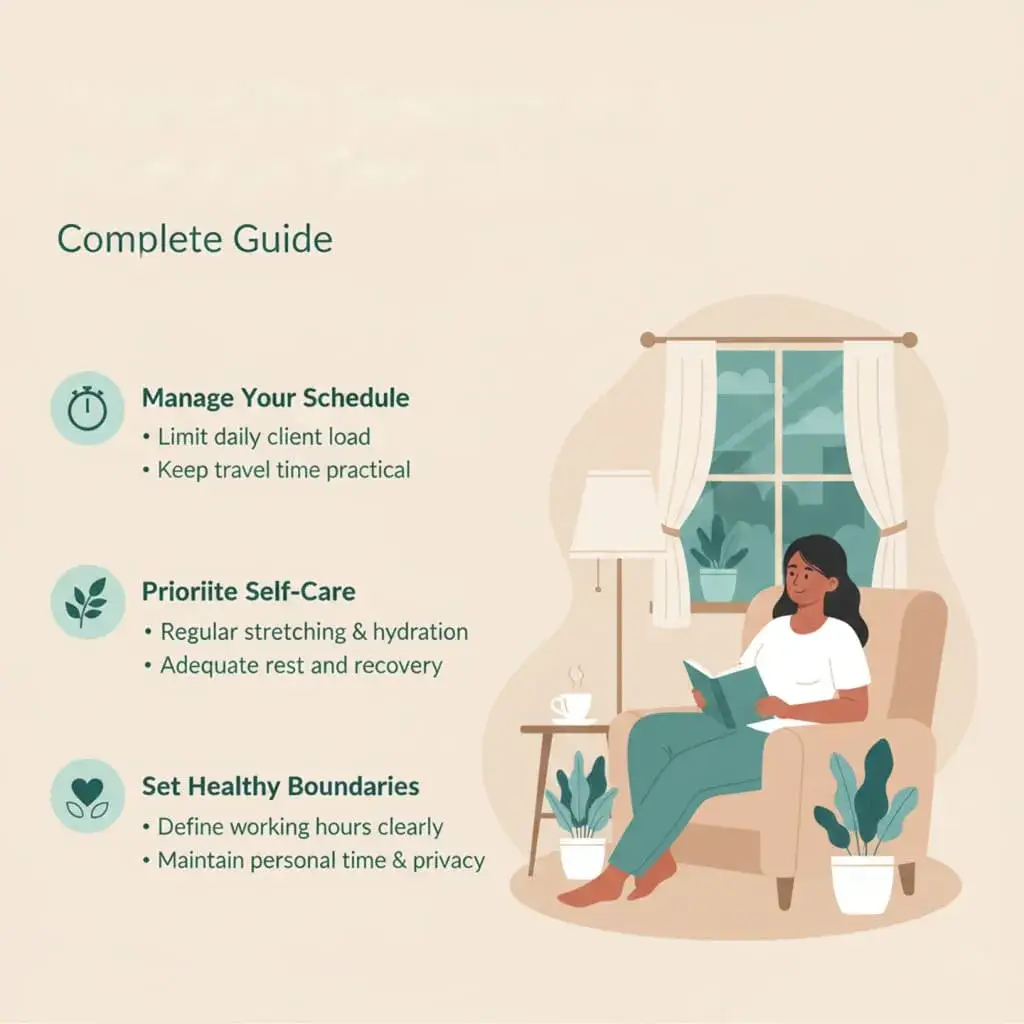
One of the most attractive aspects of home service massage therapy is the promise of flexibility and control over your schedule. Unlike spa employees locked into fixed shifts, home service therapists can theoretically work when they want, take breaks when needed, and design their career around their life rather than the other way around.
But this flexibility comes with its own challenges. Without structure, work can bleed into personal time. Without boundaries, client demands can overwhelm. Without intentional self-care, the physical demands of massage therapy lead to burnout. This guide shares practical strategies from successful home service therapists who have found sustainable balance.
The Work-Life Balance Advantage of Home Service
Before addressing challenges, let us acknowledge why home service massage therapy genuinely offers better work-life balance potential than traditional spa employment:
| Factor | Spa Employment | Home Service |
|---|---|---|
| Schedule Control | Fixed shifts assigned by manager | You choose your working hours |
| Time Off | Request and approval required | Block your calendar anytime |
| Family Events | May conflict with shifts | Schedule around commitments |
| Daily Commute | Same location daily | Start from home, varied routes |
| Downtime Use | Wait at spa between clients | Use gaps productively at home |
| Income Ceiling | Fixed regardless of effort | Work more during busy periods, less when needed |
Common Work-Life Balance Challenges
Understanding the specific challenges helps you prepare solutions before they become problems:
1. Irregular Income and Schedule Anxiety
Without guaranteed hours, many therapists feel pressure to accept every booking, including those at inconvenient times. This leads to working evenings, weekends, and holidays. Exactly the times you wanted to protect.
2. Difficulty "Switching Off"
When your phone can bring a booking request anytime, it is hard to mentally disconnect from work. Many therapists find themselves checking messages during family time, unable to fully relax.
3. Physical Exhaustion
Massage is physically demanding. Without spa-enforced limits on daily sessions, home service therapists sometimes overbook and suffer cumulative physical strain that affects both work and personal life.
4. Isolation
Spa therapists have colleagues for social interaction. Home service therapists work alone, traveling between clients. This isolation can affect mental well-being and motivation.
5. Boundary Blurring
Clients may request last-minute bookings, schedule changes, or extra time. Without clear policies, accommodating these requests erodes your personal boundaries over time.
Scheduling Strategies That Actually Work
Define Your Core Hours
Successful home service therapists establish clear working hours just like any business. This does not mean inflexibility; it means having a default structure that protects your time.
- Choose your ideal working days (e.g., Monday-Friday, or Tuesday-Saturday)
- Set start and end times (e.g., 10 AM - 7 PM)
- Block protected personal time in your calendar first
- Communicate availability clearly to clients and platforms
- Review and adjust quarterly based on what is working
Geographic Clustering
One major time drain for home service therapists is travel between clients. Smart scheduling clusters appointments geographically:
- Designate specific days for specific areas (e.g., South Mumbai on Mondays)
- When booking, suggest times that align with nearby existing appointments
- Build relationships with multiple clients in the same residential complex or area
- Factor realistic travel time. Rushing between appointments creates stress
- Consider traffic patterns when scheduling (avoid peak hours for distant locations)
The 4-5-6 Session Rule
Physical sustainability requires limiting daily sessions. Many experienced therapists follow variations of this rule:
- 4 sessions: Ideal for long-term sustainability and high-quality service
- 5 sessions: Sustainable maximum for most therapists
- 6 sessions: Occasional maximum, not sustainable daily
- Factor session duration, four 90-minute sessions equal six 60-minute sessions in physical demand
- Include 15-20 minute recovery time between sessions minimum
Strategic Day Off Placement
How you structure your days off affects both recovery and personal life quality:
- One weekday off: Handle errands, appointments, admin tasks without weekend crowds
- One weekend day off: Align with family and social schedules
- Consider split days: Half-day off midweek for physical recovery
- Protect your days off fiercely, exceptions become expectations
- Use platform settings to automatically block unavailable days
Setting Boundaries With Clients
Clear boundaries protect your time and actually improve client relationships by setting professional expectations:
Booking Policies
- Minimum notice period: Require 24-48 hours advance booking
- Cancellation policy: Clear consequences for late cancellations (e.g., 50% charge)
- Rescheduling limits: One reschedule per booking, not unlimited changes
- Late arrival policy: Session ends at scheduled time regardless of late start
- Communication hours: Respond to messages only during business hours
During-Session Boundaries
- Start and end on time; do not extend sessions without agreement and payment
- Politely decline requests outside your service scope
- Maintain professional conversation without personal oversharing
- Have a standard response for inappropriate requests or behavior
- Do not feel obligated to accept drinks, meals, or extended social interaction
Communication Boundaries
- Use platform messaging rather than personal phone number when possible
- Set specific hours for responding to booking requests
- Use automated responses outside working hours
- Keep communication focused on bookings; you are not obligated to chat
- It is acceptable to decline clients who consistently disrespect boundaries
Self-Care for the Caregiver
As a massage therapist, you spend your days caring for others. Sustainable practice requires equal attention to your own well-being:
Physical Self-Care
- Regular massage: Monthly sessions for yourself are a professional necessity, not luxury
- Stretching routine: 10-15 minutes daily, focusing on hands, wrists, shoulders, lower back
- Strengthening exercises: Core and shoulder stability prevent injury
- Proper body mechanics: Review and correct your technique regularly (learned during certification)
- Quality sleep: 7-8 hours minimum; your body repairs during sleep
- Hydration: Drink water throughout the day, not just between sessions
Mental and Emotional Self-Care
- Energetic clearing: Whatever practice works for you between clients (breathing, visualization, physical shake-off)
- Peer connection: Regular contact with other therapists for support and perspective
- Non-work activities: Hobbies and interests completely unrelated to massage
- Digital detox: Periods without phone access, especially on days off
- Professional support: Therapy or counseling if absorbing client stress affects you
Financial Self-Care
- Emergency fund: 3-6 months expenses for peace of mind during slow periods
- Insurance coverage: Health insurance for yourself, liability insurance for practice
- Retirement planning: Set aside percentage of income for future
- Rate reviews: Increase rates annually to match inflation and growing expertise
- Tax provisions: Save for tax payments to avoid year-end stress
Managing Family and Personal Life
With Children
Many therapists choose home service specifically for family flexibility. Making it work requires planning:
- Schedule around school hours. Book sessions 9:30 AM to 2:30 PM while children are in school
- Have reliable backup childcare for occasional evening or weekend bookings
- Batch your sessions to maximize work time efficiency
- Involve older children in simple business tasks (folding linens, organizing supplies)
- Be present when present. When with family, do not check work messages
With Partners
- Communicate your schedule clearly and in advance
- Protect date nights or quality time as strictly as client appointments
- Discuss financial goals together so both understand work requirements
- Share the mental load of household management equitably
- Support each other's individual interests and friendships
Personal Time
- Schedule personal activities in your calendar as non-negotiable
- Maintain friendships outside of work. Isolation is a real risk
- Pursue at least one hobby completely unrelated to wellness or bodywork
- Take actual vacations; complete breaks from work, not just lighter schedules
- Protect morning or evening rituals that ground you
Preventing and Recovering from Burnout
Burnout is a significant risk in massage therapy due to physical demands and emotional labor. Prevention is far easier than recovery:
Early Warning Signs
- Dreading sessions you used to enjoy
- Physical pain that does not resolve with rest
- Feeling resentful toward clients
- Difficulty being fully present during sessions
- Increased irritability at home
- Sleep problems or chronic fatigue
- Neglecting personal hygiene or self-care
- Fantasizing about quitting despite loving the work
Prevention Strategies
- Hard limits on weekly sessions: Apply the 4-5 session daily rule; set a maximum and do not exceed it
- Variety in services: Alternate between intensive and lighter modalities
- Regular time off: Minimum one day off weekly, vacation time quarterly
- Professional development: Learn new specializations to reignite passion
- Income diversification: Multiple revenue streams reduce pressure
- Community connection: Regular interaction with other therapists
If Burnout Has Already Started
- Reduce session load immediately to sustainable levels, even if income decreases temporarily
- Take at least one week completely off if possible
- See a healthcare provider for any physical symptoms
- Consider talking to a counselor or therapist
- Reconnect with why you started. What drew you to massage therapy?
- Evaluate whether specific clients or situations are disproportionately draining
- Make concrete changes before returning to full schedule, pricing adjustments may help
Building Sustainable Success: Real Examples
The Parent-Focused Schedule
A therapist with school-age children works 9:30 AM to 2:30 PM Monday through Friday, scheduling 3-4 sessions daily. She earns less than full-time colleagues but is present for school drop-off, pickup, homework, and activities. She takes on occasional evening sessions only for premium rates when her partner is available.
The Compressed Week
A therapist works intensively Thursday through Sunday (4-5 sessions daily following the session sustainability rule), taking Monday through Wednesday completely off. This schedule aligns with higher demand on weekends and provides extended recovery time. Three full days off weekly allows for personal projects, relationships, and genuine rest.
The Steady-State Approach
A therapist prioritizes consistency: exactly 4 sessions daily, exactly 5 days weekly, never more, rarely less. This predictable rhythm makes financial planning easy, prevents overwork, and allows steady income without feast-or-famine cycles. He declines requests outside his standard hours unless genuinely exceptional.
Frequently Asked Questions
How many sessions per day is sustainable long-term?
How do I say no to clients who want inconvenient times?
Is it okay to take a vacation without being available to clients?
How do I handle the isolation of working alone?
What if I cannot afford to turn down bookings?
How do I separate work and personal life when using personal phone?
Creating Your Sustainable Practice
Work-life balance is not something you achieve once and maintain automatically. It requires ongoing attention, adjustment, and sometimes difficult choices. The flexibility of home service massage therapy makes balance possible. But you must actively create and protect it.
Start with your non-negotiables: what personal commitments will you protect regardless of booking requests? Build your schedule around these anchors. Set clear policies and communicate them professionally. Invest in your own well-being as seriously as you invest in your clients'. And remember that a sustainable career serving clients for decades is better than an intense few years followed by burnout.
Related Articles
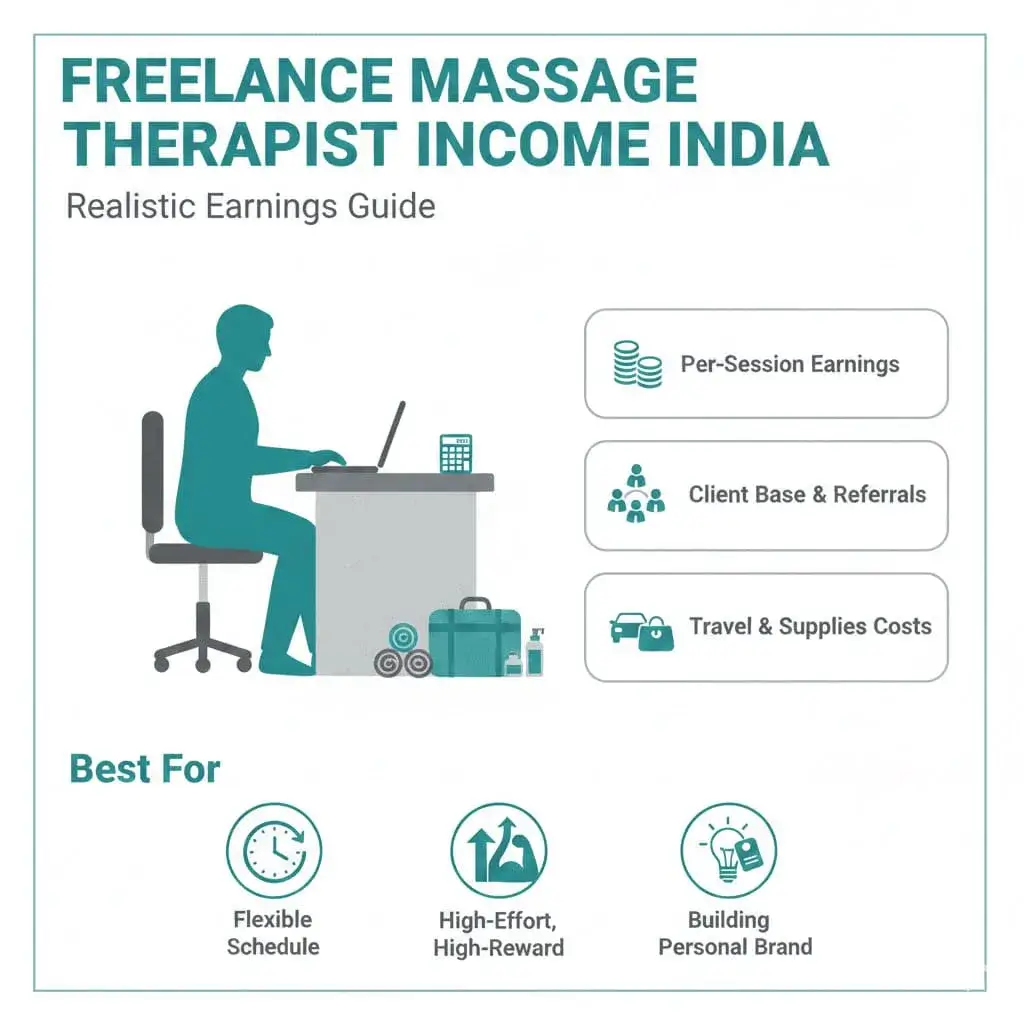
Freelance Massage Therapist Income India 2026: How Much Can You Earn?
Freelance massage therapist income in India: realistic earnings from ₹30K to ₹2L+ monthly, key factors affecting pay, and proven strategies to earn more.
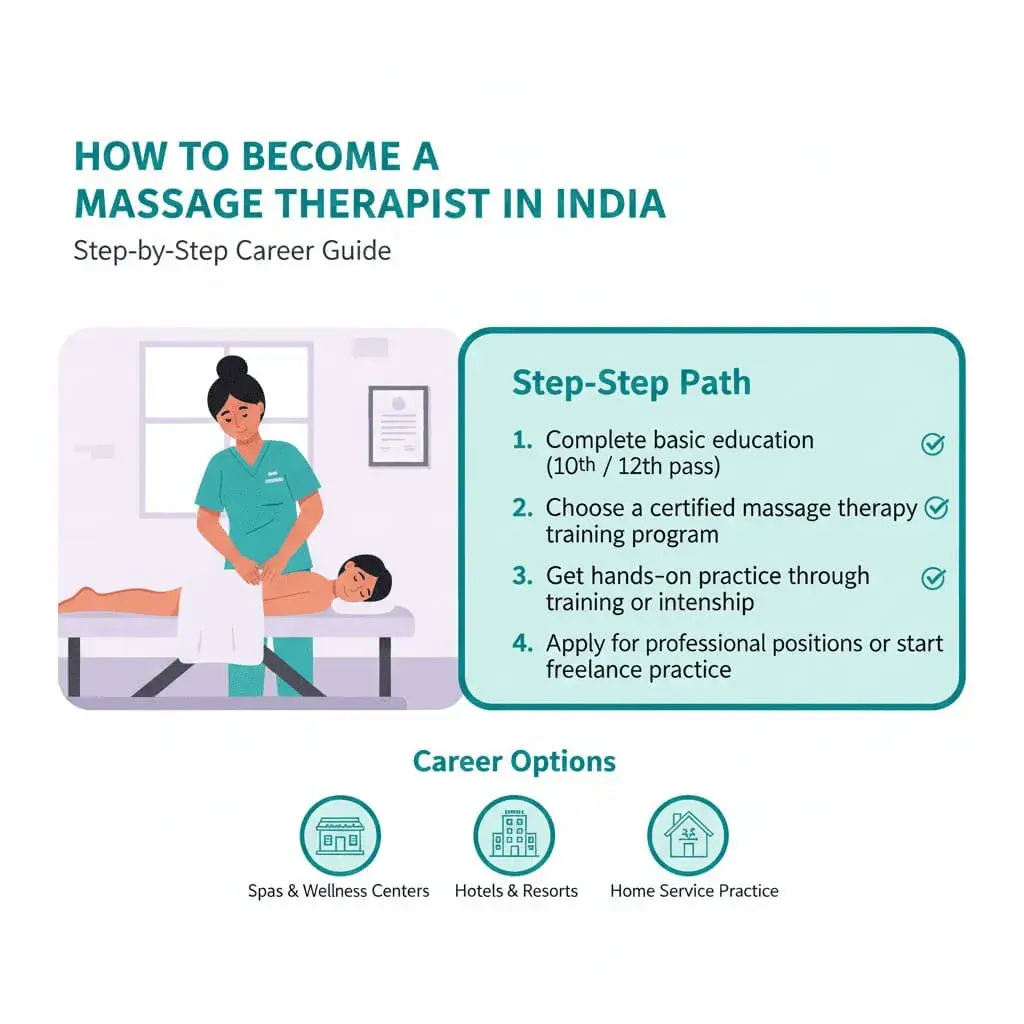
How to Become a Massage Therapist in India 2026: Career Guide
How to become a massage therapist in India. Training programs, certifications, costs, job opportunities, and a step-by-step career pathway explained.
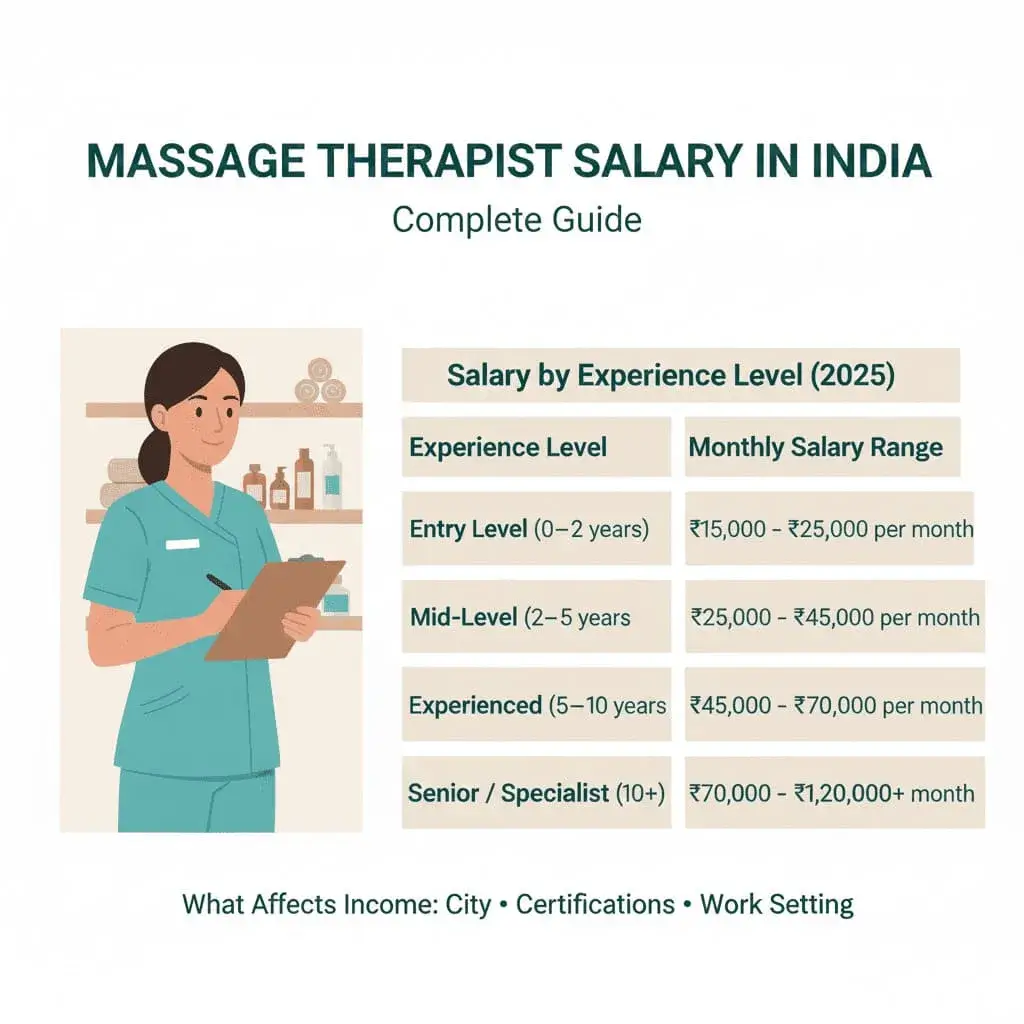
Massage Therapist Salary in India 2026: Complete Guide
Massage therapist salary guide for India 2026. Compare earnings by city, experience level, and work setting. Tips to maximize your earning potential.

How to Build Your Massage Therapy Clientele: Proven Strategies
Learn practical strategies to build a thriving massage therapy client base. From first clients to a full schedule, discover what works for therapists.
Massage Services in Other Cities

Professional Home Massage in Mumbai
Professional home massage in Mumbai. {{therapist_count}}+ verified therapists, same-day booking, 40+ areas covered. Swedish, deep tissue & Thai massage. Book now.

Professional Home Massage in Bangalore
Professional home massage in Bangalore. {{therapist_count}}+ verified therapists, same-day booking across 50+ areas. Koramangala, Whitefield, HSR Layout. Book now.

Professional Home Massage in Delhi NCR
Professional home massage in Delhi NCR. {{therapist_count}}+ verified therapists offering same-day booking across 50+ areas including Gurgaon, Noida, and CP. Book now.

Professional Home Massage in Chennai
Professional home massage in Chennai. {{therapist_count}}+ verified therapists, same-day booking, 40+ areas covered. Swedish, deep tissue & Thai massage. Book now.