
Freelance Massage Therapist Income India 2026: How Much Can You Earn?
Realistic income expectations and strategies for independent massage professionals
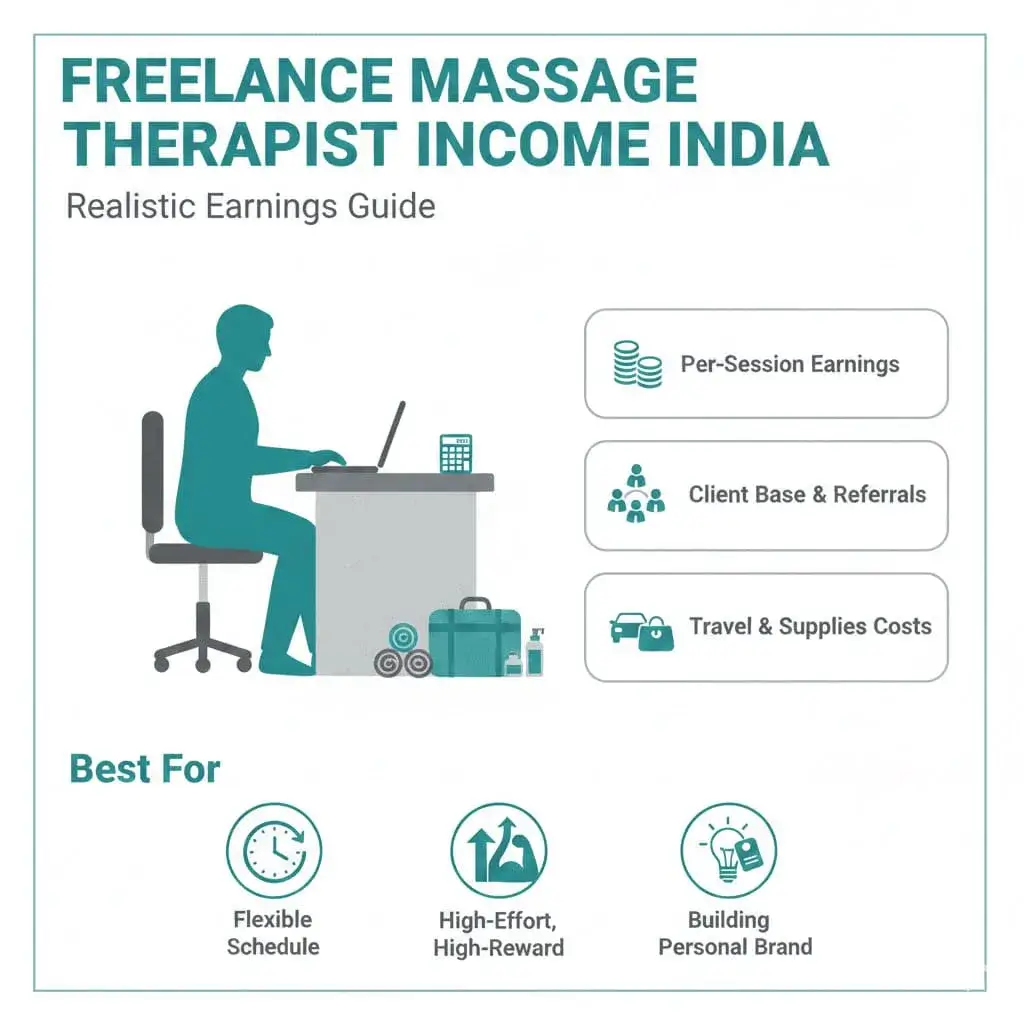
The question every aspiring massage therapist asks: "How much can I actually earn working freelance?" Unlike salaried positions with fixed pay, freelance massage therapy offers income potential that ranges dramatically: from modest supplementary earnings to substantial six-figure annual incomes. The difference lies not just in skill, but in business strategy, client positioning, and market choices.
This guide provides transparent, realistic income expectations for freelance massage therapists in India, based on actual market data and therapist experiences across different cities and service models.
Freelance vs. Employment: The Income Reality
Before diving into numbers, understand the fundamental difference between employed and freelance income structures. Employed therapists receive fixed salaries regardless of client volume, while freelancers earn based on sessions completed. With both higher ceilings and lower floors. Home service massage offers unique earning dynamics worth understanding.
| Factor | Employed Therapist | Freelance Therapist |
|---|---|---|
| Income Type | Fixed monthly salary | Variable per-session earnings |
| Earning Ceiling | Limited by salary bands | Unlimited potential |
| Income Stability | Consistent monthly | Fluctuates with bookings |
| Expenses Covered | Equipment, supplies, transport | Self-funded |
| Client Acquisition | Provided by employer | Self-generated or platform |
| Schedule Control | Set by employer | Complete flexibility |
Realistic Income Ranges by Experience Level
Freelance income varies significantly based on experience, certification level, location, and business model. Here are realistic monthly income ranges for Indian freelance massage therapists:
Beginner Freelancers (0-1 Year Experience)
- Monthly Income Range: ₹15,000 - ₹40,000
- Sessions Per Week: 8-15 sessions
- Per-Session Rate: ₹500 - ₹1,000
- Primary Challenge: Building initial client base
- Income Pattern: Inconsistent, building momentum
New freelancers typically struggle with client acquisition in the first 6-12 months. Many supplement income with part-time spa work while building their independent practice.
Intermediate Freelancers (1-3 Years Experience)
- Monthly Income Range: ₹40,000 - ₹80,000
- Sessions Per Week: 15-25 sessions
- Per-Session Rate: ₹800 - ₹1,500
- Primary Focus: Client retention and referrals
- Income Pattern: More consistent with repeat clients
At this stage, therapists have established regular clients and receive referrals. Income becomes more predictable as repeat booking rates increase to 40-60%.
Experienced Freelancers (3-5 Years Experience)
- Monthly Income Range: ₹80,000 - ₹1,50,000
- Sessions Per Week: 20-30 sessions
- Per-Session Rate: ₹1,200 - ₹2,500
- Primary Focus: Premium positioning and specialization
- Income Pattern: Stable with seasonal variations
Experienced freelancers command premium rates through specialization, strong reputations, and established client networks. Many work exclusively with high-net-worth clients.
Premium/Expert Freelancers (5+ Years Experience)
- Monthly Income Range: ₹1,50,000 - ₹3,00,000+
- Sessions Per Week: 20-35 sessions
- Per-Session Rate: ₹2,500 - ₹5,000+
- Primary Focus: Elite clientele and exclusive services
- Income Pattern: High and stable with waiting lists
Income by City: Metro vs. Tier-2 Markets
Location significantly impacts earning potential. Metro cities offer higher rates but also higher competition and living costs. Tier-2 cities provide lower rates but often better profit margins.
| City Category | Session Rate Range | Monthly Potential | Market Saturation |
|---|---|---|---|
| Mumbai | ₹1,500 - ₹5,000 | ₹80K - ₹3L | High competition |
| Delhi NCR | ₹1,200 - ₹4,500 | ₹70K - ₹2.5L | High competition |
| Bangalore | ₹1,200 - ₹4,000 | ₹70K - ₹2.2L | Moderate-high |
| Hyderabad | ₹1,000 - ₹3,500 | ₹60K - ₹1.8L | Moderate |
| Pune | ₹1,000 - ₹3,000 | ₹55K - ₹1.5L | Moderate |
| Chennai | ₹900 - ₹3,000 | ₹50K - ₹1.5L | Moderate |
| Tier-2 Cities | ₹600 - ₹2,000 | ₹35K - ₹1L | Low-moderate |
Platform-Based vs. Independent Freelancing
Freelance therapists can work independently or through platforms that connect them with clients. Each model has distinct income implications.
Platform-Based Freelancing
Working through established platforms provides immediate client access but involves commission structures or subscription fees.
- Pros: Consistent client flow, no marketing needed, verified clients, payment protection
- Cons: Platform fees (15-30% commission or subscription), rate limitations, competition within platform
- Best For: New freelancers building experience, therapists who prefer focusing solely on service delivery
- Typical Net Income: 70-85% of session rate after platform fees
Independent Freelancing
Building your own client base without platforms requires marketing investment but offers higher per-session earnings.
- Pros: Keep 100% of session fees, set your own rates, build personal brand, no platform restrictions
- Cons: Client acquisition costs, marketing time investment, payment collection challenges, no client verification
- Best For: Experienced therapists with established networks, those willing to invest in marketing
- Typical Net Income: 90-95% of session rate (minus marketing and supplies)
Factors That Significantly Impact Income
1. Certification and Specialization
Higher certifications and training directly correlate with earning potential. International certifications like CIBTAC or CIDESCO can increase rates by 50-100% compared to basic training.
- Basic certification: ₹500-1,200/session baseline
- Advanced certification: ₹1,000-2,000/session (understand career progression)
- International certification (CIBTAC/CIDESCO): ₹1,500-3,500/session
- Medical massage specialization: ₹2,000-4,000/session
- Multiple specializations: Premium positioning possible
2. Client Segment Targeting
The clients you target dramatically affect income potential. Premium segments pay significantly more but require appropriate positioning and service quality.
| Client Segment | Typical Session Rate | Acquisition Difficulty | Retention Rate |
|---|---|---|---|
| Budget-conscious | ₹500-800 | Easy | Low (price-sensitive) |
| Middle-class families | ₹800-1,500 | Moderate | Moderate |
| Young professionals | ₹1,200-2,000 | Moderate | High |
| Corporate executives | ₹2,000-3,500 | Difficult | Very high |
| HNI/Elite clients | ₹3,500-5,000+ | Very difficult | Extremely high |
3. Service Menu and Upselling
Offering diverse massage services and strategic upselling can increase average transaction value by 30-50%.
- Extended sessions (90-120 min): 40-60% higher than standard rates (understand massage duration guidelines)
- Aromatherapy add-ons: Additional ₹200-500 per session
- Hot stone additions: Additional ₹300-600 per session
- Package deals: Higher commitment but lower per-session rate (optimize massage frequency)
- Couples sessions: 80-90% of double rate (time efficient)
4. Scheduling Optimization
How you structure your schedule directly impacts monthly income. Efficient scheduling can increase sessions per day without burnout.
- Geographic clustering: Book clients in same area on same day to minimize travel time
- Buffer optimization: 15-20 minute buffers between sessions (not 30-60 minutes)
- Peak hour focus: Prioritize evening and weekend slots (highest demand)
- Minimum booking notice: Reduce same-day cancellations with 24-hour policies
- Sustainable pace: 4-6 sessions daily maximum to prevent burnout and injury
Real Income Breakdown: Monthly Scenarios
Let us examine realistic monthly income scenarios for freelance therapists at different stages:
Scenario A: Part-Time Beginner (Building Phase)
- Sessions per week: 10 sessions (understand recommended frequency)
- Average rate: ₹800/session
- Gross monthly: ₹32,000
- Expenses (supplies, transport): ₹5,000
- Platform fees (if applicable): ₹6,400
- Net monthly income: ₹20,600 - ₹27,000 (compare to salaried positions)
Scenario B: Full-Time Intermediate (Established)
- Sessions per week: 22 sessions
- Average rate: ₹1,200/session
- Gross monthly: ₹1,05,600
- Expenses (supplies, transport, marketing): ₹12,000
- Platform fees (if applicable): ₹15,840
- Net monthly income: ₹77,760 - ₹93,600
Scenario C: Premium Freelancer (Expert Level)
- Sessions per week: 25 sessions
- Average rate: ₹2,500/session
- Gross monthly: ₹2,50,000
- Expenses (premium supplies, transport): ₹18,000
- Platform subscription (if applicable): ₹5,000
- Net monthly income: ₹2,27,000 - ₹2,32,000
Hidden Costs That Affect Net Income
Freelancers must account for expenses that employed therapists do not face. Failing to budget for these can create misleading income expectations.
- Professional supplies: Oils, lotions, linens (₹2,000-5,000/month)
- Equipment maintenance: Table care, replacement items (₹500-1,500/month)
- Transportation: Fuel, vehicle maintenance, parking (₹3,000-8,000/month)
- Marketing: Business cards, online presence, ads (₹1,000-5,000/month)
- Insurance: Professional liability coverage (₹500-1,500/month)
- Continuing education: Workshops, certifications (₹1,000-3,000/month averaged)
- Health insurance: Self-funded coverage (₹1,500-4,000/month)
- Tax provisions: Set aside 10-30% depending on income bracket
Tax Considerations for Freelance Therapists
Understanding tax obligations is essential for accurate income planning. Freelance income is taxable as business income or professional income.
- Income up to ₹2.5L: No tax (old regime) or ₹3L (new regime)
- Income ₹2.5L-5L: 5% tax rate
- Income ₹5L-10L: 20% tax rate
- Income above ₹10L: 30% tax rate
- GST registration: Required if annual turnover exceeds ₹20L
- Deductible expenses: Supplies, equipment, transport, training costs
Strategies to Maximize Freelance Income
Short-Term Income Boosters
- Implement referral incentives: Offer existing clients ₹200-500 credit for successful referrals
- Create package deals: 5-session packages with 10% discount increase commitment
- Add premium add-ons: Aromatherapy, hot stones, extended time options
- Optimize scheduling: Fill gaps with promotional rates for off-peak times
- Request reviews: Strong online reviews attract premium clients
Long-Term Income Growth
- Pursue advanced certifications: Each certification level enables rate increases
- Develop specializations: Niche expertise commands premium pricing (explore sports, prenatal, ayurvedic, thai)
- Build corporate relationships: Regular executive clients provide stable income
- Create passive income: Online courses, training videos, consultation services
- Consider team building: Train and manage other therapists for commission income
Income Growth Timeline: Realistic Expectations
Building substantial freelance income takes time. Here is a realistic progression timeline:
- Months 1-6: Building phase, income ₹15K-30K, focus on any clients
- Months 6-12: Stabilization, income ₹30K-50K, repeat clients emerging
- Year 2: Growth phase, income ₹50K-80K, referral network developing
- Year 3: Establishment, income ₹80K-1.2L, premium positioning possible
- Years 4-5: Optimization, income ₹1.2L-2L, selective client acceptance
- Years 5+: Premium tier, income ₹2L+, waiting list status achievable
Common Income Mistakes to Avoid
- Underpricing services: Racing to bottom destroys long-term earning potential
- Ignoring expenses: Gross income is meaningless without expense tracking
- No cancellation policy: Last-minute cancellations devastate weekly income
- Accepting every client: Problem clients consume time and energy disproportionately
- Skipping tax planning: Unexpected tax bills create financial stress
- Neglecting self-care: Burnout ends careers; sustainable pace matters
- No emergency fund: Income fluctuations require 3-6 months expenses saved
Frequently Asked Questions
Can I earn more freelancing than working at a spa?
How many sessions per day is realistic?
Should I start freelancing immediately after certification?
How do I handle income fluctuations?
Is freelance massage therapy a viable full-time career?
Start Your Freelance Journey with Platform Support
Building freelance income is challenging alone. Established platforms provide client access, payment security, and professional support while you develop your independent practice.
Wellness Pro connects certified therapists with verified premium clients across 15 Indian cities. Our subscription model means you keep more of your earnings compared to commission-based platforms, while accessing a steady flow of quality bookings.
Related Articles
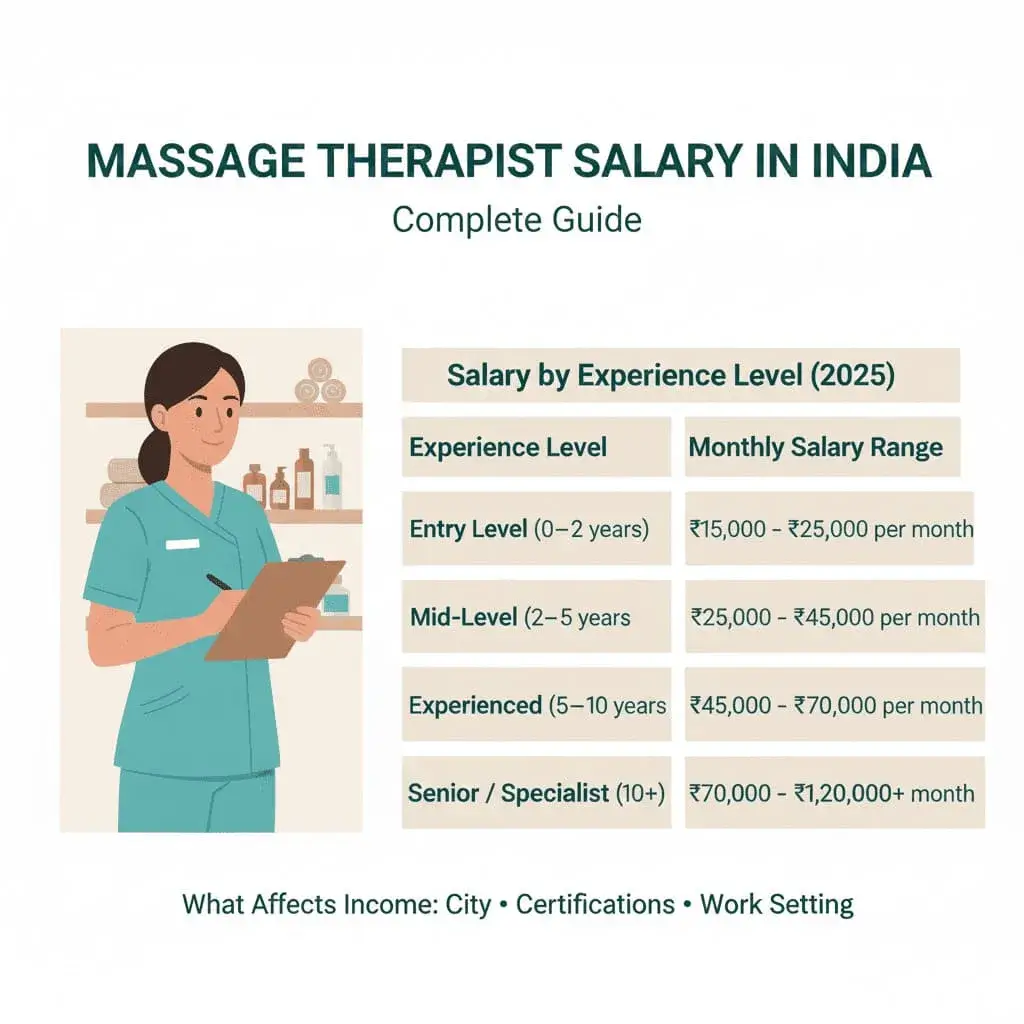
Massage Therapist Salary in India 2026: Complete Guide
Massage therapist salary guide for India 2026. Compare earnings by city, experience level, and work setting. Tips to maximize your earning potential.
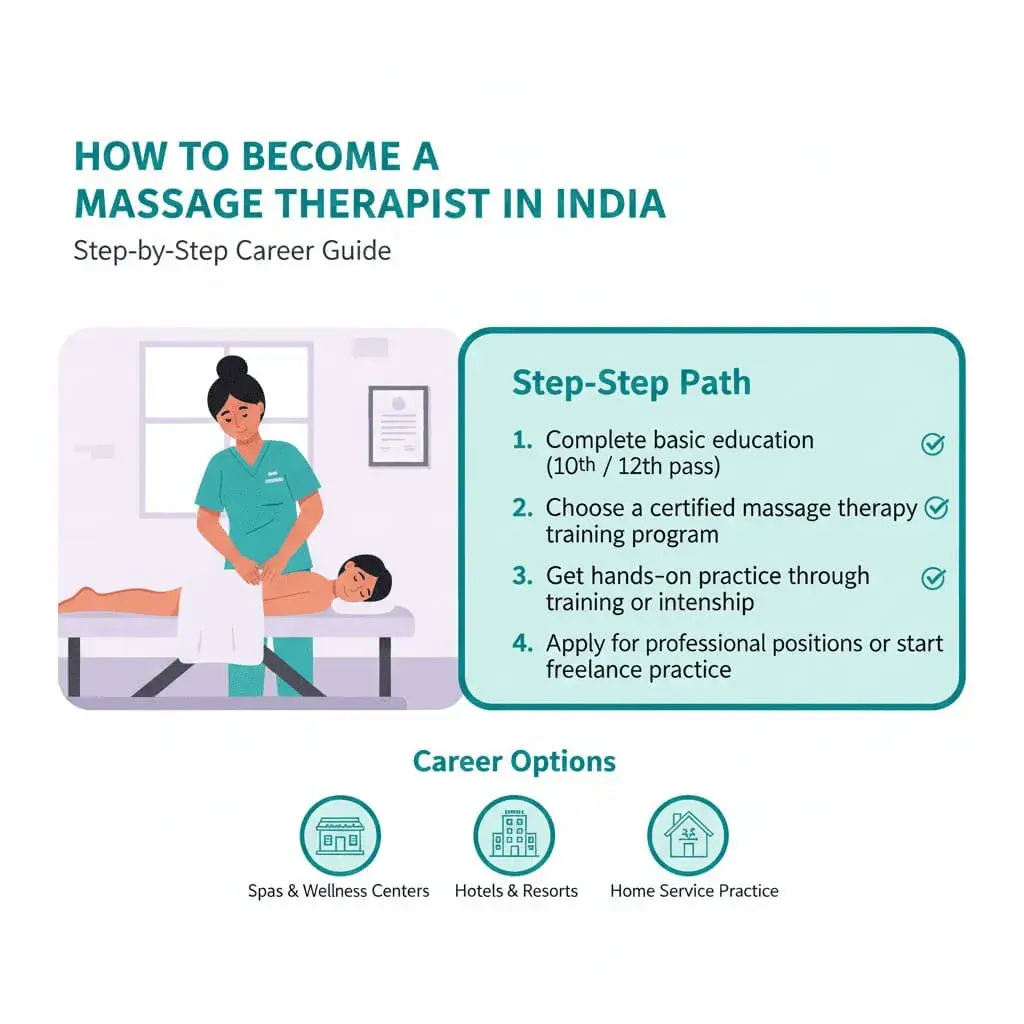
How to Become a Massage Therapist in India 2026: Career Guide
How to become a massage therapist in India. Training programs, certifications, costs, job opportunities, and a step-by-step career pathway explained.

How to Build Your Massage Therapy Clientele: Proven Strategies
Learn practical strategies to build a thriving massage therapy client base. From first clients to a full schedule, discover what works for therapists.
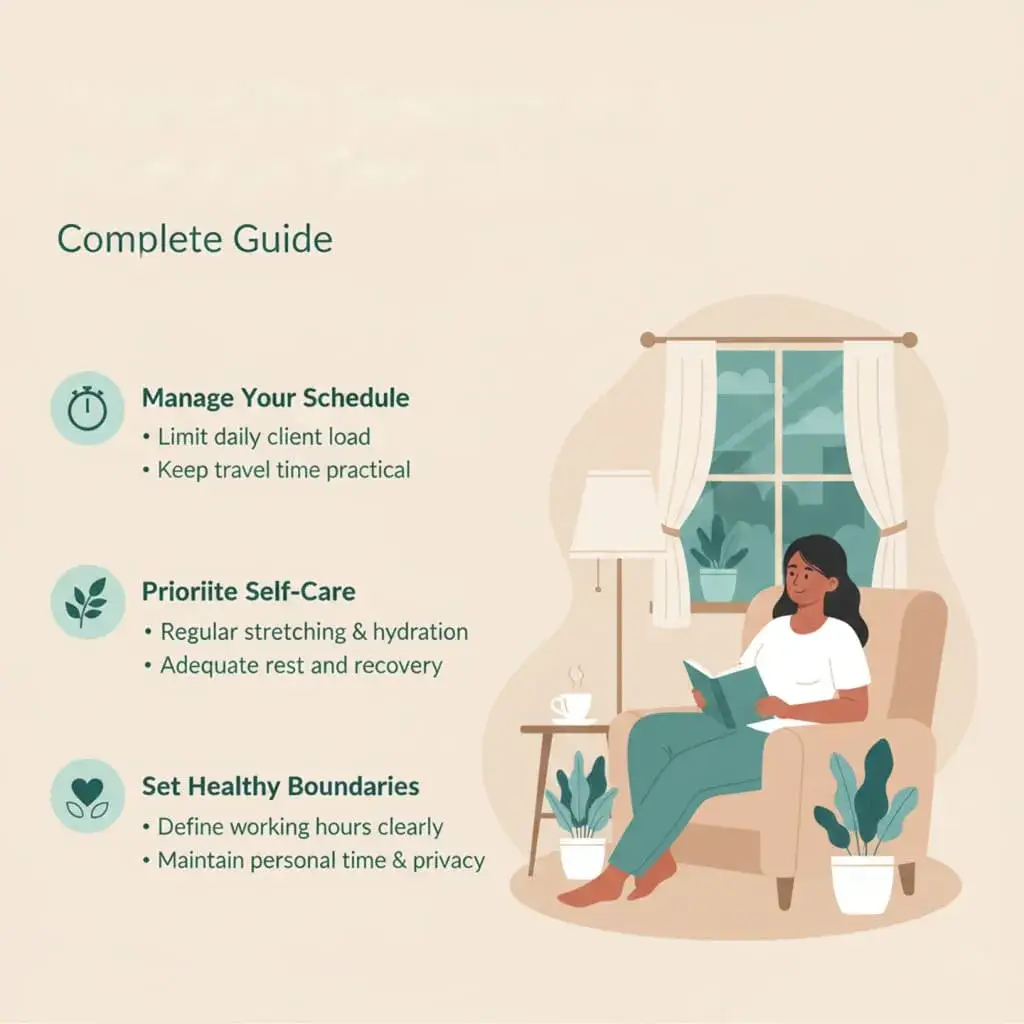
Work-Life Balance as a Massage Therapist
How home service massage therapists achieve work-life balance. Scheduling strategies, boundary setting, self-care tips, and burnout prevention guide.
Massage Services in Other Cities

Professional Home Massage in Mumbai
Professional home massage in Mumbai. {{therapist_count}}+ verified therapists, same-day booking, 40+ areas covered. Swedish, deep tissue & Thai massage. Book now.

Professional Home Massage in Delhi NCR
Professional home massage in Delhi NCR. {{therapist_count}}+ verified therapists offering same-day booking across 50+ areas including Gurgaon, Noida, and CP. Book now.

Professional Home Massage in Bangalore
Professional home massage in Bangalore. {{therapist_count}}+ verified therapists, same-day booking across 50+ areas. Koramangala, Whitefield, HSR Layout. Book now.

Professional Home Massage in Pune
Professional home massage in Pune. {{therapist_count}}+ verified therapists offering same-day booking across 40+ areas. Koregaon Park, Baner, Hinjewadi. Book now.