
Post-Workout Massage: Benefits & Optimal Timing
Accelerate recovery and enhance your training results
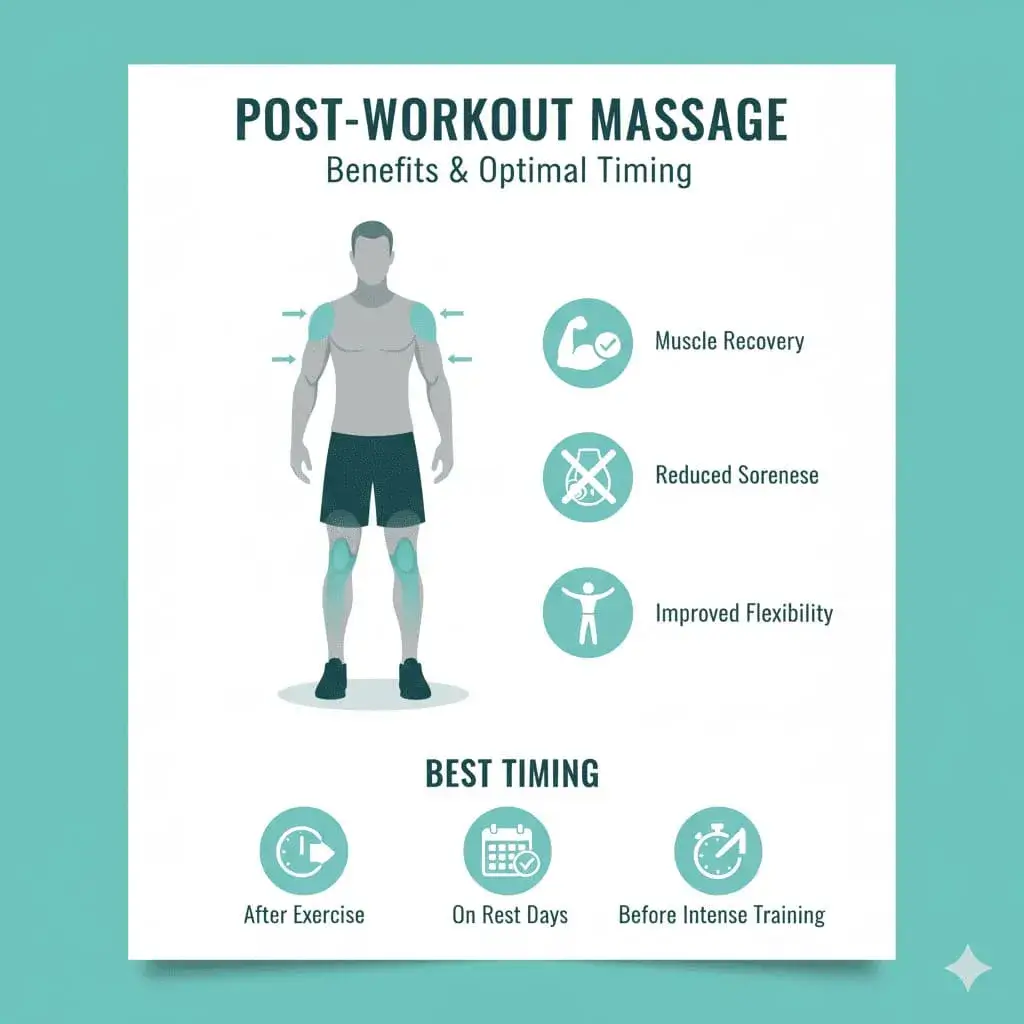
You've pushed through a challenging workout. Your muscles are fatigued, perhaps already hinting at tomorrow's soreness. What happens in the hours and days after exercise determines how quickly you recover, and how ready you'll be for your next training session. Post-workout massage is one of the most effective recovery tools available, backed by solid research and embraced by athletes at every level.
But timing matters. Technique matters. Understanding what's happening in your body after exercise helps you use massage strategically rather than just hoping it helps. Let's explore the science of post-workout recovery and how to optimize it for your training.
What Happens to Your Body After Exercise
To understand how massage helps recovery, we need to understand what exercise does to your body:
Muscle Fiber Damage
Intense exercise, especially resistance training and eccentric movements, creates microscopic tears in muscle fibers. This isn't injury; it's the stimulus for adaptation. Your body repairs these micro-tears and builds back stronger. But the repair process takes time and involves inflammation.
Metabolic Waste Accumulation
Working muscles produce metabolic byproducts including lactate, hydrogen ions, and other waste products. While your circulatory system clears these, the process takes time. Meanwhile, these accumulated substances contribute to muscle fatigue and discomfort.
Inflammation Response
Your immune system responds to exercise-induced muscle damage with inflammation, bringing repair cells, nutrients, and fluid to affected areas. Some inflammation is necessary for adaptation, but excessive or prolonged inflammation delays recovery and increases soreness.
Muscle Tension and Shortening
After intense use, muscles often remain in a partially contracted state. This residual tension limits range of motion, contributes to stiffness, and can affect movement patterns in subsequent workouts.
Delayed Onset Muscle Soreness (DOMS)
DOMS typically peaks 24-72 hours after exercise. It's not caused by lactate (as once believed) but by the inflammatory response to muscle fiber damage. DOMS causes stiffness, tenderness, reduced strength, and decreased range of motion.
How Post-Workout Massage Helps Recovery
Massage addresses multiple aspects of post-exercise recovery:
1. Enhanced Circulation
Massage increases blood flow to treated muscles; some studies show up to 50% improvement in local circulation. This enhanced blood flow delivers oxygen and nutrients needed for repair while helping clear metabolic waste products more quickly.
2. Reduced Inflammation
Research published in Science Translational Medicine found that massage reduces inflammatory cytokines (proteins that promote inflammation) in muscles. Importantly, massage appears to reduce excessive inflammation without eliminating the beneficial inflammatory signaling needed for adaptation.
3. DOMS Reduction
Multiple studies confirm massage reduces DOMS severity. A meta-analysis in Frontiers in Physiology found massage therapy was the most effective recovery intervention studied, outperforming compression garments, cold water immersion, and active recovery for reducing perceived soreness.
"The clients who train regularly and book their massage within a few hours of a hard session consistently report less soreness the next day. I focus on flushing techniques and moderate pressure on the muscles they worked hardest. The sweet spot seems to be two to six hours post-workout rather than immediately after, when the muscles are still too fatigued for much hands-on work."
4. Faster Strength Recovery
It's not just about feeling better; massage may help you regain strength faster. Research shows that massage after eccentric exercise helps restore muscle strength more quickly than passive rest alone. This means better readiness for subsequent training sessions.
5. Improved Flexibility
Post-exercise massage releases residual muscle tension and addresses fascial restrictions, restoring range of motion that exercise may have temporarily reduced. This flexibility benefit supports movement quality in future workouts.
6. Nervous System Recovery
Intense training activates your sympathetic nervous system; the "fight or flight" response. Massage activates the parasympathetic system, promoting recovery mode. This shift supports the rest and repair processes that adaptation requires.
7. Mitochondrial Support
Fascinating research suggests massage may promote mitochondrial biogenesis; the creation of new mitochondria in muscle cells. Mitochondria are your cells' energy factories, so this could support long-term training adaptations.
| Benefit | Mechanism | Research Support |
|---|---|---|
| Reduced soreness | Decreased inflammation, improved circulation | Strong (multiple meta-analyses) |
| Faster strength recovery | Reduced muscle damage markers, enhanced repair | Moderate to strong |
| Improved flexibility | Released tension, fascial work | Moderate |
| Better sleep | Parasympathetic activation, cortisol reduction | Strong |
| Reduced inflammation | Cytokine modulation | Strong (cellular research) |
| Enhanced circulation | Mechanical and neurological effects | Strong |
| Mental recovery | Stress reduction, relaxation response | Moderate |
Optimal Timing: When to Get Post-Workout Massage
Timing your post-workout massage affects its benefits. Here's what research and practice suggest:
Immediate Post-Workout (0-2 Hours)
Massage in the immediate post-workout window can help initiate recovery while muscles are still warm and circulation is elevated. This timing is particularly effective for reducing muscle tension and supporting waste clearance. Many professional athletes get massage within this window.
However, very intense deep tissue work immediately after exhausting exercise may be too much for some people. Moderate pressure often works better in this window; your muscles are already stressed.
Same Day (2-6 Hours Post)
This is often the sweet spot for recovery massage. Your muscles have begun the initial inflammatory response, but it hasn't peaked yet. Massage at this point may help modulate inflammation and prepare you for optimal recovery overnight, when most repair occurs.
Next Day (12-24 Hours Post)
Massage the day after a hard workout addresses early DOMS and continues supporting recovery. This timing works well if same-day massage isn't practical. You may be able to tolerate deeper pressure now than immediately post-workout.
Peak DOMS Window (24-72 Hours)
Massage during peak soreness can provide relief and may speed the resolution of DOMS. Pressure should be adjusted. Very sore muscles need gentler treatment. Many people find massage most valuable during this window because the relief is so noticeable.
| Timing | Benefits | Best For | Pressure |
|---|---|---|---|
| Immediate (0-2 hrs) | Initiates recovery, clears waste | Pro athletes, serious trainers | Light to moderate |
| Same day (2-6 hrs) | Modulates inflammation, prep for overnight recovery | Most exercisers | Moderate |
| Next day (12-24 hrs) | Addresses early DOMS, continues recovery | Practical option when same-day not possible | Moderate to firm |
| Peak DOMS (24-72 hrs) | Relief from soreness, speeds resolution | Those already sore | Gentle to moderate (adjust to tolerance) |
Best Massage Types for Post-Workout Recovery
Different massage approaches serve different recovery needs:
Sports Massage
Specifically designed for athletes and active people, sports massage combines techniques to address the demands of training. Therapists trained in sports massage understand exercise physiology and can target recovery strategically. This is often the best choice for serious trainers.
Deep Tissue Massage
For chronic tension and deep muscle work, deep tissue massage reaches layers that superficial techniques miss. Best used when muscles have recovered from immediate post-workout fatigue; not immediately after exhausting sessions. Excellent for addressing accumulated training tension.
Swedish Massage
Don't underestimate Swedish massage for recovery. The flowing strokes effectively promote circulation and relaxation. For moderate training or when muscles are very sore, Swedish massage may be more appropriate than aggressive deep work.
Myofascial Release
Fascia, the connective tissue surrounding muscles, can become restricted from training. Myofascial release addresses these restrictions, improving muscle function and range of motion. Particularly valuable for those experiencing movement limitations.
Percussion Therapy
Massage guns and percussion devices have become popular recovery tools. They can provide some benefits, improved blood flow, reduced muscle tension, but don't fully replace hands-on massage. They're best used as supplements between professional sessions.
| Type | Best Use | Timing | Intensity |
|---|---|---|---|
| Sports Massage | Comprehensive athletic recovery | Any time, adjusted to training | Varies by need |
| Deep Tissue | Chronic tension, accumulated stress | Not immediately post-exhaustion | Firm to intense |
| Swedish | General recovery, very sore muscles | Any time | Light to moderate |
| Myofascial Release | Movement restrictions, fascial issues | Any time | Light to moderate pressure, sustained |
| Percussion/Massage Gun | Quick recovery between sessions | Any time, self-administered | Adjustable |
Post-Workout Massage for Different Training Types
Your workout type affects your recovery massage needs:
Strength Training
Heavy lifting creates significant muscle fiber damage, especially with eccentric (lowering) movements. Post-strength training massage should focus on worked muscle groups. Timing massage for the same evening or next day allows initial inflammation to begin while catching the recovery window.
- Focus on specific muscles trained that session
- Allow 2-4 hours before deep work on exhausted muscles
- Address both primary movers and stabilizers
- Include flexibility work for muscles that shorten under load
Endurance Training
Long runs, rides, or swims create different demands. More metabolic stress, repetitive strain, and cumulative fatigue rather than acute muscle damage. Post-endurance massage focuses on flushing, restoring range of motion, and addressing repetitive strain patterns.
- Focus on high-repetition muscles (legs for runners/cyclists, shoulders for swimmers)
- Address common overuse areas (IT band, calves, hip flexors)
- Lighter pressure is often sufficient; muscles are less damaged than in strength training
- Include feet and hands which absorb significant impact/repetition
HIIT and CrossFit
High-intensity interval training combines metabolic stress with muscle damage across multiple movement patterns. Recovery massage should be comprehensive, addressing the full body rather than isolated muscle groups.
- Full-body approach due to varied movements
- Pay attention to common HIIT trouble spots (shoulders, lower back, knees)
- May need gentle approach if training was very intense
- Address accumulated fatigue from training frequency
Sport-Specific Training
Athletes in specific sports have characteristic stress patterns. Tennis players need arm and shoulder work; soccer players need leg focus; swimmers need shoulder and lat attention. Your massage therapist should understand your sport's demands.
Pre-Workout vs. Post-Workout Massage
Both have their place, but they serve different purposes:
| Aspect | Pre-Workout | Post-Workout |
|---|---|---|
| Primary purpose | Preparation, activation | Recovery, repair |
| Intensity | Light to moderate, invigorating | Varies by timing and soreness |
| Duration | Often shorter (15-30 min) | Standard to longer (60-90 min) |
| Technique focus | Circulation, warming, range of motion | Flushing, inflammation reduction, tension release |
| Timing | 1-4 hours before workout | Same day to 72 hours after |
| Effect on performance | May enhance (if not too relaxing) | Improves subsequent workouts via recovery |
Building Massage Into Your Training Schedule
For optimal results, massage should be part of your training plan, not an afterthought. Here's how to integrate it:
Weekly Schedule Example
- Heavy training day → Same evening or next day massage
- Rest day → Ideal for longer, deeper massage sessions
- Before competition/race → Light massage 2-3 days prior, not the day before
- After competition → Gentle massage within 24 hours, deeper work after 48 hours
Frequency Recommendations
| Training Level | Recommended Frequency | Focus |
|---|---|---|
| Recreational (2-3x/week) | Monthly to bi-weekly | General recovery, tension prevention |
| Regular (4-5x/week) | Weekly to bi-weekly | Recovery support, address problem areas |
| Serious amateur (6x/week) | Weekly | Essential recovery, injury prevention |
| Competitive athlete | 1-3x/week | Integrated into training periodization |
Signs You Need Recovery Massage
Beyond scheduled sessions, watch for these indicators that massage would be particularly beneficial:
- Persistent soreness that doesn't resolve with rest
- Reduced range of motion or feeling "tight"
- Declining performance despite consistent training
- Increased injury frequency or nagging issues
- Trouble sleeping after hard training days
- Mental fatigue or reduced motivation to train
- Asymmetrical movement or compensating patterns
- Chronic stiffness upon waking
Maximizing Your Post-Workout Massage
To get the most from recovery massage:
Communicate About Your Training
Tell your therapist what you trained, how hard, and when. Knowing you did heavy squats yesterday versus a light yoga session today changes the appropriate approach. The more your therapist understands your training, the better they can target recovery.
Hydrate Before and After
Massage releases substances from muscles that your kidneys need to process. Being well-hydrated supports this clearance. Drink water before your session and continue hydrating afterward.
Combine with Other Recovery
Massage works best as part of comprehensive recovery: adequate sleep, proper nutrition (especially protein), appropriate training load, and stress management. No single intervention replaces the fundamentals.
Track Your Response
Notice how massage affects your recovery and subsequent training. Do you feel better the next day? Perform better in the following workout? Tracking these patterns helps you optimize timing and frequency for your individual response.
Home Massage for Athletes
For active people, home massage offers particular advantages:
- No commute when already fatigued from training
- Can shower and change at home before the session
- Transition directly to rest/sleep afterward
- Schedule sessions to align precisely with training days
- Continue recovery protocols (stretching, foam rolling) in your space
- Easier to fit around demanding training schedules
After a hard training session, the last thing you want is to travel to a spa. Having a skilled therapist come to you means your energy goes toward recovery, not logistics.
Frequently Asked Questions
Should I get massage immediately after working out?
Will massage make my soreness worse before it gets better?
Can massage replace stretching and foam rolling?
How soon after massage can I work out again?
Is it better to get massage on rest days or training days?
Does massage count as active recovery?
Should I avoid massage before a competition or race?
How does massage compare to ice baths for recovery?
Train Hard, Recover Smart
Your results come from the training-recovery cycle; not just the training. The athletes who sustain progress year after year are often those who take recovery as seriously as their workouts. Post-workout massage is one of the most effective recovery tools available, addressing multiple recovery mechanisms simultaneously.
Whether you're a casual gym-goer dealing with post-workout soreness or a serious athlete optimizing performance, massage can improve your recovery, reduce injury risk, and help you get more from your training. The key is making it consistent; not just an occasional treat, but a regular part of your program.
Your muscles do the work during training. Give them what they need to rebuild stronger.
Related Articles
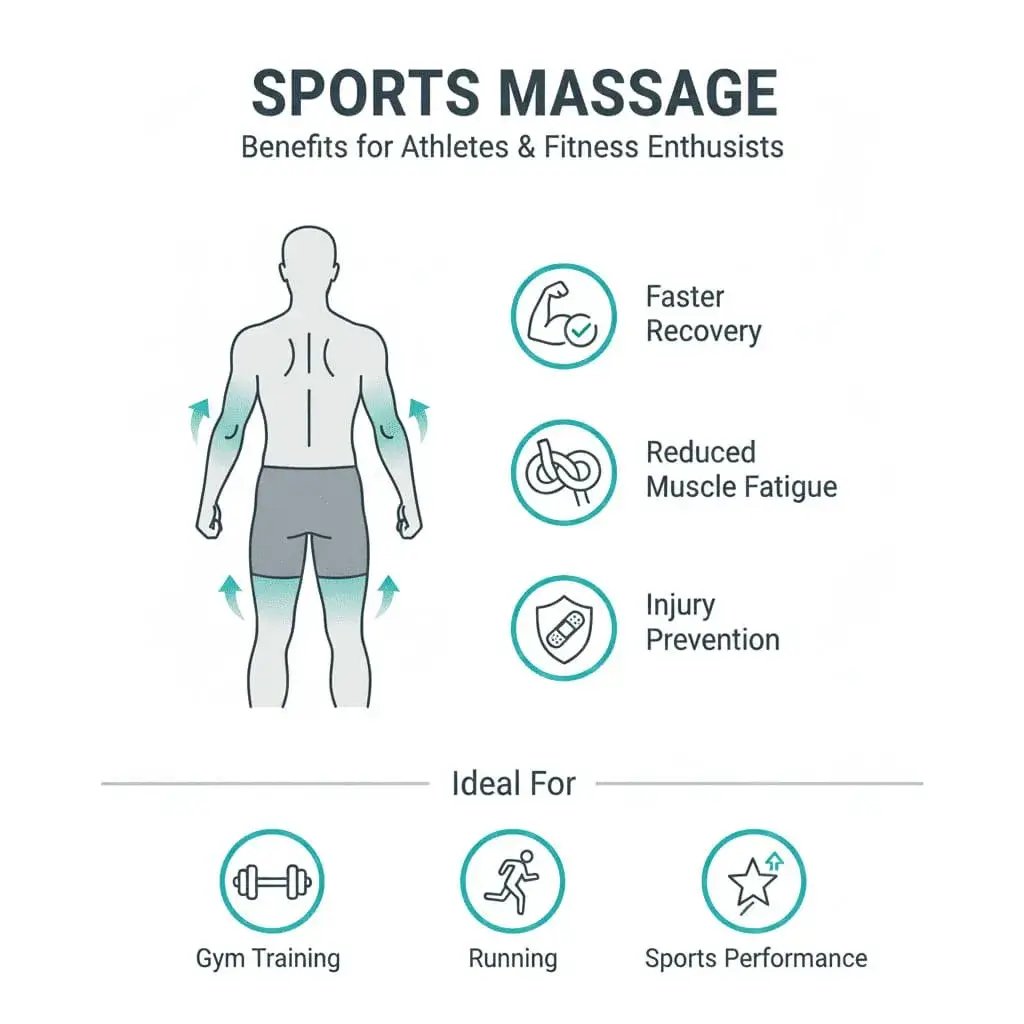
Sports Massage Benefits: Complete Guide for Athletes & Fitness Enthusiasts
Sports massage guide: how it boosts athletic performance, speeds recovery, and prevents injuries. Learn the best techniques, timing, and what to expect.
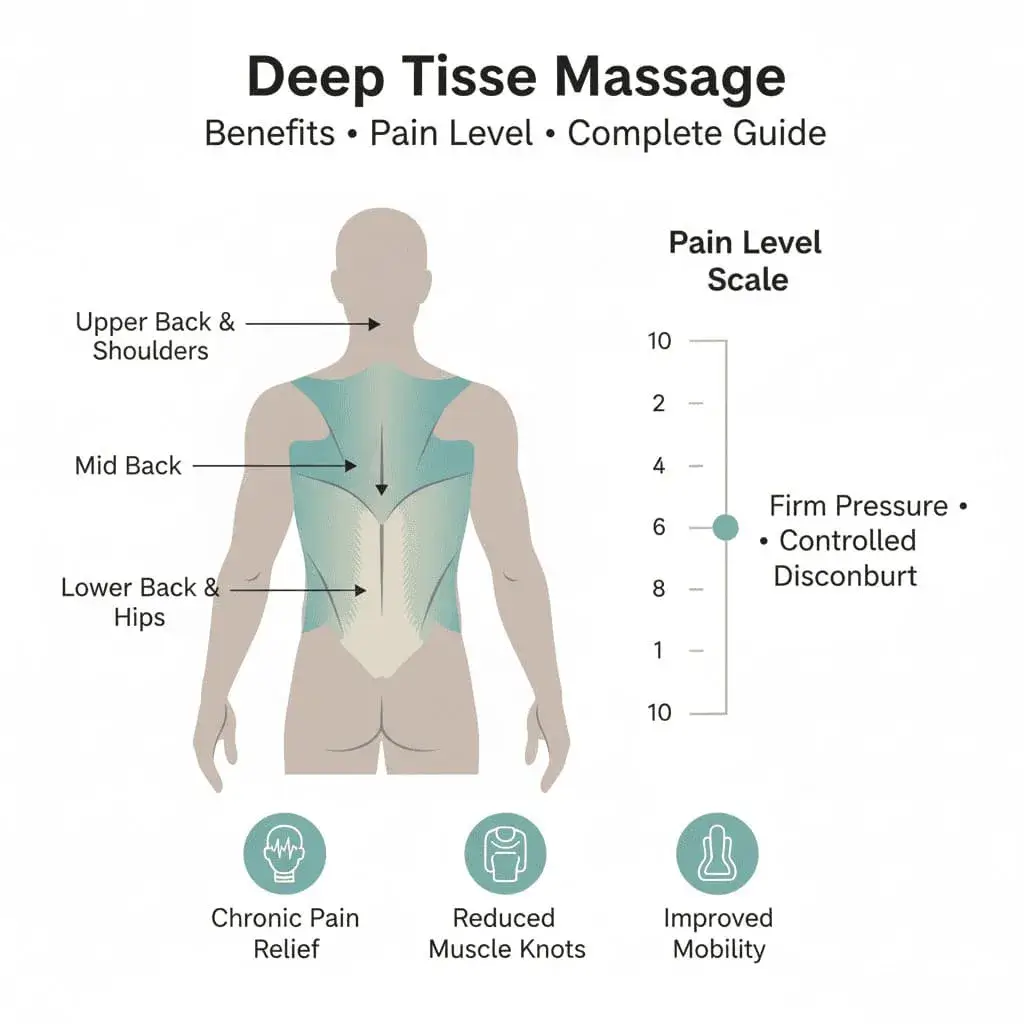
Deep Tissue Massage: Benefits, Pain Level & What to Expect
Learn what deep tissue massage really feels like, its proven benefits for chronic pain and tension, and how to know if it's right for you. Expert guide.
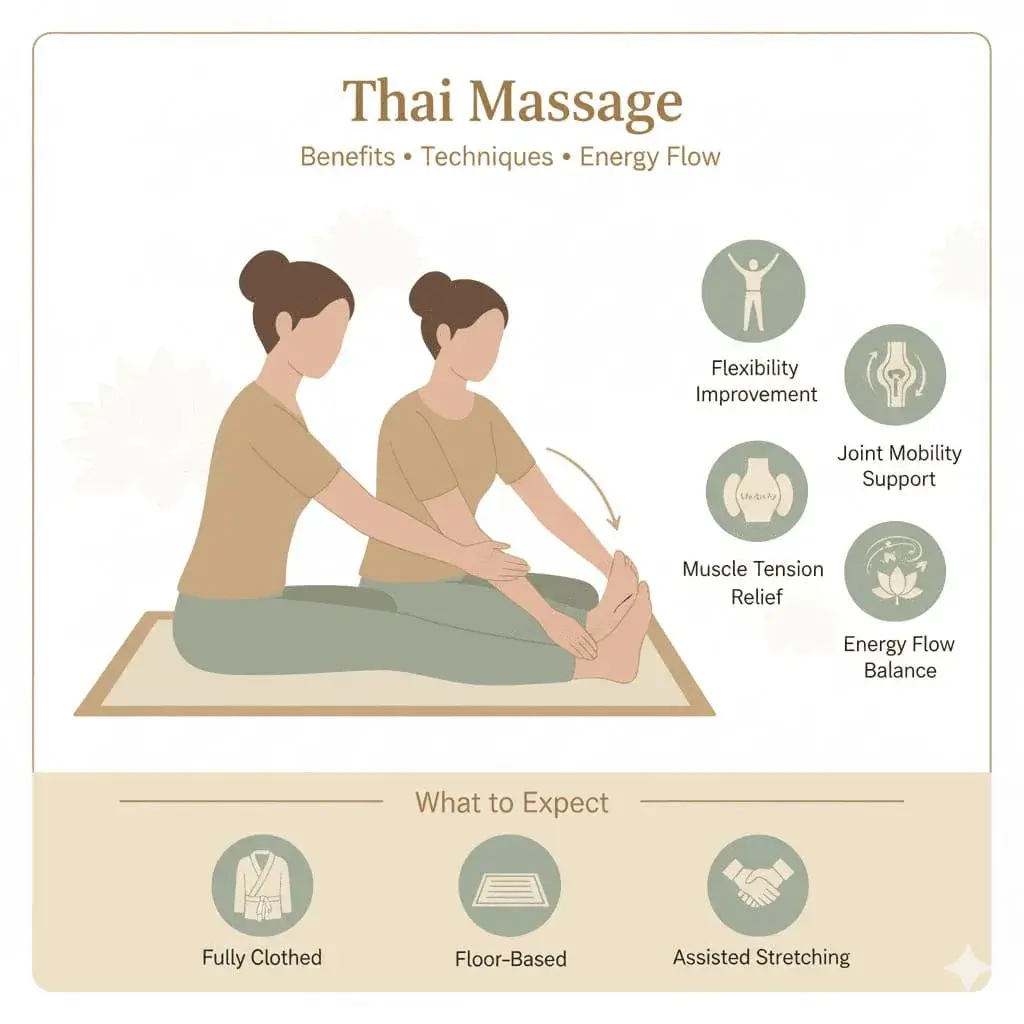
Thai Massage Benefits: Is It Right for You?
Learn about Thai massage - stretching, compression, and yoga-like movements that make it unique. Discover the benefits, what to expect, and who it suits.
Back Massage Benefits: Relief for Pain, Tension & Posture
Back massage benefits: how it relieves chronic pain, releases deep muscle tension, and improves posture. Expert guide on techniques, frequency, and results.
Massage Services in Other Cities

Professional Home Massage in Bangalore
Professional home massage in Bangalore. {{therapist_count}}+ verified therapists, same-day booking across 50+ areas. Koramangala, Whitefield, HSR Layout. Book now.

Professional Home Massage in Mumbai
Professional home massage in Mumbai. {{therapist_count}}+ verified therapists, same-day booking, 40+ areas covered. Swedish, deep tissue & Thai massage. Book now.

Professional Home Massage in Pune
Professional home massage in Pune. {{therapist_count}}+ verified therapists offering same-day booking across 40+ areas. Koregaon Park, Baner, Hinjewadi. Book now.

Professional Home Massage in Delhi NCR
Professional home massage in Delhi NCR. {{therapist_count}}+ verified therapists offering same-day booking across 50+ areas including Gurgaon, Noida, and CP. Book now.