
How Long Should a Full Body Massage Be? 60 vs 90 Minutes
What each session length gives you, and how long each massage on our menu runs
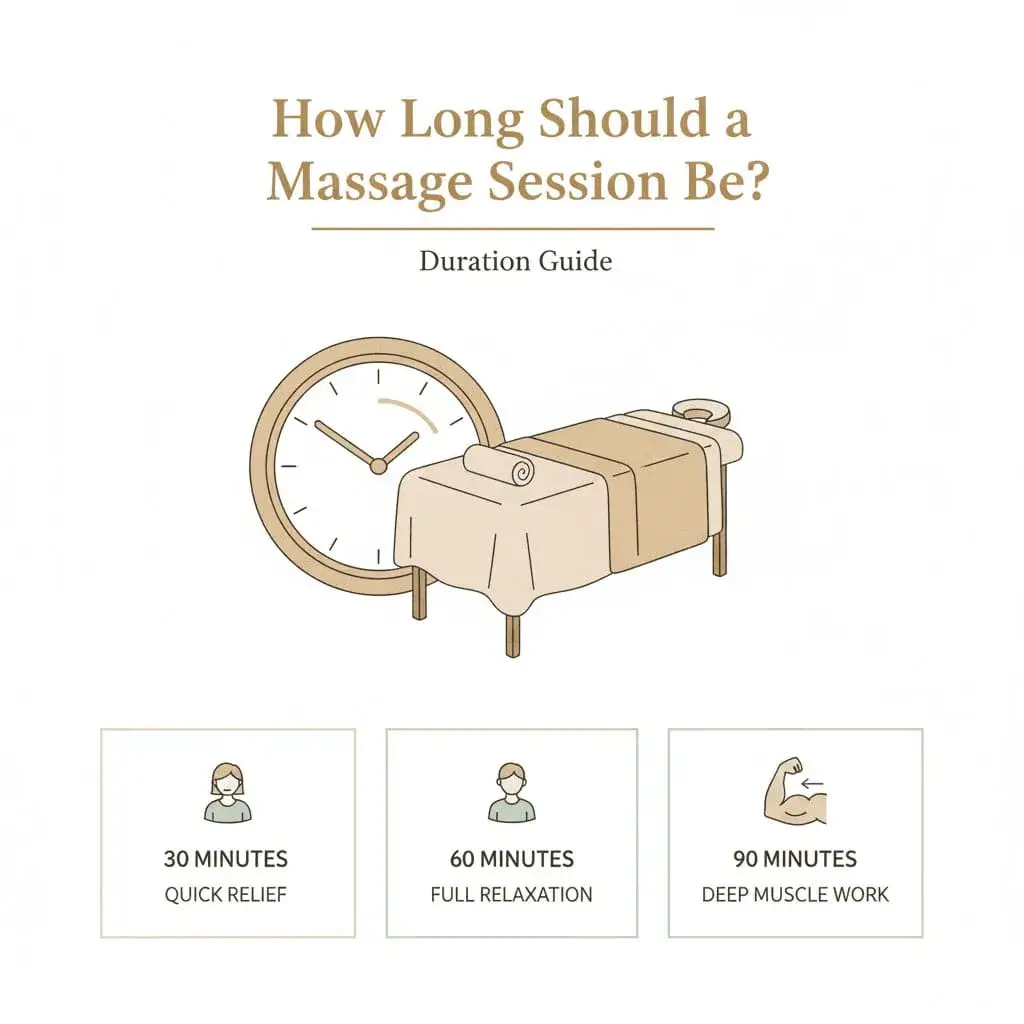
Massage sessions across the industry run anywhere from 30 minutes to 2 hours. The right length for you depends on what you're trying to achieve and the type of massage you're getting - and choosing well means getting the results you want instead of leaving feeling like something was missing.
Here's what many people don't realize: session length changes what a therapist can actually accomplish. A 30-minute massage focuses on one area; a 90-minute massage covers your whole body with room to spare. They are different experiences, not just different amounts of the same thing.
This guide breaks down what each duration offers, helps you match session length to your goals, and explains when spending more (or less) time makes sense.
Quick Duration Guide
30 Minutes
Focused relief for one problem area. Best for targeted work, quick stress relief, or maintenance between longer sessions.
60 Minutes
The standard for full-body massage. Covers everything at normal depth. Perfect for general wellness and first-timers.
90 Minutes
Full body plus focused work on problem areas. Ideal for deep tissue, chronic tension, and longer-lasting relief.
120 Minutes
The luxury experience. Everything in depth, unhurried pace. Perfect for special occasions or multiple techniques.
These are the common industry lengths. Our own home sessions run 60 to 90 minutes, matched to the service you book.
The Quick Answer
For a full body massage, 60 minutes is the standard: enough time to cover the whole body at normal depth, and short enough to fit most schedules. Choose 90 minutes if you have specific problem areas, want deep tissue work, or have not had a massage in a long time.
On our own menu, home massage services run 60 to 90 minutes. Swedish massage is 60 minutes (starting at ₹1,999 in metro cities), while deep-pressure styles like deep tissue and Thai massage are set at 90 minutes because they need the extra time to work properly. Want the exact menu now? Jump to our services and durations, or see current prices on the pricing page.
What Each Duration Offers
30 Minutes: Focused Relief
A 30-minute massage is not a shortened full-body massage - it's a targeted session focusing on one or two specific areas. There simply isn't time to address the whole body meaningfully.
- What's possible: Focus on neck and shoulders, OR lower back, OR legs - not all of them
- Best for: Addressing one specific problem area, quick stress relief, maintenance between longer sessions
- Limitations: No time for full-body work, limited warm-up time, may feel rushed
- Who should book this: People with one clear problem spot, those on tight schedules, as a "booster" between regular sessions
45 Minutes: The In-Between Option
Some spas offer 45-minute sessions as a middle ground. This allows for more than focused work but still isn't quite enough for thorough full-body massage. Our own home menu starts at 60 minutes: a home visit includes the therapist travelling to you and setting up, and a session under an hour is rarely worth that trip for you or for them.
- What's possible: Back, neck, and shoulders with decent attention, OR two problem areas
- Best for: Upper body focus for desk workers, people who find 60 minutes too long
- Limitations: Still tight for full body, may need to skip some areas
- Who should book this: Those who primarily hold tension in their upper body, regular clients for maintenance
60 Minutes: The Standard
Sixty minutes is the industry standard for good reason - it's the minimum time needed for a satisfying full-body massage. A skilled therapist can address your entire body, though not in great depth on any particular area.
- What's possible: Full body coverage - back, neck, shoulders, arms, legs, feet, and often some attention to glutes and scalp
- Best for: General relaxation, stress relief, maintenance, first-time massage experiences
- Limitations: Limited time for problem areas, may feel quick in some spots, deep tissue work may be rushed
- Who should book this: Most people, most of the time - it's the versatile choice
90 Minutes: Built for Therapeutic Work
Ninety minutes is where massage moves from "nice" to "therapeutic" for many people. The extra 30 minutes allows either comprehensive full-body work OR full-body plus focused attention on problem areas.
- What's possible: Thorough full body with time to address problem areas in depth
- Best for: Chronic tension, deep tissue work, therapeutic massage, people who haven't had massage recently
- Advantages: No rushing, time for body to fully relax, can address multiple concerns
- Who should book this: Anyone with specific issues to address, deep tissue seekers, those wanting maximum benefit
Many regular massage clients who initially booked 60 minutes eventually switch to 90 once they experience the difference. The additional time allows the therapist to work more thoroughly and your body to release tension more completely.
120 Minutes (2 Hours): The Luxury Experience
Two-hour sessions are about luxury, comprehensive treatment, or combining techniques. Our own home menu tops out at 90 minutes for deep tissue, Thai, and couples massage, so treat this length as general industry context rather than something you can book with us.
- What's possible: Everything - full body, extended time on all problem areas, unhurried pace, possibly multiple techniques
- Best for: Special occasions, severe tension throughout body, combining massage types, ultimate relaxation
- Consider if: You have chronic issues in multiple areas, want an indulgent experience, are using massage for serious therapeutic work
- May be too much if: You get restless lying still, have scheduling constraints, don't have multiple areas needing attention
Duration Comparison at a Glance
So how long should a massage be? Here is how the common massage session lengths compare:
| Duration | Coverage | Best For |
|---|---|---|
| 30 min | 1-2 focused areas | Targeted relief, quick sessions |
| 45 min | Upper body OR 2-3 areas | Upper body focus, maintenance |
| 60 min | Full body (standard depth) | General wellness, relaxation |
| 90 min | Full body + problem areas | Therapeutic work, deep tissue |
| 120 min | Comprehensive everything | Luxury, severe tension, special occasions |
Whatever the duration, plan for a few minutes of talk at the start: a good therapist asks about pain areas and pressure preference before beginning. At a home session, the table setup happens in under 10 minutes in any quiet corner of your home.
Best Duration by Massage Type
Different massage styles need different amounts of time, and our menu reflects that: every service has a set duration, chosen for how that style actually works. You pick the service, and the right session length comes with it.
| Service | Duration | Why This Length |
|---|---|---|
| Swedish Massage | 60 min | Flowing full-body strokes fit well in an hour |
| Aromatherapy Massage | 60 min | Gentle full-body work with essential oils |
| Sports Massage | 75 min | Extra time for worked muscle groups |
| Ayurvedic Oil Massage | 75 min | Warm oil application needs an unhurried pace |
| Hot Stone Massage | 75 min | Stone placement and heat need setup time |
| Deep Tissue Massage | 90 min | Muscles must be warmed up before deep pressure |
| Thai Massage | 90 min | Stretching and pressure work take longer |
| Couples Massage | 90 min | Two therapists working at the same time |
Notice the pattern: the deeper or more involved the style, the longer the set duration. Deep tissue gets 90 minutes because going deep on cold muscles is uncomfortable and less effective - the first part of the session warms the tissue up. There is also a value angle: on our price list, the 90-minute services cost less per minute than the 60-minute ones. Exact prices for your city are on the pricing guide and your city's price page.
Best Duration by Goal
For Stress Relief and Relaxation
If your main goal is stress relief and relaxation, you need enough time to actually relax. This takes longer than you might think.
- Recommended: 60-90 minutes
- Why: It typically takes 15-20 minutes for your nervous system to shift from stress mode to relaxation mode. Shorter sessions mean less time actually being relaxed.
- Consider 90 minutes if: You carry a lot of tension, have trouble relaxing, or want the full de-stress experience
For Chronic Pain or Specific Issues
Addressing chronic pain requires time - both to work on the affected area and to address compensating muscles that have also been affected.
- Recommended: 90 minutes (minimum 60 for single-area focus)
- Why: Chronic issues often involve multiple muscle groups. Lower back pain might involve glutes, hamstrings, and hip flexors too. You need time to address the full picture.
- Consider longer if: The issue affects multiple areas, you also want some full-body relaxation, or you haven't addressed it in a while
For Athletic Recovery
Athletic recovery requires different durations depending on whether it's post-event or maintenance.
- Post-workout/event: 30-60 minutes focused on worked muscle groups with sports massage techniques
- Regular maintenance: 60-90 minutes for comprehensive recovery
- Why: Recovery massage can be targeted. If you just ran a marathon, you probably want leg focus, not necessarily full body.
For General Wellness/Maintenance
Understanding how often to get massage helps you plan session durations for ongoing wellness.
- Recommended: 60 minutes for full-body massage
- Why: For regular maintenance without specific issues, 60 minutes covers everything adequately. Save 90-minute sessions for when you need extra attention.
First-Time vs. Experienced Clients
If It's Your First Massage
For first-timers, 60 minutes is usually ideal. Review our massage etiquette guide to know what to expect.
- Long enough to experience real massage - You'll get a sense of full-body work
- Not overwhelming - 90+ minutes might feel long if you're not used to lying still
- Good baseline - Helps you understand your preferences for future sessions
- Manageable investment - Lower commitment while you're still exploring
If You Get Massage Regularly
Experienced clients often have clearer preferences and can make better duration choices:
- You know your needs - Understand which areas need attention
- Body responds faster - Regular massage clients often relax more quickly
- Can alternate durations - 60 minutes for maintenance, 90 when needed
- Efficiency possible - Less consultation time needed, more hands-on work
When Shorter Sessions Make Sense
Longer isn't always better. There are legitimate reasons to book shorter sessions:
- ✓You have one specific problem area - 30-45 minutes of focused work may be more effective than 60 minutes spread thin
- ✓Time constraints are real - A 30-minute massage you actually get is better than a 90-minute massage you keep postponing
- ✓Between longer sessions - Short "maintenance" sessions can extend the benefits of less frequent longer sessions
- ✓You get restless - Some people genuinely find it hard to lie still for 90+ minutes (see our preparation tips)
- ✓Pre-event massage - Before athletic events, shorter targeted work is often preferable
On our menu, the closest match for focused work is a 60-minute session: tell the therapist your one problem area at the start, and they will spend most of the hour there instead of spreading the time evenly.
When Longer Sessions Are Worth It
Certain situations benefit significantly from extended time:
- ✓You haven't had massage in months - Your body needs time to unwind accumulated tension
- ✓Multiple problem areas - Shoulders AND lower back AND legs all need attention
- ✓Deep tissue work - Warming up the muscles, then working deep, then easing off all take time
- ✓High stress levels - Your nervous system needs longer to shift out of stress mode
- ✓You want the full experience - Sometimes massage is a treat, not just treatment
- ✓Chronic conditions - Fibromyalgia, chronic pain, etc. benefit from unhurried work
- ✓Thai massage or specialty massage - Some massage styles are designed for longer sessions
Getting Maximum Value from Your Session Time
Whatever duration you choose, these practices help you get the most from it:
Before Your Session
- ✓Be on time - Late arrival means less massage time, not extended end time
- ✓Know your priorities - Decide what matters most before you're on the table
- ✓Communicate clearly - Tell the therapist your goals and problem areas upfront
- ✓Use the bathroom - Don't waste session time on breaks
- ✓Skip heavy meals - Digestion competes with relaxation (see preparation guide)
During Your Session
- ✓Give feedback early - Adjusting pressure at the start helps far more than mentioning it near the end
- ✓Speak up about priorities - "I really need more time on my shoulders" is useful information
- ✓Let go of time anxiety - Checking the clock works against relaxation
- ✓Trust the therapist's pacing - They're trained to manage time effectively
After Your Session
- ✓Don't rush out - Take a moment to reorient before jumping up
- ✓Hydrate - Water supports your body in processing the session and enhances massage benefits
- ✓Note what worked - Remember duration effectiveness for future bookings
- ✓Book your next session - Getting regular massage builds on the benefits of the last session
Frequently Asked Questions
Is 60 minutes enough for a full body massage?
What's the difference between 60 and 90 minutes really?
Can I get deep tissue in 30 minutes?
Is 2 hours too long for a massage?
Should I book longer if I'm very stressed?
What if I fall asleep - am I wasting time?
Can I extend my session once it's started?
Does the therapist really spend the full time on massage?
Making Your Choice
The "right" duration depends on your goals, the type of massage you want, and what's practical for your life. When in doubt, 60 minutes is a solid choice for most situations. If you have specific issues or want deeper work, invest in 90 minutes - the difference is often significant.
Remember: it's easier to book more time than you need than to feel rushed. If you can, choose the longer option for your first session with a new therapist or when working through built-up tension. Once you know what you prefer, you can plan future sessions accordingly.
Related Articles
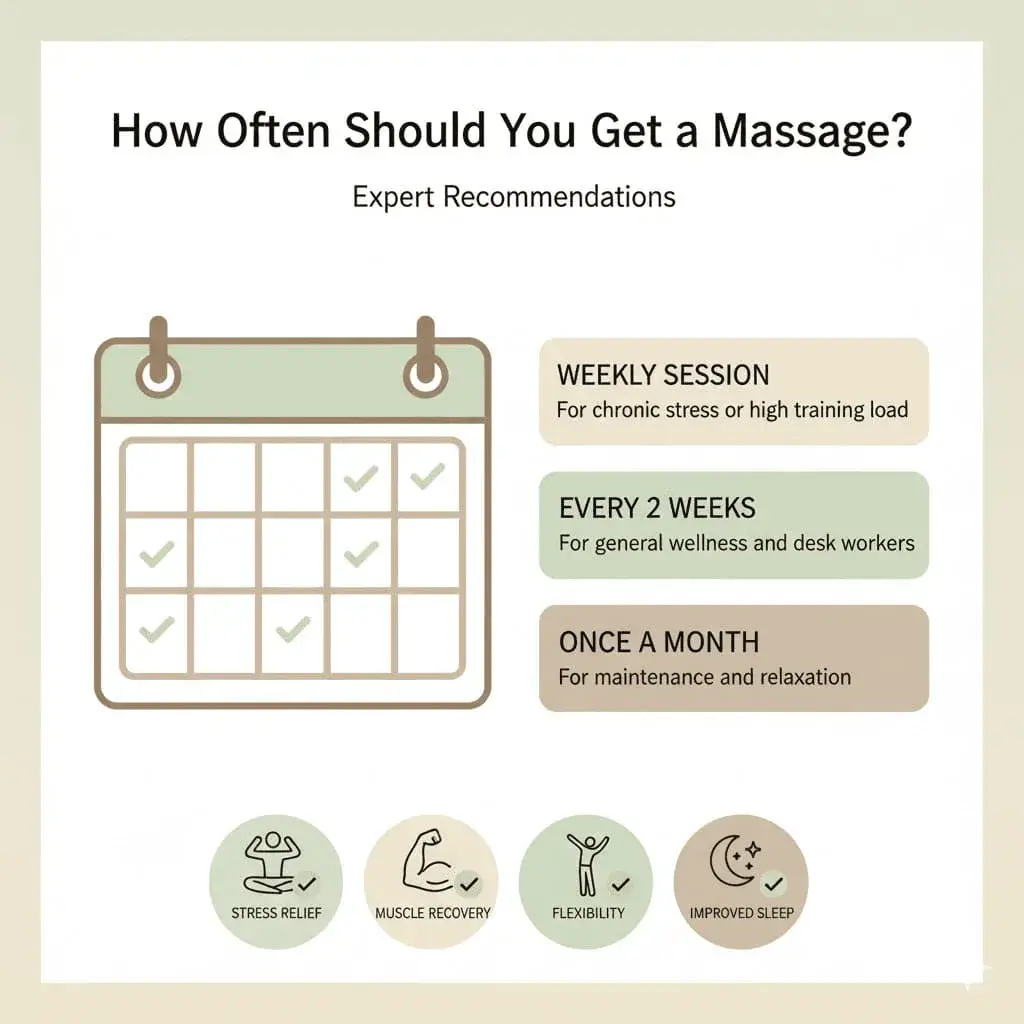
How Often Should You Get a Massage? A Practical Guide
Find your ideal massage frequency by goal - stress relief, pain management, athletic recovery, or general wellness. Practical guidelines that work.
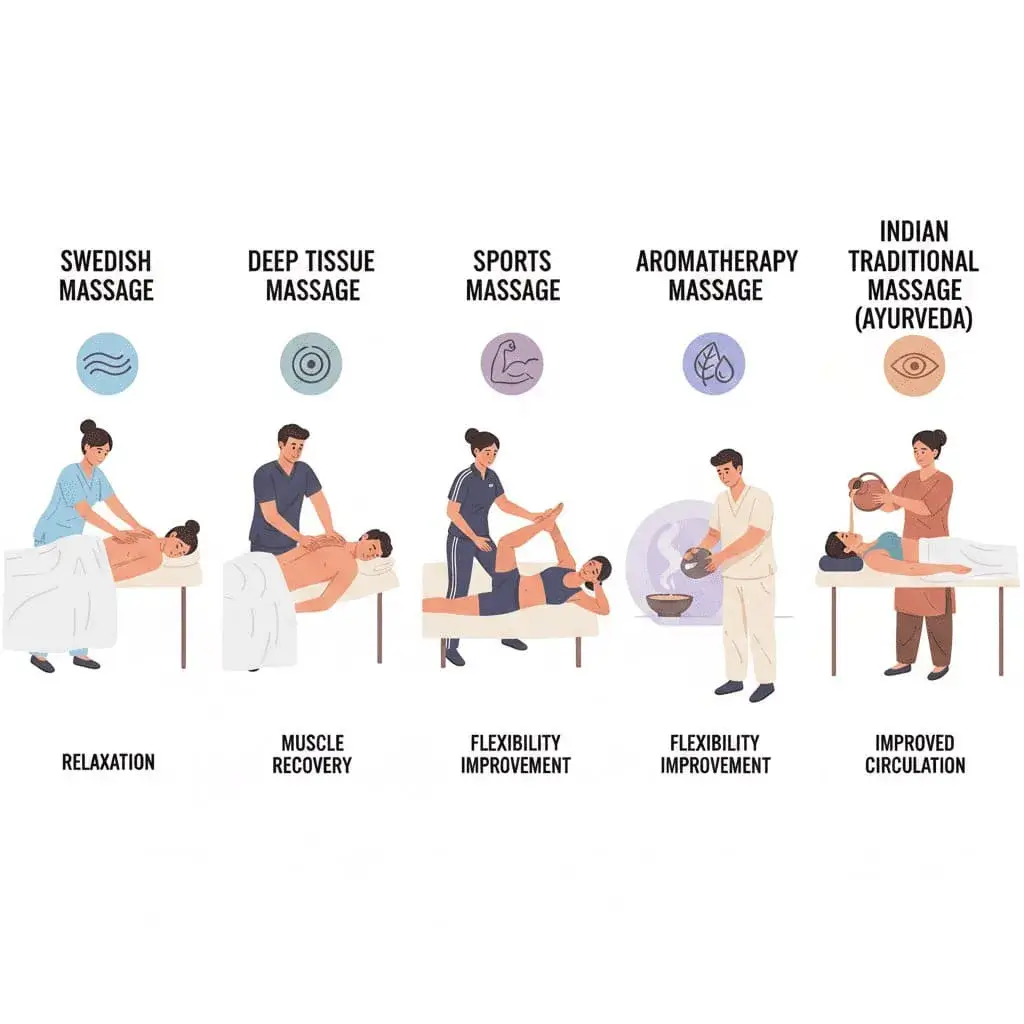
Types of Body Massage in India: How to Choose
Swedish for relaxation, deep tissue for pain, Thai for flexibility - compare the 8 massage types you can book at home in India and pick the right one.
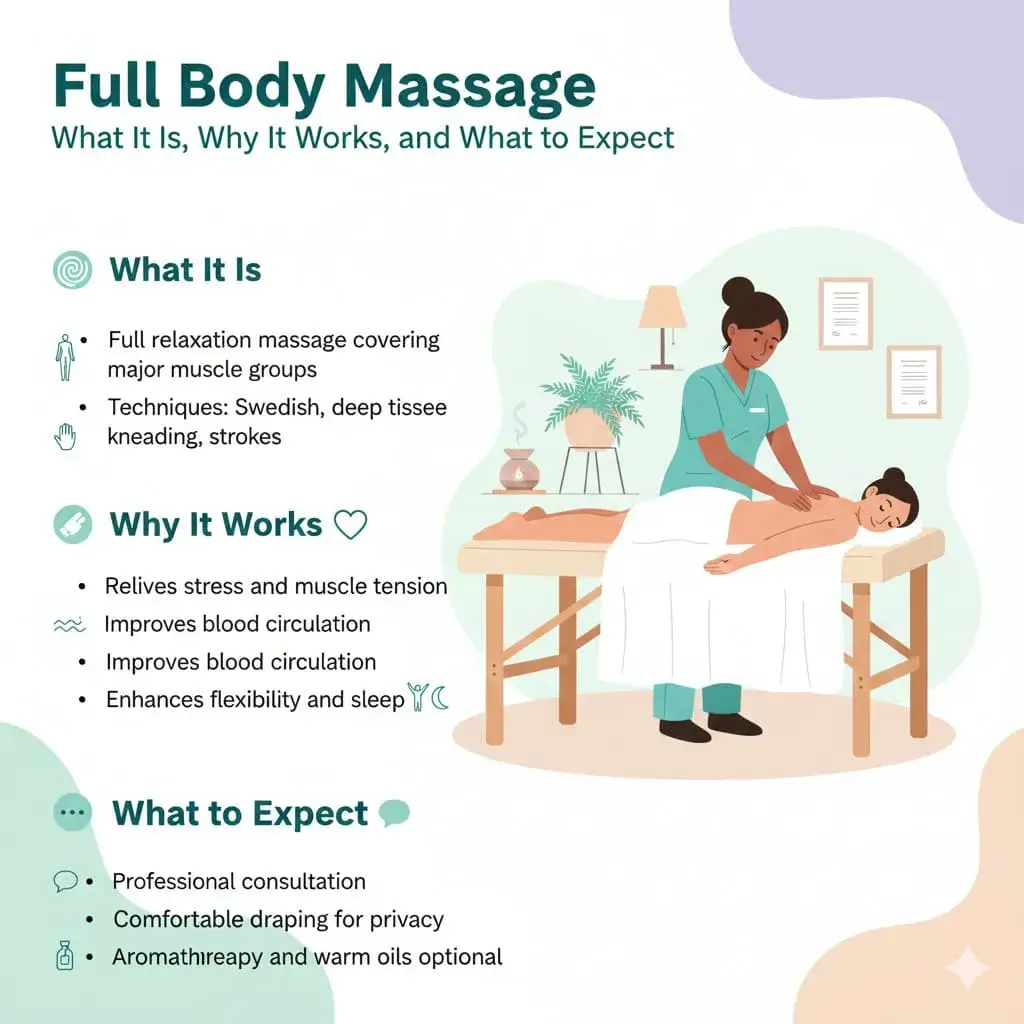
Full Body Massage: What It Is, Why It Works, and What to Expect
What is full body massage? Learn the benefits, best types for your needs, and what to expect. Expert tips from trained therapists for your session.
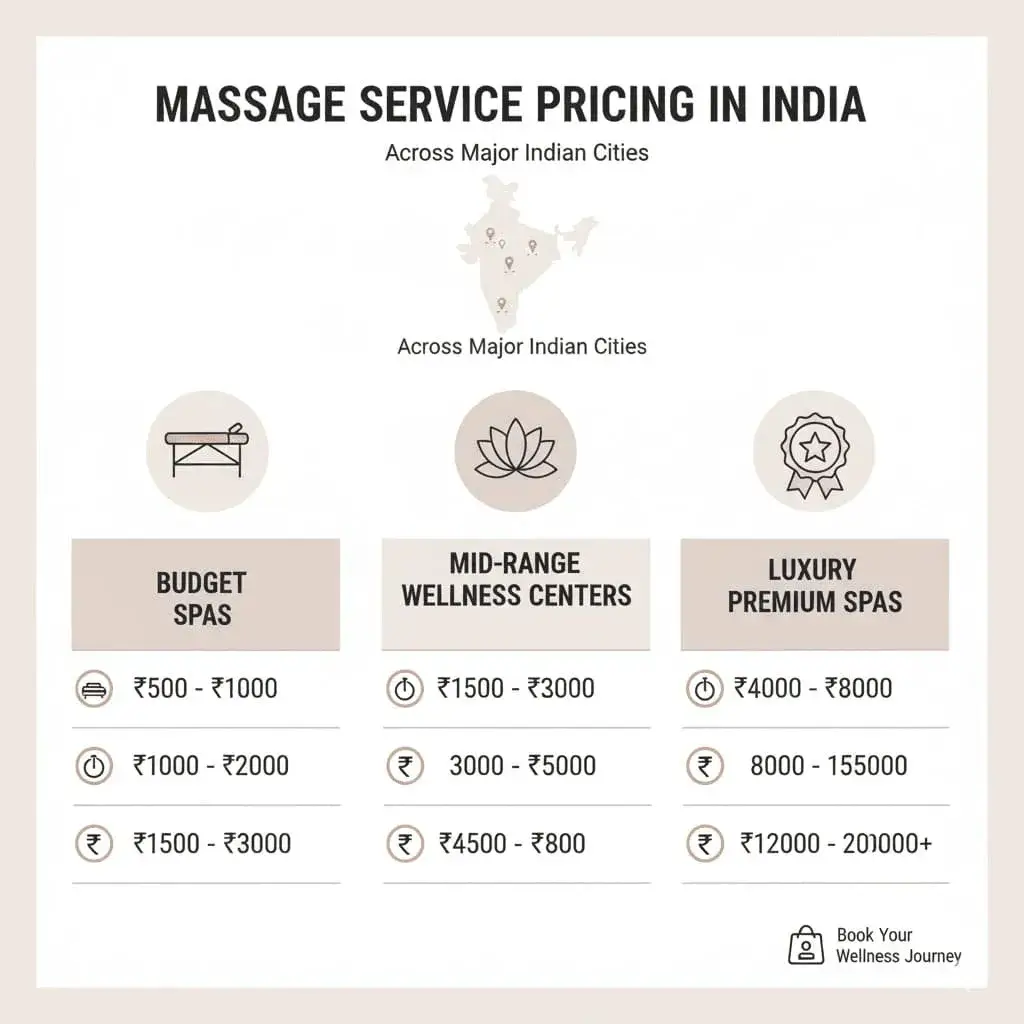
Massage Price in India: Live Rates From Our Booking System
Real home massage prices, updated live from our booking system. Full body massage at home starts at ₹1,999 in metros and less in smaller cities.
Massage Services in Other Cities

Professional Home Massage in Mumbai
Professional home massage in Mumbai. {{therapist_count}}+ verified therapists, same-day booking, 40+ areas covered. Swedish, deep tissue & Thai massage. Book now.

Professional Home Massage in Bangalore
Professional home massage in Bangalore. {{therapist_count}}+ verified therapists, same-day booking across 50+ areas. Koramangala, Whitefield, HSR Layout. Book now.

Professional Home Massage in Delhi NCR
Professional home massage in Delhi NCR. {{therapist_count}}+ verified therapists offering same-day booking across 50+ areas including Gurgaon, Noida, and CP. Book now.

Professional Home Massage in Pune
Professional home massage in Pune. {{therapist_count}}+ verified therapists offering same-day booking across 40+ areas. Koregaon Park, Baner, Hinjewadi. Book now.