
Oil Massage Benefits: Best Oils and What to Expect
Why the right oil makes all the difference in your massage experience
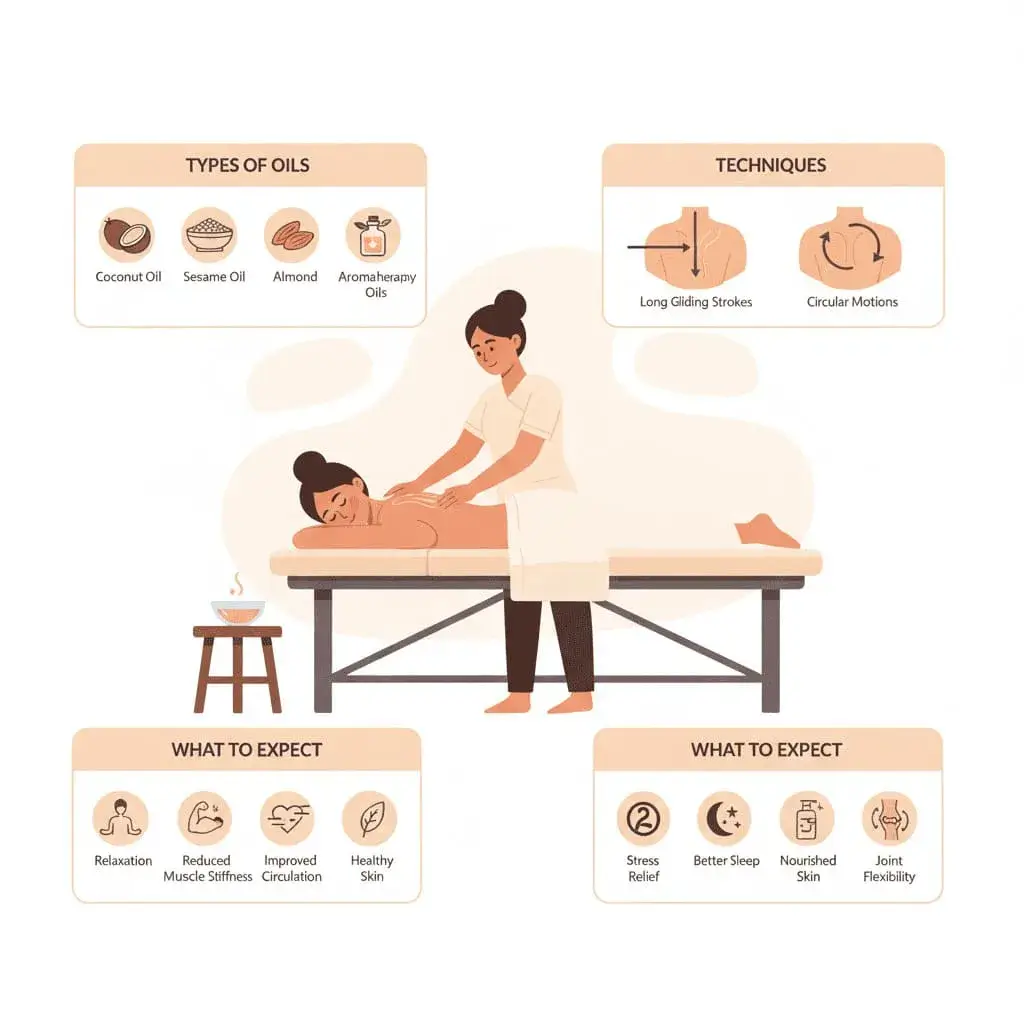
There's something about oil massage that feels different. The warmth, the glide, the way your skin feels afterward - it's not just in your head. Oil changes how massage works on your body, and each oil brings its own benefits.
In India, oil massage isn't a spa trend - it's been part of wellness culture for thousands of years. Your grandmother probably knew which oil to use for which season. But even if you're new to the idea, understanding the basics helps you get more from your massage sessions.
This guide covers everything you need to know: why oil massage works, which oils suit different needs, what techniques therapists use, and how to prepare for the best experience.
Why Oil Massage? The Real Benefits
Oil isn't just lubricant that makes the therapist's hands glide better (though it does that too). It actually changes what the massage can do for your body:
Better Muscle Work
Without oil, there's friction between the therapist's hands and your skin. That friction limits how smoothly they can work into your muscles. Oil eliminates that friction, letting them apply consistent pressure through longer strokes. The result? Deeper, more effective work without the skin-pulling discomfort.
Skin Nourishment
Your skin is your largest organ, and it absorbs what you put on it. Quality massage oils - especially natural ones like coconut or sesame - moisturize deeply and can nourish your skin. You walk out with muscles feeling better AND skin that feels softer.
Heat Generation
Oil combined with massage strokes creates warmth. This isn't just comfortable - heat helps muscles relax and increases blood flow to the area. It's why oil massage often feels more soothing than dry techniques like Thai massage.
Extended Effects
The oil that remains on your skin continues working after the massage ends. It keeps absorbing, keeps moisturizing, and in Ayurvedic tradition, is believed to continue its therapeutic effects for hours. This is why many therapists recommend not showering immediately after an oil massage.
Oil Massage vs Dry Massage: What's the Difference?
Not all massage uses oil - Thai massage and some sports techniques work on clothed bodies without any lubricant. Here's how they compare:
| Aspect | Oil Massage | Dry Massage |
|---|---|---|
| Stroke type | Long, flowing, continuous | Shorter, more targeted |
| Pressure | Can go deeper smoothly | May feel more intense/friction |
| Skin benefits | Moisturizes, nourishes | None directly |
| Clothing | Undressed (with draping) | Often clothed |
| Post-massage feel | Skin feels soft, slightly oily | No residue |
| Best for | Relaxation, skin health, Swedish/Ayurvedic | Thai, Shiatsu, quick sessions |
| Cleanup needed | May want to shower later | Ready to go immediately |
Types of Massage Oils: Which One Is Right for You?
The oil matters. A lot. Different oils have different properties - how they absorb, what they do for your skin, how they smell, and what skin types they suit. Here are the most common options used by professional therapists:
Oil Types at a Glance
Coconut Oil
Cooling for summer, antibacterial - ideal for full body massage
Sesame Oil
Warming for winter, deeply nourishing - traditional Ayurvedic choice
Sweet Almond
Gentle, Vitamin E rich - ideal for Swedish massage and sensitive skin
Jojoba Oil
Does not block skin pores, fast absorbing - great for head massage and face
Coconut Oil
The most popular choice in South India and increasingly everywhere else. Light, absorbs well, and has a subtle natural scent most people find pleasant. Often used in full body massage sessions.
- ✓Best for: Normal to dry skin, general relaxation
- ✓Absorbs: Medium speed - not too fast, not too slow
- ✓Benefits: Antibacterial, deeply moisturizing, cooling in summer
- ✓Smell: Light, natural coconut scent
- ✓Note: Can solidify in cold weather; therapists warm it before use
Sesame Oil
The traditional Ayurvedic choice and still widely used in North India. Heavier than coconut, with warming properties - perfect for winter or for people who always feel cold.
- ✓Best for: Dry skin, winter months, Vata body types (in Ayurveda)
- ✓Absorbs: Slower - stays on skin longer
- ✓Benefits: Warming, deeply nourishing, traditionally believed to calm the nervous system
- ✓Smell: Distinctive nutty aroma (some love it, some don't)
- ✓Note: The massage variety is different from cooking sesame oil
Sweet Almond Oil
A favorite in Western massage styles like Swedish. Light, almost odorless, and works well for most skin types. Often the default at spas that cater to international clientele.
- ✓Best for: Sensitive skin, those who dislike strong scents
- ✓Absorbs: Medium to fast
- ✓Benefits: Gentle, rich in Vitamin E, good for sensitive skin
- ✓Smell: Very mild, almost none
- ✓Note: Avoid if you have nut allergies
Olive Oil
Heavier and more nourishing, good for very dry skin. Not commonly used in professional massage due to its strong smell, but popular for home self-massage.
- ✓Best for: Very dry skin, home use
- ✓Absorbs: Slowly
- ✓Benefits: Extremely moisturizing, rich in antioxidants
- ✓Smell: Distinctive olive scent
- ✓Note: Can feel heavy; usually mixed with lighter oils for massage
Jojoba Oil
Technically a liquid wax, not an oil. Very similar to your skin's natural sebum, so it absorbs beautifully without clogging pores. Often used for face and head massage.
- ✓Best for: Oily or acne-prone skin, face massage
- ✓Absorbs: Fast
- ✓Benefits: Does not block skin pores (oils like this are called non-comedogenic), balances oil production
- ✓Smell: None
- ✓Note: More expensive than other options
Herb-Infused Oils
Many Ayurvedic massages use oils infused with medicinal herbs. These are prepared by cooking herbs in a base oil (usually sesame or coconut) for extended periods to extract their properties.
- Brahmi oil - Traditionally used for relaxation and mental clarity
- Bhringraj oil - Traditionally used for head massage, hair health
- Mahanarayan oil - Traditionally used for joint and muscle pain
- Ksheerabala oil - Traditionally used for nervous system support, often in head massage
On a home session through our platform, the therapist brings the oils along with the table, towels, and music - you can state a preference when they ask at the start of the session. And if you want the full traditional warm-oil experience, the 75-minute Abhyanga session is built around it.
How to Choose the Right Oil for Your Skin
Your skin type should guide your oil choice. Here's a quick matching guide:
| Skin Type | Best Oils | Avoid |
|---|---|---|
| Dry skin | Sesame, Olive, Coconut | Very light oils that absorb too fast |
| Oily skin | Jojoba, Grapeseed, light Almond | Heavy oils like Olive |
| Sensitive skin | Sweet Almond, Jojoba (fragrance-free) | Essential oil blends, heavily scented oils |
| Normal skin | Almost anything - Coconut, Almond, Sesame | Personal preference matters most |
| Acne-prone | Jojoba, Grapeseed (do not block pores) | Coconut (can block pores for some) |
Oil Massage Techniques: What Therapists Do
Oil enables specific techniques that wouldn't work as well without lubrication. Here's what you might experience during an oil massage. Understanding massage techniques helps you know what to expect:
Effleurage (Long Strokes)
The foundation of oil massage. Long, gliding strokes that follow the length of your muscles. These warm up the tissue, spread the oil, and feel incredibly soothing. The therapist can maintain continuous contact from shoulder to fingertip in one smooth motion - a hallmark of Swedish massage.
Petrissage (Kneading)
Squeezing, rolling, and kneading movements on larger muscle groups like thighs, calves, and shoulders. Oil makes this smoother and allows the therapist to work more deeply - essential for back massage and deep tissue work.
Friction
Circular or cross-fiber movements focused on specific areas - often where muscle meets bone or around joints. Oil allows precise work without irritating the skin from repetitive motion.
Abhyanga Technique (Ayurvedic)
Traditional Ayurvedic oil massage uses specific stroke patterns: long strokes on limbs, circular motions on joints. The oil is applied generously and worked in systematically from head to foot. The focus is on the oil penetrating and nourishing as much as the manual manipulation.
What to Expect During an Oil Massage
If you've never had an oil massage before, here's what typically happens:
Before the Massage
- Intake discussion - The therapist asks about your preferences, any skin sensitivities, and whether you have oil preferences
- Changing - You undress to your comfort level (usually underwear) and get under a sheet or towel on the massage table
- Oil warming - Good therapists warm the oil before applying. Cold oil on skin is jarring
During the Massage
- Initial application - Oil is applied to one section at a time (you stay draped except for the area being worked)
- Working the oil in - Long strokes spread and press oil into your skin
- Deeper work - Once the area is warmed up, the therapist can do more focused work on knots or tension
- Coverage - A full body oil massage typically covers back, legs, arms, neck, and sometimes feet, scalp, and face
After the Massage
- You'll feel relaxed and your skin will feel smooth but slightly oily - great for stress relief
- Take your time getting up - oil massage is deeply relaxing and you may feel drowsy, which can help with better sleep
- Some oil will remain on your skin - this is intentional
- You can towel off excess, but ideally let the remaining oil absorb
How to Prepare and What to Do After
Before Your Oil Massage
- ✓Shower beforehand - Start with clean skin so the oil absorbs better
- ✓Skip heavy lotions - They create a barrier that reduces oil absorption
- ✓Eat light - A full stomach and lying face-down don't mix well
- ✓Arrive early - Give yourself time to relax before the session starts
- ✓Communicate preferences - Tell the therapist if you prefer certain oils or have sensitivities
After Your Oil Massage
- ✓Wait to shower - If possible, let the oil absorb for 2-4 hours (or overnight in Ayurvedic tradition)
- ✓Stay warm - Your pores are open and you may feel more sensitive to cold
- ✓Drink water - Hydration helps process the massage and supports your skin
- ✓Take it easy - Don't schedule intense activities right after
- ✓Wear loose clothes - Tight clothing on freshly oiled skin can feel uncomfortable
DIY: Self-Massage with Oil at Home
You don't always need a professional. Self-massage with oil - called Abhyanga in Ayurveda - is a practice you can do at home. It's particularly good for maintaining skin health and relaxation between professional sessions.
Basic Self-Abhyanga Steps
- Warm the oil - Place your oil bottle in warm water for a few minutes
- Start at your head - If doing scalp, apply oil and massage in circular motions (see our head massage guide)
- Face and ears - Gentle circles on face, don't forget behind ears
- Arms - Long strokes on long bones, circular on joints (shoulders, elbows, wrists)
- Chest and abdomen - Gentle clockwise circles on belly
- Back - Reach what you can with long strokes (see back massage techniques)
- Legs - Same principle - long on thighs and calves, circular on knees and ankles
- Feet - Don't skip these. Spend time on the soles (see foot massage guide)
A full self-massage takes about 15-20 minutes. Even 5 minutes focusing on feet, hands, and scalp delivers benefits. Traditionally done in the morning before bathing.
Frequently Asked Questions
Can I request a specific oil at my massage appointment?
Why do some people say not to shower after oil massage?
Is coconut oil bad for acne-prone skin?
Why does sesame oil smell so strong?
Will oil massage stain my clothes?
Is warm oil really better than room temperature?
Can I mix essential oils into my massage oil?
Getting the Most from Oil Massage
Oil massage offers something that dry techniques can't - the combination of skilled touch and nourishing oils working together on your muscles and skin. Understanding which oils suit your body and what to expect helps you get more from each session.
Whether you're booking a professional session or practicing self-massage at home, the basics remain the same: choose appropriate oils for your skin, allow time for absorption, and don't rush the experience. Oil massage has stayed at the heart of Indian wellness tradition for thousands of years for good reason.
Related Articles
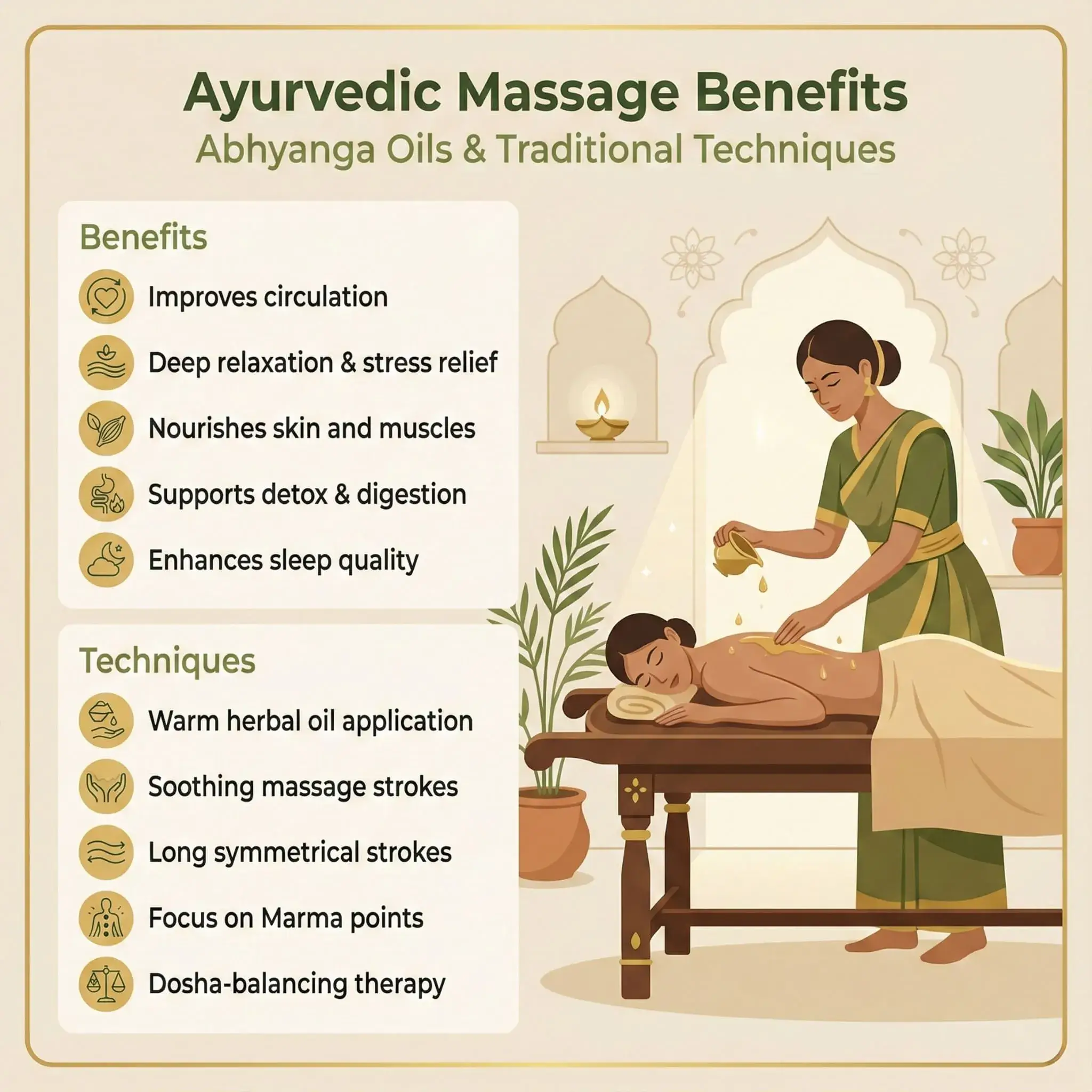
Abhyanga (Ayurvedic Massage) at Home: Benefits and Oils
What an Ayurvedic oil massage actually does, which oils suit Indian seasons, and how a 75-minute abhyanga session works at your home.
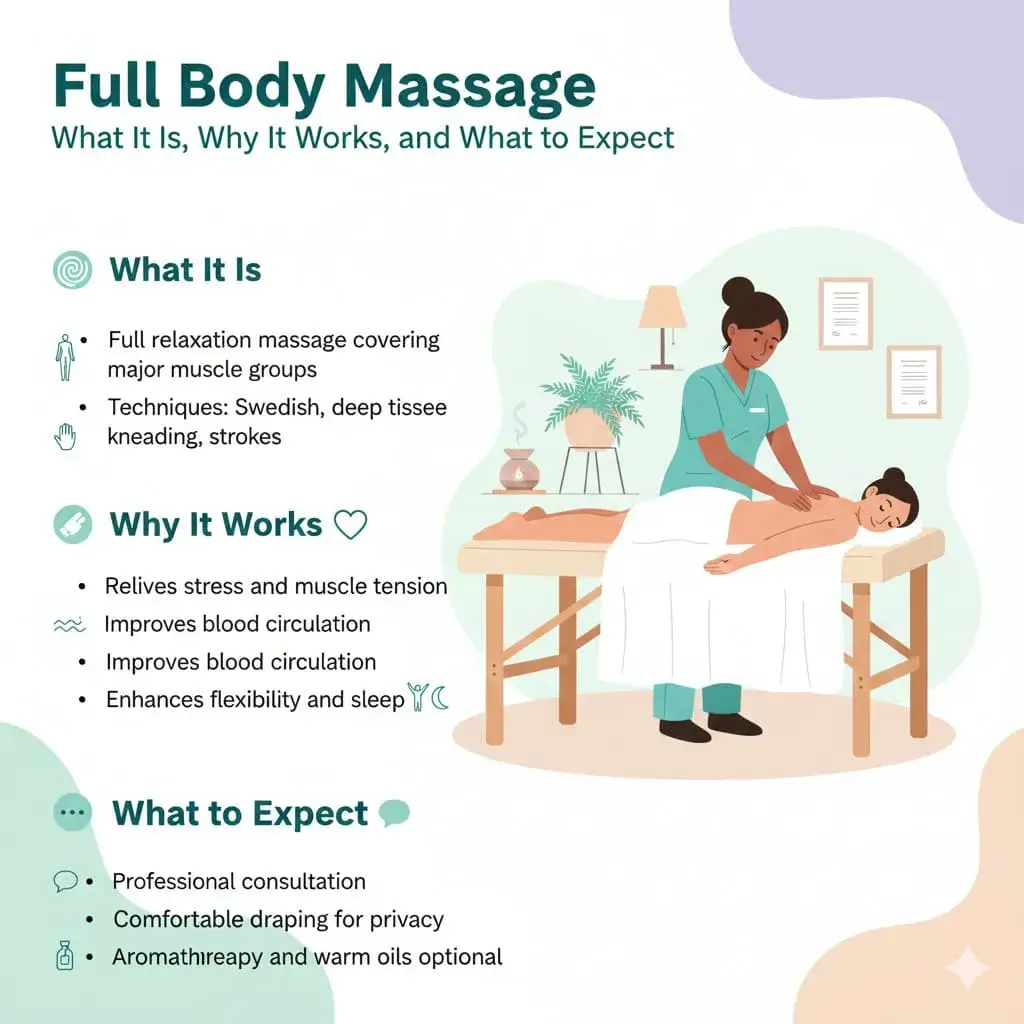
Full Body Massage: What It Is, Why It Works, and What to Expect
What is full body massage? Learn the benefits, best types for your needs, and what to expect. Expert tips from trained therapists for your session.
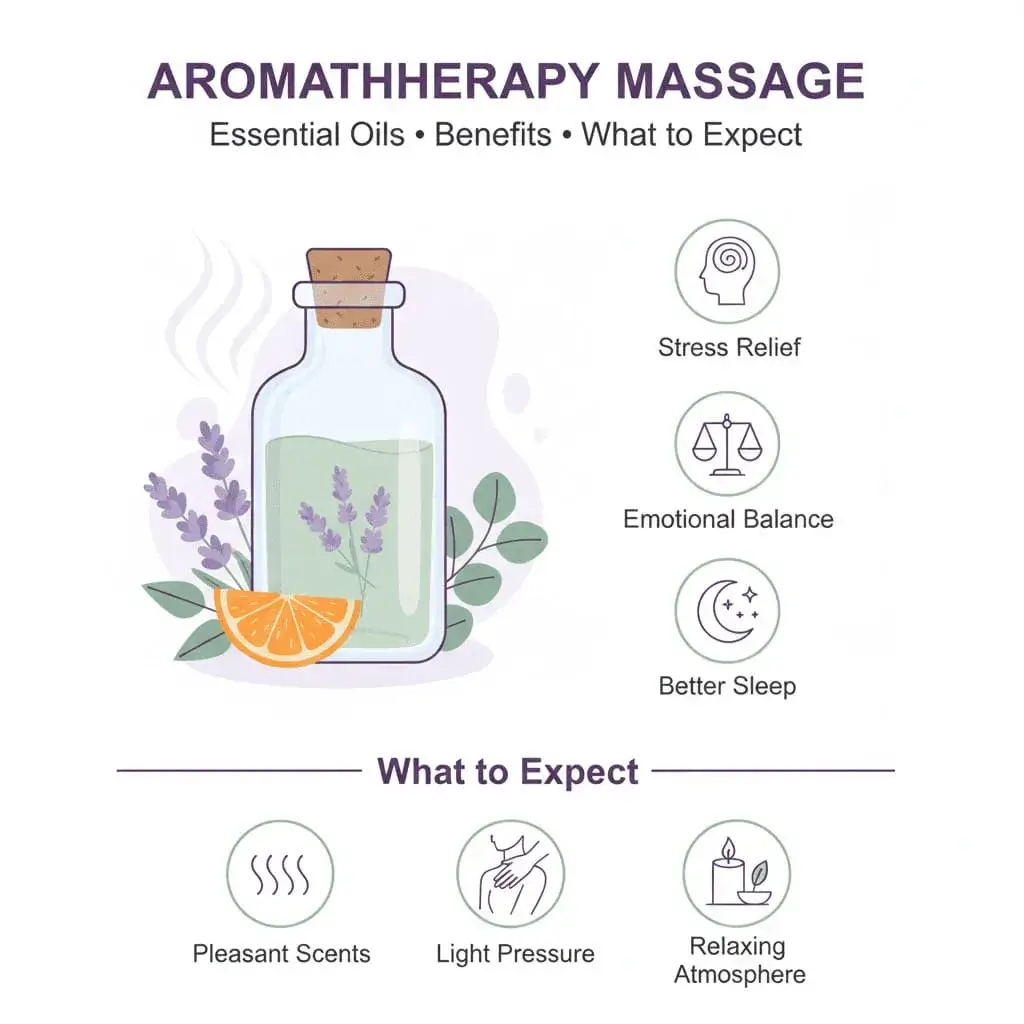
Aromatherapy Massage at Home: Benefits and What to Expect
Aromatherapy massage pairs relaxing strokes with essential oils chosen for your needs. On our menu it is a 60-minute home session. See oils and benefits.
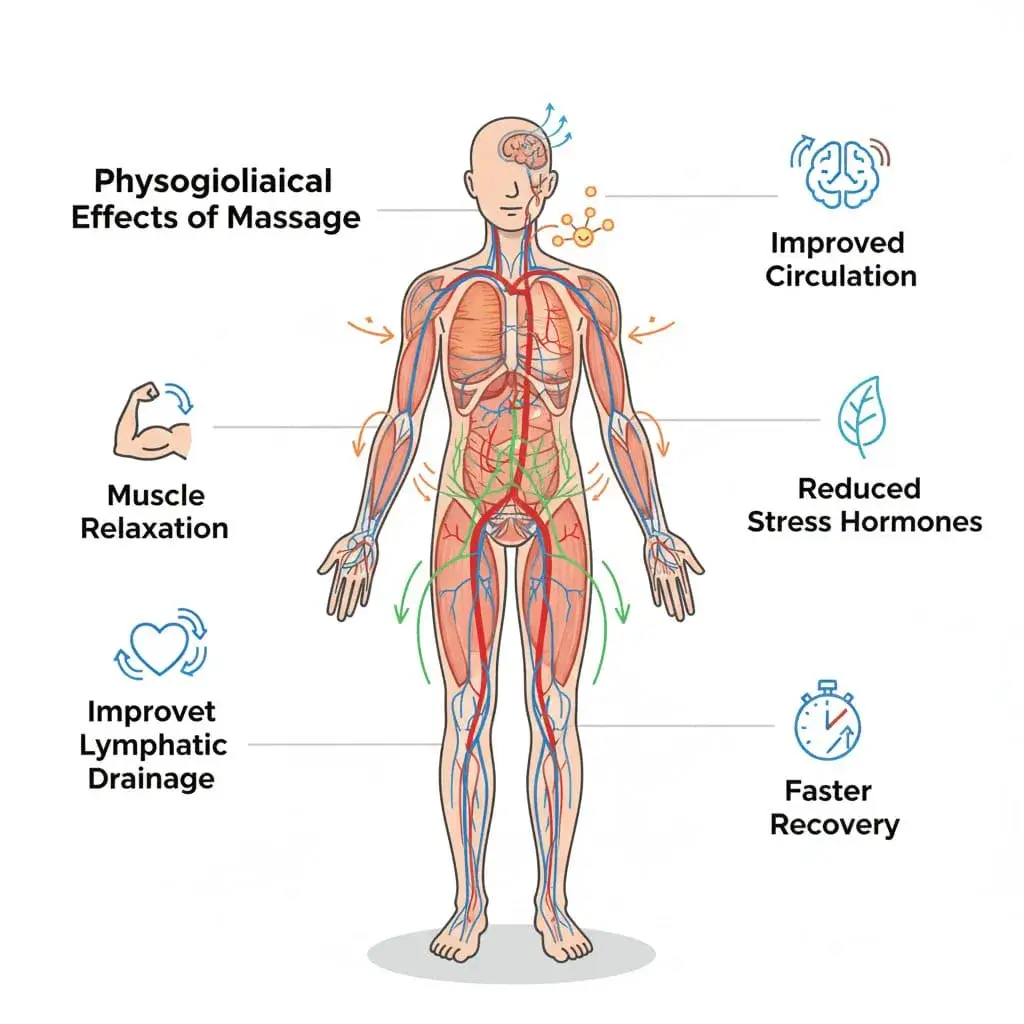
What Does a Massage Do to Your Body? Science-Backed Guide
Discover what actually happens inside your body during a massage. From muscle changes to brain chemistry shifts - the science explained simply.
Massage Services in Other Cities

Professional Home Massage in Mumbai
Professional home massage in Mumbai. {{therapist_count}}+ verified therapists, same-day booking, 40+ areas covered. Swedish, deep tissue & Thai massage. Book now.

Professional Home Massage in Bangalore
Professional home massage in Bangalore. {{therapist_count}}+ verified therapists, same-day booking across 50+ areas. Koramangala, Whitefield, HSR Layout. Book now.

Professional Home Massage in Delhi NCR
Professional home massage in Delhi NCR. {{therapist_count}}+ verified therapists offering same-day booking across 50+ areas including Gurgaon, Noida, and CP. Book now.

Professional Home Massage in Kochi
Professional home massage in Kochi. {{therapist_count}}+ verified therapists, same-day booking, 30+ areas covered. Swedish, deep tissue & Thai massage. Book now.